

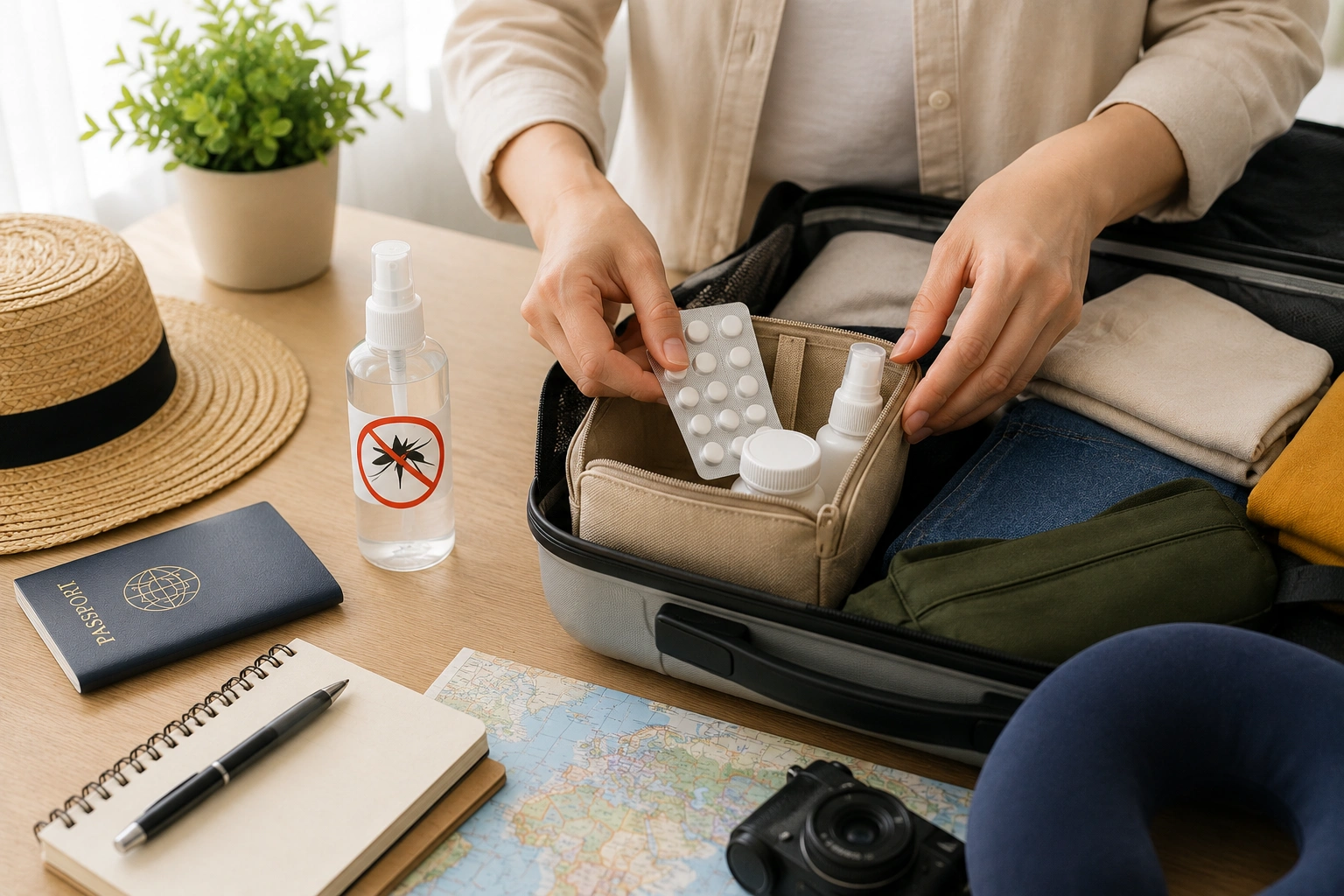
Not every traveller requires malaria pills. However, if you are travelling to a destination where malaria is present, understanding your risk and whether preventive medication is recommended should be an important part of your travel preparation.
A pre-travel consultation allows a doctor to assess your destination, itinerary, and individual health needs to determine whether malaria prevention medication is appropriate and provide personalised travel health advice before your departure.
Key Takeaway
- Malaria is a serious but preventable mosquito-borne disease.
- Not every traveller requires antimalarial medication—the need depends on your destination, itinerary, and individual risk factors.
- If prescribed, take malaria tablets exactly as directed before, during, and after your trip.
- Continue practising mosquito bite prevention even while taking preventive medication.
- Seek urgent medical attention if you develop a fever during travel or after returning from a malaria-risk area.
What Is Malaria and Why Should Travellers Be Concerned?
Malaria is a serious infectious disease caused by Plasmodium parasites transmitted through the bite of an infected female Anopheles mosquito.
According to the World Health Organisation (WHO), there were an estimated 263 million malaria cases worldwide in 2023, demonstrating that malaria remains a significant global health concern despite being preventable and treatable.
Symptoms usually develop between 7 and 30 days after infection, but some malaria species (particularly Plasmodium vivax and P. ovale) may cause illness months after travel.
Common symptoms of malaria include:
- Fever
- Chills
- Headache
- Muscle aches
- Fatigue
- Sweating
- Nausea
- Vomiting
- Diarrhoea (occasionally)
Although Singapore was certified malaria-free by the World Health Organisation (WHO) in 1982, imported malaria cases continue to occur among travellers returning from malaria-endemic countries. As nearly all reported malaria cases in Singapore are imported, travellers should assess their malaria risk and seek medical advice before visiting destinations where malaria is present.
Severe malaria is a medical emergency and can rapidly become life-threatening if not treated promptly.
Which Countries Have Malaria Risk?
Malaria is present in more than 80 countries, primarily across Africa, South and Southeast Asia, Central and South America, and Oceania.
Higher-risk destinations include many parts of:
- Nigeria
- Ghana
- Kenya
- Tanzania
- Uganda
- Papua New Guinea
- India (selected states)
- Indonesia (especially eastern provinces)
- Solomon Islands
- Amazon regions of South America
However, malaria risk can vary within individual countries. Some cities have little or no transmission, while nearby rural, forested, or border areas may carry a much higher risk.
Check your destination before you travel. Malaria risk varies not only between countries but also between different regions within the same country. Before your trip, check whether malaria is present at your destination and review the latest prevention recommendations that the Centres for Disease Control and Prevention (CDC) Travellers’ Health destination pages provide
Do You Need Malaria Pills for Overseas Travel from Singapore?
Although Singapore is malaria-free, overseas travel remains the primary source of malaria risk for Singapore residents. A local study found that 99.7% of malaria cases reported in Singapore between 2013 and 2017 were imported infections, highlighting the importance of assessing your risk before travelling.
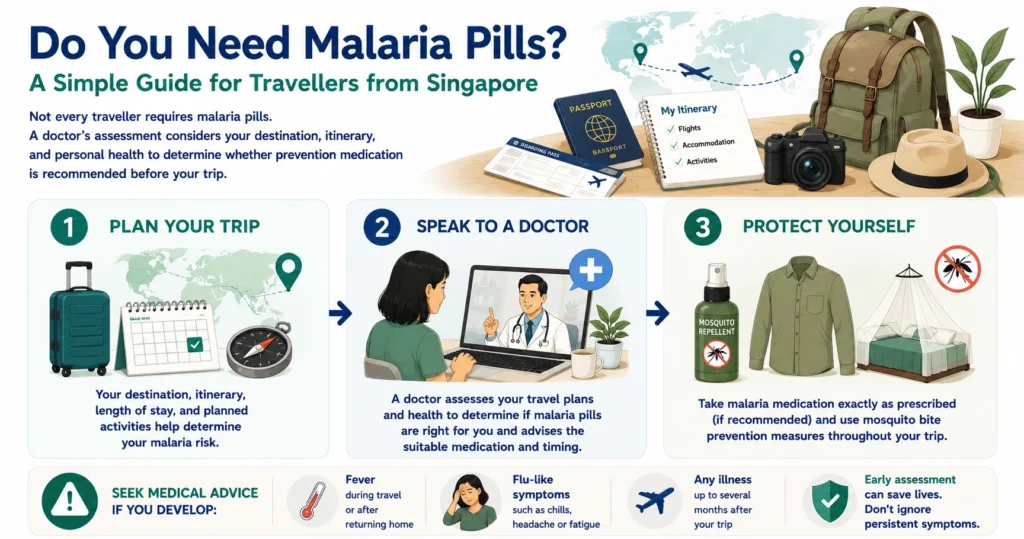
Whether you need malaria pills depends on your destination, itinerary, length of stay, planned activities, and individual health needs.
As part of a pre-travel consultation, your doctor will assess your travel plans to determine whether malaria prevention medication is appropriate. You may be advised to take malaria pills if you:
- Are travelling to an area where malaria is present
- Plan to spend time in rural or forested regions, ie., backpacking
- Will be travelling for an extended period
- Expect frequent outdoor or nighttime activities
- Have underlying medical conditions that may increase the risk of complications
- Are doing humanitarian work or military deployment in rural or forested regions
Special group considerations:
- Pregnant travellers should seek medical advice before travelling, as malaria infection during pregnancy carries a significantly higher risk of serious complications for both mother and baby.
- Children travelling to malaria-risk areas may require different preventive medication and dosing.
For example, someone spending several weeks trekking through remote forested areas may face a higher malaria risk than someone attending business meetings in a major city within the same country. Seeking medical advice before departure helps ensure you receive personalised recommendations based on your destination and travel plans, including malaria prevention medication where appropriate.
Why Is It Important to Start Malaria Pills Before Travelling?
Starting malaria prevention medication at the recommended time is an important part of protecting yourself when travelling to malaria-endemic areas.
A Singapore study found that more than 90% of Singapore residents diagnosed with imported malaria between 2012 and 2016 had not taken adequate malaria chemoprophylaxis before travelling overseas. These findings highlight the importance of assessing your malaria risk and seeking medical advice before travelling to malaria-endemic areas.
The timing of malaria prevention medication depends on the type prescribed. Depending on the medication prescribed, treatment may begin 1–2 days before travel or 1–2 weeks before travel. Because the recommended schedule varies depending on the medication, it is important to consult a doctor well in advance of your trip.
Planning ahead also gives you sufficient time to begin your medication according to the recommended schedule, receive personalised travel health advice based on your destination and itinerary, and discuss other preventive measures to help reduce your risk of malaria while travelling.
How Can a Doctor Determine If You Need Malaria Pills?
A travel health consultation helps ensure you receive advice appropriate to your destination and individual travel needs.
During the consultation, the doctor may review:
- Your itinerary
- Countries and regions being visited
- Length of stay
- Planned activities
- Existing medical conditions
- Current medications
- Whether additional vaccinations should be considered
The consultation may also cover other preventive health services and travel advice relevant to your destination.
If you’re preparing for overseas travel, GoMed Singapore allows you to consult a licensed doctor remotely to assess your malaria risk and determine whether malaria prevention medication is appropriate before departure.
How Do Malaria Pills Work?
Malaria pills, also known as antimalarial medication or malaria prophylaxis, help prevent malaria by targeting the malaria parasite at different stages of its life cycle, reducing the risk of infection developing into illness.
There is no single antimalarial medication that is suitable for every traveller. There are different types of malaria pills, each containing different active ingredients and dosing schedules. The most suitable option depends on your destination, itinerary, medical history, and travel needs.
Depending on the medication prescribed, you may need to take malaria pills before travelling and continue taking them for a period after leaving the malaria-risk area. To maximise protection, it is important to follow the prescribed instructions carefully and complete the full course as directed.
Commonly prescribed medications include:
Atovaquone-Proguanil (Malarone)
- Taken once daily
- Started 1–2 days before travel
- Continued during travel and for 7 days after leaving the malaria-risk area
- Suitable for many short-term travellers.
Doxycycline
- Taken once daily
- Started 1–2 days before travel
- Continued for 4 weeks after leaving the malaria-risk area
- May also provide protection against some other bacterial infections but can increase sun sensitivity.
Mefloquine
- Taken once weekly
- Started at least 2 weeks before travel
- Continued for 4 weeks after travel
- Not suitable for everyone, particularly individuals with certain psychiatric conditions or seizure disorders.
Your doctor will recommend the medication that best matches your destination and medical history.
What Are the Common Side Effects?
Most travellers tolerate antimalarial medications well.
Possible side effects vary depending on the medication and may include:
- Nausea
- Stomach upset
- Headache
- Mild dizziness
- Photosensitivity (with doxycycline)
- Sleep disturbances or vivid dreams (with mefloquine)
Your doctor will discuss potential side effects and help select the most appropriate medication.
How Can You Reduce Your Risk of Malaria While Travelling?
Malaria pills reduce the risk of malaria but do not provide complete protection. Travellers should always combine medication with mosquito bite prevention measures.
Simple precautions include:
- EPA-registered insect repellents (DEET, picaridin, IR3535, oil of lemon eucalyptus where appropriate)
- Long sleeves and trousers
- Air-conditioned or screened accommodation
- Insecticide-treated bed nets where appropriate
- Permethrin-treated clothing and gear (do not apply directly to skin)
Travellers should also remain alert to symptoms during and after their trip. Seek medical attention immediately if you develop a fever during travel or after returning from a malaria-risk area, even if you took malaria pills exactly as prescribed.
Can You Get Malaria Pills Online in Singapore?
Yes. If appropriate after a medical assessment, licensed telemedicine providers can prescribe malaria pills in Singapore through an online consultation. This allows travellers to receive personalised travel health advice and, where suitable, begin malaria prevention medication before their departure.
How It Works
Getting malaria pills online in Singapore is a straightforward process:
- Book an online consultation with a licensed doctor before your trip.
- Discuss your travel itinerary and medical history, including your destination, length of stay, planned activities, current medications, and any underlying medical conditions.
- Receive a personalised medical assessment and travel health advice. Your doctor will determine whether malaria prevention medication is appropriate for your destination and recommend the most suitable option based on your individual needs.
- Receive your prescribed medication via discreet doorstep delivery. If prescribed, your medication will be dispensed through a licensed pharmacy partner and delivered before your departure, allowing you to start the medication according to the recommended schedule.
Planning a trip to a malaria-risk destination? Book an online travel consultation with a GoMed doctor today to get personalised travel health advice before you depart.
Frequently Asked Questions
Can antibiotics prevent or treat malaria?
Most antibiotics do not prevent or treat malaria. However, doxycycline, an antibiotic, is commonly prescribed as one of several approved medications for malaria prevention in travellers visiting malaria-risk areas.
Whether doxycycline is suitable depends on factors such as your destination, medical history, travel duration, and individual health needs. Other antimalarial medications may be recommended depending on the country being visited and local patterns of drug resistance.
A doctor can advise which malaria prevention medication is most appropriate before your trip.
Why does malaria affect red blood cells?
After entering the body, malaria parasites first develop in the liver before infecting red blood cells. As the parasites multiply, they damage these blood cells, leading to symptoms such as fever, chills, fatigue, and, in severe cases, complications that require immediate medical attention.
What should I do if I develop a fever after returning from overseas?
If you develop a fever, chills, or flu-like symptoms after visiting a malaria-risk area, consult a doctor promptly and mention your recent travel history. Early diagnosis and treatment are important because malaria can become serious if left untreated.
Can I stop taking malaria pills once I leave the country?
No.
Some malaria medications must be continued after leaving the malaria-risk area because parasites may still be developing in the body.
If I don't get bitten, do I still need to finish my pills?
Yes.
Complete the prescribed course according to your doctor’s instructions.
Can a previous malaria infection protect you from getting malaria again?
No.
Having had malaria in the past does not provide reliable long-term immunity. Travellers can still get malaria if they are bitten by an infected mosquito during future trips, so appropriate preventive measures should be taken whenever travelling to malaria-risk areas.
References
- Centers for Disease Control and Prevention. CDC Yellow Book 2026: Health Information for International Travel – Malaria. Atlanta, GA: U.S. Centers for Disease Control and Prevention; 2025. Available at: https://wwwnc.cdc.gov/travel/page/yellowbook-home
- World Health Organization. World Malaria Report 2024. Geneva: World Health Organization; 2024. Available at: https://www.who.int/teams/global-malaria-programme/reports/world-malaria-report-2024
- Centers for Disease Control and Prevention. CDC Travelers’ Health – Malaria. Available at: https://wwwnc.cdc.gov/travel/diseases/malaria
- International Society of Travel Medicine (ISTM). Travel Medicine Resources. Available at: https://www.istm.org
- Infectious Diseases Society of America. Clinical Practice Guidelines and Resources. Arlington, VA: Infectious Diseases Society of America. Available at: https://www.idsociety.org/practice-guideline/
- Communicable Diseases Agency, Singapore. Malaria. Available at: https://www.cda.gov.sg/professionals/diseases/malaria
- HealthHub Singapore. Travel Health. Available at: https://www.healthhub.sg/live-healthy/travel-health
- Ministry of Health Singapore. Travel Advisory. Available at: https://www.moh.gov.sg
- Lee KS, Lai YL, Loong F, Barkham TMS, et al. Assessment of the risk posed to Singapore by the emergence of artemisinin-resistant malaria in the Greater Mekong Subregion. Western Pacific Surveillance and Response Journal. 2019;10(1):1–8.