

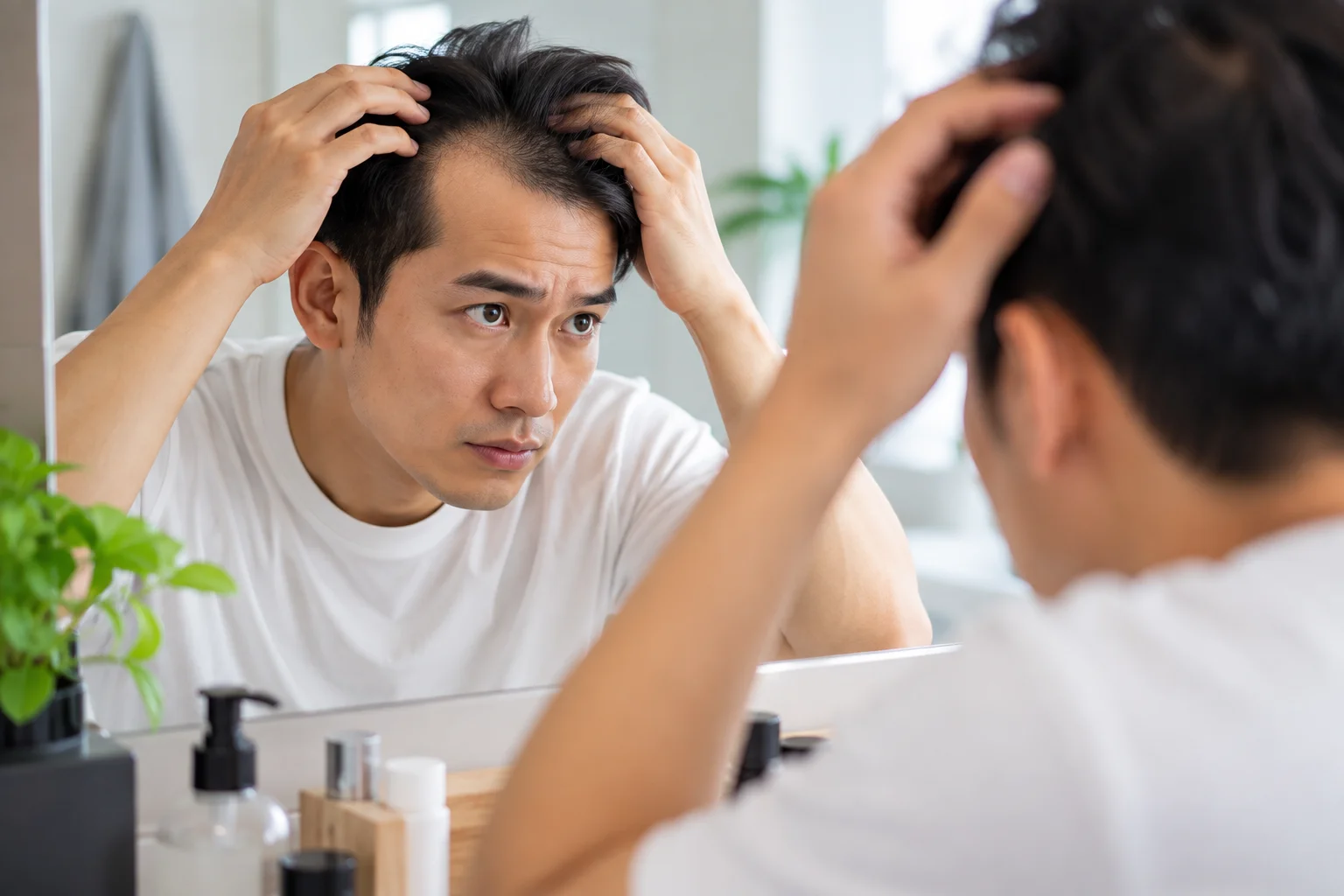
Male pattern hair loss is also known medically as androgenetic alopecia or male pattern baldness. It is the most common type of hair loss in men. Many men begin noticing gradual hair thinning in their 20s or 30s, although it can happen earlier or later in life. By the age of 50, about half of men experience some degree of male pattern hair loss.
This condition is usually progressive, meaning hair thinning may continue gradually over time if left untreated. The earlier hair loss is recognised and managed, the better the chance of slowing further progression and preserving existing hair.
Key Takeaway
- Male pattern hair loss is common and usually progressive, but early management may help slow hair loss and preserve existing hair.
- Treatment options vary between individuals, so medical assessment can help determine the cause and suitable approach.
- Treatment works best when started early, although results vary and ongoing treatment may be needed to maintain them.
- Sudden, patchy or unusual hair loss should be medically assessed, especially when accompanied by scalp pain, redness, scaling, scarring or other symptoms.
What Is Male Pattern Hair Loss?
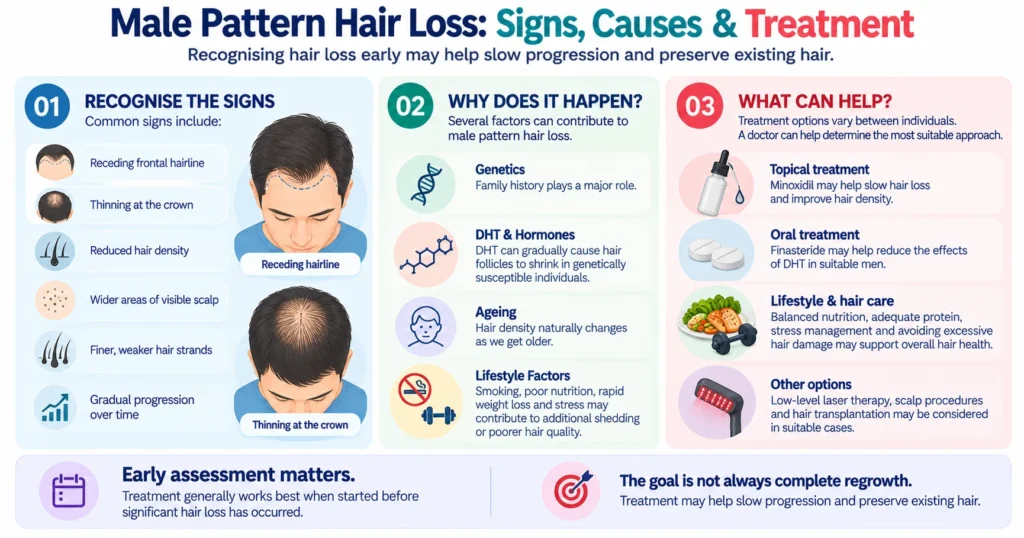
Male pattern hair loss typically follows a predictable pattern. Many men first notice gradual recession of the frontal hairline or thinning around the crown area. Over time, the hair may become finer, shorter and less dense.
The condition happens because affected hair follicles slowly shrink over time, a process known as miniaturisation. As follicles become smaller, the hairs produced become thinner and weaker until some follicles eventually stop producing visible hair altogether.
Hair loss progression varies from person to person. Some men experience slow thinning over many years, while others may notice faster progression.
What Causes Male Pattern Hair Loss?
Several factors contribute to male pattern hair loss.
Genetics
Family history plays a major role. Men with close relatives who experience male pattern hair loss may have a higher likelihood of developing it themselves.
Hormones and DHT
Male hormones known as androgens contribute to this condition. One hormone, dihydrotestosterone (DHT), is particularly important in androgenetic alopecia. In genetically susceptible individuals, DHT may gradually cause hair follicles to shrink over time.
Smoking
Smoking may affect circulation and overall hair health. Some studies suggest smoking may contribute to worsening hair thinning in certain individuals.
Nutritional and Lifestyle Factors
Poor nutrition, rapid weight loss, severe stress, low protein intake, and certain deficiencies do not usually cause male pattern hair loss directly, but they may trigger additional shedding or worsen overall hair quality.
Ageing
Hair density naturally changes with age. Male pattern hair loss may become more noticeable over time as hair growth slows and follicles gradually miniaturise.
Common Symptoms of Male Pattern Hair Loss
Symptoms may include:
- gradual recession of the frontal hairline
- thinning at the crown or vertex
- reduced hair density
- widening areas of visible scalp
- finer and weaker hair strands
- progressive thinning over time
Some men notice increased hair shedding initially, while others mainly notice slower regrowth and reduced hair volume.
How Doctors Diagnose Male Pattern Hair Loss
Doctors usually diagnose male pattern hair loss through a detailed medical history and physical examination.
Doctors may ask about:
- family history of hair loss
- duration and progression of symptoms
- recent stress or illness
- medications and supplements
- diet and lifestyle habits
A scalp examination helps doctors assess the pattern of hair thinning, follicle miniaturisation, and overall scalp condition. In some cases, doctors may recommend additional assessment if the pattern appears unusual or if they suspect other medical conditions.
Treatment Options for Male Pattern Hair Loss
While male pattern hair loss may not always be completely reversible, treatment may help slow further hair loss, and some men may experience partial regrowth or improved hair density.
Lifestyle and Hair Care
Lifestyle measures may support overall hair health, including:
- smoking reduction or cessation
- maintaining a balanced diet
- adequate protein intake
- stress management
- avoiding excessive hair damage from harsh treatments
Topical Hair Treatments
The best-established topical treatment for male pattern hair loss is topical minoxidil. Minoxidil may help slow the balding process, thicken hair strands, and prolong the growth phase of hair. Results usually take 3 to 6 months to become noticeable, and benefits generally last only while treatment is continued.
Topical approaches are sometimes used alone in milder hair loss or combined with oral treatment in suitable individuals.
Hair-support shampoos may help maintain a healthy scalp environment and improve the look and feel of the hair. While they can be useful as part of a broader hair-care routine, evidence-based treatments may still be needed to slow male pattern hair loss or support regrowth.
Oral Medications
Hormonal oral medications are sometimes used for suitable men with androgenetic alopecia. These medications work by reducing the effects of dihydrotestosterone (DHT), a hormone involved in follicle miniaturisation and progressive hair thinning.
One commonly prescribed oral treatment for male pattern hair loss is finasteride. The goal of treatment is usually to slow further hair loss, preserve existing hair and support potential regrowth in some individuals.
Results vary, and treatment often takes several months before improvement becomes noticeable.
Doctors usually assess medical history, suitability and potential side effects before recommending oral treatment.
Finasteride is not suitable for everyone. Potential side effects include reduced libido, erectile dysfunction, ejaculation difficulty, breast tenderness or enlargement, testicular pain, mood changes, depression, anxiety, and rare suicidal thoughts. Finasteride can also affect PSA interpretation and should not be used by pregnant women or women who may become pregnant because of potential risk to a male fetus.
Other Approaches
Other approaches may include:
- low-level laser therapy
- scalp procedures
- hair transplantation
The suitability and effectiveness of different options vary between individuals.
What Results Can Men Expect From Hair Loss Treatment?
Hair loss treatment results vary between individuals. The main goal of treatment is usually to slow further hair loss and preserve existing hair. Some men may also experience mild to moderate improvement in hair density over time.
Results are often better when treatment is started earlier, before significant follicle miniaturisation has occurred.
Most treatments require consistency and patience. Noticeable improvement may take several months, and ongoing treatment is usually needed to maintain results.
Factors that may affect treatment response include:
- stage of hair loss
- age
- genetics
- consistency of treatment
- overall scalp and hair health
While some men may notice visible thickening or regrowth, complete reversal of advanced baldness is usually less likely.
Not sure whether your hair loss is something to be concerned about? A doctor can assess the pattern and progression of your hair loss and help determine whether treatment may be appropriate.
Understanding the Norwood Scale
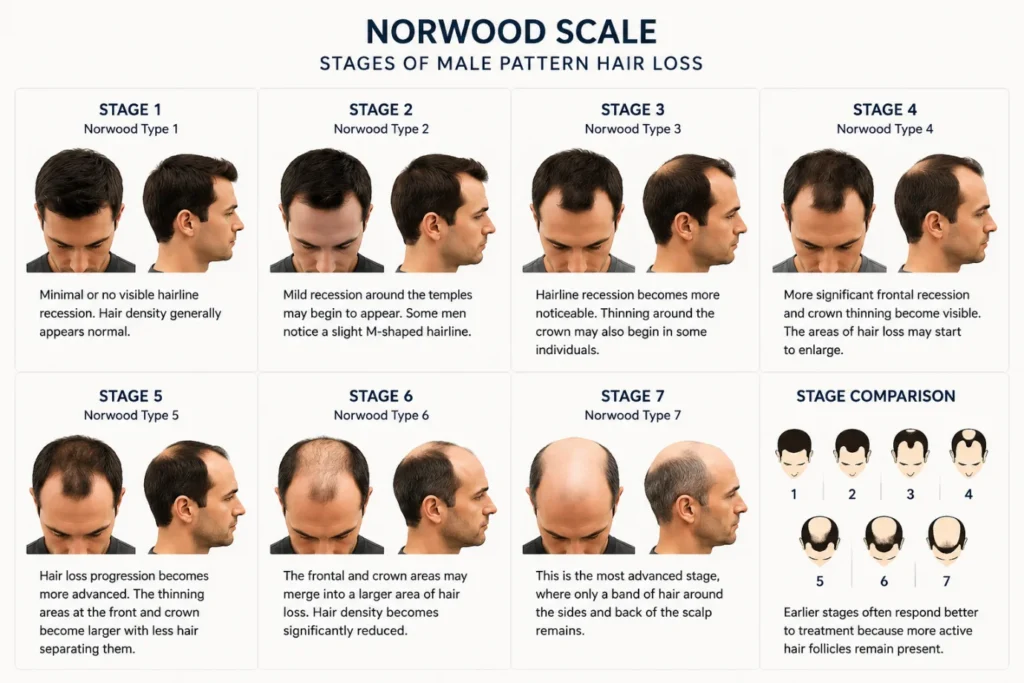
The Norwood Scale is commonly used to classify the stages of male pattern hair loss. It helps describe how hair loss progresses over time.
Stage 1
Minimal or no visible hairline recession. Hair density generally appears normal.
Stage 2
Mild recession around the temples may begin to appear. Some men notice a slight M-shaped hairline.
Stage 3
Hairline recession becomes more noticeable. Thinning around the crown may also begin in some individuals.
Stage 4
More significant frontal recession and crown thinning become visible. The areas of hair loss may start to enlarge.
Stage 5
Hair loss progression becomes more advanced. The thinning areas at the front and crown become larger, with less hair separating them.
Stage 6
The frontal and crown areas may merge into a larger area of hair loss. Hair density becomes significantly reduced.
Stage 7
This is the most advanced stage, where only a band of hair remains around the sides and back of the scalp.
Why Early Treatment Matters
Male pattern hair loss is usually progressive. Over time, affected follicles gradually shrink and may eventually stop producing visible hair.
Earlier treatment often gives better outcomes because more active follicles remain present during the earlier stages of hair loss. Advanced hair loss may become more difficult to manage once significant follicle miniaturisation has occurred.
For many men, the goal of treatment is not necessarily complete regrowth, but rather slowing progression and preserving existing hair.
Common Myths About Male Pattern Hair Loss
Wearing Hats Causes Hair Loss
Wearing caps or hats does not usually cause male pattern hair loss.
Frequent Washing Causes Baldness
Normal hair washing does not cause androgenetic alopecia. Some shedding during washing is usually part of the normal hair cycle.
Styling or Combing Hair Causes Permanent Hair Loss
Normal styling or combing does not directly cause male pattern baldness, although excessive traction or harsh treatments may damage hair.
Stress Alone Is the Main Cause
Stress may contribute to temporary shedding in some situations, but male pattern hair loss is mainly related to genetics and hormonal factors.
Other Types of Hair Loss
Not all hair loss is male pattern hair loss.
Other conditions include:
Telogen Effluvium
This causes temporary diffuse hair shedding, often triggered by stress, illness, weight loss or hormonal changes.
Alopecia Areata
This is an autoimmune condition that may cause sudden patchy hair loss.
Female Pattern Hair Loss
Women may also experience hormonally related hair thinning, although the pattern usually differs from male pattern hair loss.
Proper medical assessment helps determine the likely cause of hair loss and whether treatment is appropriate.
Can Male Pattern Hair Loss Be Managed Online in Singapore?
Online consultation may be suitable for some men experiencing male pattern hair loss in Singapore. During teleconsultation, doctors may assess hair loss history, progression, medical history and treatment suitability.
At GoMed, our doctors provide online consultations for suitable patients experiencing male pattern hair loss. If appropriate, treatment options and follow-up plans may be discussed during the consultation.
Frequently Asked Questions
Can Male Pattern Hair Loss Be Reversed?
Complete reversal may not always be possible. Treatment is usually aimed at slowing progression, preserving existing hair and supporting partial regrowth in some individuals.
Is Hair Loss Permanent?
Male pattern hair loss is generally progressive and long-term. Early treatment may help slow further thinning.
Does Stress Cause Male Pattern Hair Loss?
Stress alone does not usually directly cause androgenetic alopecia, although severe stress may worsen hair shedding or make existing hair thinning more noticeable.
When Should I Seek Treatment for Hair Loss?
It is generally better to seek assessment earlier rather than waiting for more advanced hair loss
References
- Sinclair R. Male pattern androgenetic alopecia. BMJ. 1998;317:865–869.
- Hamilton JB. Patterned loss of hair in man. Annals of the New York Academy of Sciences. 1951;53(3):708–728.
- Norwood OT. Male pattern baldness: classification and incidence. Southern Medical Journal. 1975;68(11):1359–1365.
- Kaufman KD. Androgens and alopecia. Molecular and Cellular Endocrinology. 2002;198(1-2):89–95.
- American Academy of Dermatology Association. Hair loss: Diagnosis and treatment.