


For years, weight loss advice has been overly simple: eat less, move more. But for many adults, biology gets in the way. The endless cycle of dieting, resetting, and stalling out isn’t just exhausting; it’s deeply frustrating.
Constant cravings and immovable plateaus can make you feel stuck, but struggling with your weight is not a personal failure, and seeking medical support is nothing to be ashamed of. Sometimes, biology needs a boost. Mounjaro, a weight loss medication, offers a powerful, modern tool to help reset the balance and support your journey.
Key Takeaway
- Mounjaro can support weight loss by reducing appetite and food intake while increasing feelings of fullness.
- It is suitable only for eligible adults following a medical assessment.
- Treatment starts at a low dose and increases gradually to help the body adjust.
- Common side effects include nausea, diarrhoea, constipation and abdominal discomfort.
- Mounjaro works best alongside a balanced diet and regular physical activity for sustainable weight management.
- Ongoing medical follow-up is important to monitor progress, side effects and treatment suitability.
What Is Mounjaro?
Mounjaro is a prescription medication containing tirzepatide, an active ingredient that acts on two naturally occurring hormones: glucose-dependent insulinotropic polypeptide (GIP) and glucagon-like peptide-1 (GLP-1).
It is a dual GLP-1 and GIP receptor agonist, meaning it works on pathways involved in appetite, digestion and blood sugar regulation.
Mounjaro is an injectable medicine given once a week. Its effects include:
- regulating blood sugar
- regulating appetite
- slowing digestion by delaying gastric emptying
- reducing food intake
- supporting weight management
Tirzepatide was initially developed to treat type 2 diabetes. Its use for weight management has since been studied extensively in clinical trials involving people with obesity or overweight and related health conditions.
How Tirzepatide Helps You Lose Weight
Tirzepatide can help you lose weight by reducing appetite and food intake, which may make it easier to maintain a lower calorie intake. It can also slow gastric emptying, which may contribute to feelings of fullness after eating.
These effects work alongside changes in eating habits and physical activity rather than replacing them. For people using the medication for weight management, the aim is to support sustainable weight loss as part of a broader treatment plan.
How Does Mounjaro Work for Weight Loss?
The medication can help people lose weight by acting on hormones involved in appetite, food intake and digestion. It does not simply make the body burn more calories; instead, it can make it easier to eat less and maintain a lower calorie intake.
Tirzepatide targets both GIP and GLP-1 pathways. These can influence appetite and satiety, while the medicine also slows how quickly the stomach empties after eating.
As a result, some people may:
- feel full sooner
- stay full for longer
- experience fewer food cravings
- eat smaller portions
- find it easier to maintain a calorie deficit
The medicine can also help control glucose levels, particularly in people with type 2 diabetes.
However, this treatment is not intended to replace healthy eating or physical activity. For long-term results, it works best as part of a broader plan that includes a balanced diet, regular activity and sustainable habits.
Who Can Take Mounjaro for Weight Management?
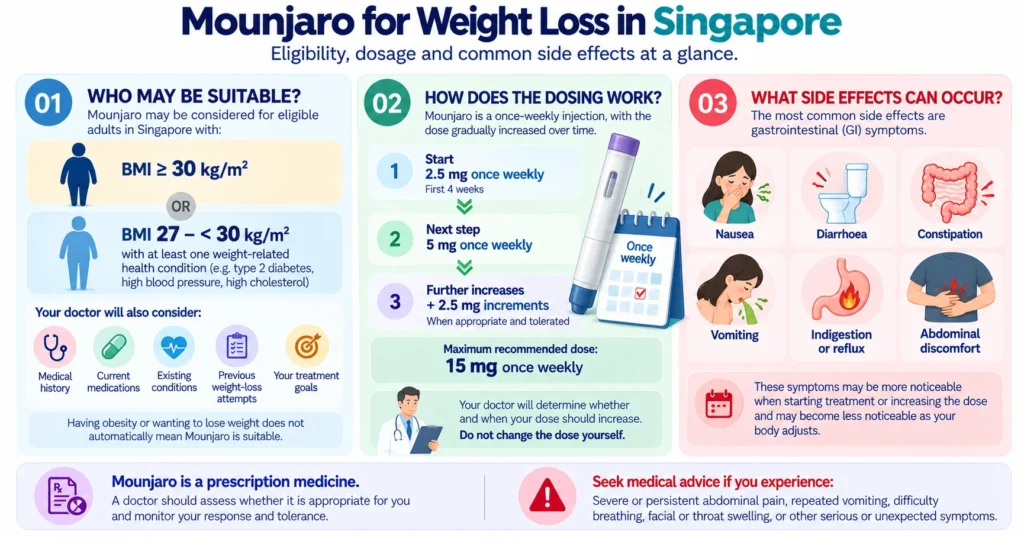
It may be prescribed to eligible adults who meet criteria and are considered suitable after a medical assessment. Having obesity or wanting to lose weight does not automatically mean that Mounjaro is appropriate.
In Singapore, Mounjaro is approved for weight management in adults with an initial BMI of 30 kg/m² or higher, or adults with a BMI of 27 kg/m² to below 30 kg/m² who have at least one weight-related health condition.
A doctor may consider factors such as:
- your BMI and weight
- existing chronic conditions
- current medications
- medical history
- previous attempts to lose weight
- potential contraindications
- your overall treatment goals
The medication may not be suitable for people with certain medical histories. In particular, people with a personal or family history of medullary thyroid cancer or medullary thyroid carcinoma should discuss this with their doctor. Mounjaro is contraindicated in people with a personal or family history of MTC or with Multiple Endocrine Neoplasia syndrome type 2 (MEN 2).
This medical assessment helps determine whether the treatment is appropriate and whether additional monitoring may be needed.
How Does Using Mounjaro Support Weight Loss?
Mounjaro is taken as a once-weekly injection under the skin. Treatment typically starts at the smallest dose and is gradually increased, allowing the body to adjust to the medication.
The injection can generally be taken once a week on the same day, with or without food. Your doctor or healthcare provider should explain how to administer the prescribed product and how to store it correctly.
What Is the Starting Dose?
The usual starting dose is 2.5 mg once weekly for four weeks. This is an initiation dose designed to help your body adjust, not a maintenance dose.
After four weeks, the dose is generally increased to 5 mg once weekly. Further increases may be considered based on your response and your tolerance to treatment.
Starting with the lowest dose is important because gastrointestinal side effects can be more noticeable at the start of treatment or when the dose is increased.
How Is the Dose Increased?
The dose is increased gradually rather than starting at a high level immediately. After you have been on a dose for at least 4 weeks, your doctor may increase it in 2.5 mg increments when appropriate.
The maximum recommended dose for adults is 15 mg once weekly. However, reaching the maximum dose is not necessary for everyone.
Your doctor may keep you at a lower dose if it provides an appropriate response or if increasing it causes troublesome side effects.
Do not change the dose yourself. The treatment schedule should be followed under medical supervision.
How Much Weight Can You Lose With Mounjaro?
The amount of weight people lose with this treatment varies. Clinical trials have found that tirzepatide can lead to significant weight loss over time, but individual results are not guaranteed.
In the 72-week SURMOUNT-1 clinical trial, adults with obesity or overweight and at least one weight-related complication experienced an average body weight reduction of approximately:
- 15.0% with 5 mg
- 19.5% with 10 mg
- 20.9% with 15 mg
The study also found that most participants receiving tirzepatide achieved at least 5% weight loss after 72 weeks.
These figures describe average results from clinical studies, not the expected outcome for every person. Starting weight, dose, treatment duration, diet, activity levels and individual response can all affect how much weight someone loses.
Mounjaro can support weight loss, but the goal should be sustainable weight management rather than trying to lose as much weight as possible as quickly as possible.
Considering Mounjaro for Weight Loss?
A GoMed doctor can assess your health, medical history and weight loss goals to determine whether this treatment may be appropriate for you.
What Are the Common Side Effects?
The most common Mounjaro side effects are gastrointestinal symptoms. These can include nausea, diarrhoea, constipation, vomiting, indigestion and abdominal discomfort.
Nausea is particularly common when starting treatment or increasing the dose. These symptoms often become less noticeable as the body adjusts to the medication.
Some people find it easier to manage mild symptoms by:
- eating smaller meals
- eating slowly
- stopping when comfortably full
- avoiding very heavy or fatty meals if they worsen symptoms
- drinking enough fluids
- following the prescribed treatment schedule
Reduced appetite is an intended effect of treatment, but eating too little can make it harder to get enough nutrients. A balanced diet remains important throughout treatment.
If you experience a side effect that bothers you or does not improve, speak with your healthcare provider rather than changing the dose yourself.
What Are the Serious Side Effects of Mounjaro?
Most side effects are mild to moderate, but more serious reactions can occur and may require medical attention.
Potential serious side effects include pancreatitis, gallbladder problems, severe gastrointestinal reactions, kidney problems related to dehydration and serious allergic reactions. The risk of low blood sugar may also be higher when Mounjaro is used with insulin or certain medicines that increase insulin release.
Mounjaro also carries a warning about thyroid C-cell tumours. Animal studies found an increased incidence of these tumours with tirzepatide, although it is not known whether the same risk applies to humans.
Seek medical help if you develop severe or persistent abdominal pain, repeated vomiting, difficulty breathing, swelling of the face or throat or other symptoms of a serious reaction.
Mounjaro vs Other GLP-1 Medications: How Does It Compare?
Mounjaro is often discussed alongside Wegovy and Ozempic because all three are under the group of GLP-1 injectable medications used to treat diabetes or manage weight. However, they are not the same medicine.
It contains tirzepatide, which acts on both GIP and GLP-1 pathways. Ozempic contains semaglutide and is used for type 2 diabetes, while Wegovy also contains semaglutide and is approved for chronic weight management in eligible patients.
The right medication depends on factors such as your health, medical history, treatment goals and how you respond to treatment. A doctor can help determine which option may be appropriate, rather than choosing solely based on which medication has produced the greatest weight loss in clinical studies.
What Should You Expect When Starting The Treatment?
When starting the GLP-1 medication, the first few weeks are usually a period of adjustment. You may notice changes in appetite and cravings before seeing substantial weight changes.
Because treatment begins at the lowest dose and increases gradually, weight within the first few weeks should not be used to judge your eventual response to treatment.
Your healthcare provider may monitor your weight, side effects and overall response before deciding whether your current dose remains appropriate.
Over time, the aim is to establish a treatment plan that supports weight loss while remaining tolerable and safe.
How Do You Get Mounjaro Online in Singapore?
Mounjaro is a prescription medicine in Singapore. Where clinically appropriate, a licensed healthcare provider may provide medical assessment and prescribing through teleconsultation in accordance with Singapore’s Healthcare Services Act requirements.
The doctor must determine whether remote care is clinically appropriate and conduct an adequate assessment before prescribing. If an in-person examination or further investigation is needed, you may be advised to attend a clinic. The doctor will assess whether the treatment is suitable for you before prescribing it.
With GoMed, the process typically involves the following steps:
1. Complete an Online Medical Assessment
Start by providing information about your weight, medical history, existing conditions, current medications and weight-loss goals. This gives the doctor a better understanding of your health before the consultation.
Be as accurate and transparent as possible when completing the assessment, including any existing conditions or medications you are taking.
2. Have an Online Consultation With a Doctor
A licensed doctor reviews your medical information and discusses your health, weight-loss goals and suitability for treatment during the teleconsultation.
The doctor may ask about your medical history, previous weight-loss attempts, current medications and any potential contraindications. If an in-person assessment or further investigation is needed, you may be advised to visit a clinic instead.
3. Receive a Prescription if Appropriate
If the doctor determines that Mounjaro is suitable for you, they can prescribe the appropriate dose and explain how to use it safely. You will receive guidance on the treatment schedule, injection technique, storage requirements and important do’s and don’ts.
Your medication will then be delivered via discreet packaging to your doorstep, allowing you to receive your treatment conveniently at home.
4. Continue With Follow-Up Care
Follow-up care allows your doctor to monitor your progress and determine whether your current treatment remains appropriate. Your response, side effects and tolerance can be reviewed over time, and the dose may be maintained or adjusted when clinically appropriate.
Can Mounjaro Support Long-Term Weight Management?
The medication can support weight loss, but maintaining progress involves more than medication alone. A balanced diet and regular physical activity can help establish sustainable habits alongside treatment.
Weight is also influenced by sleep, eating patterns, activity levels and other health factors. These should continue to be considered even when treatment is helping reduce appetite and food intake.
If you eventually stop treatment, speak with your healthcare provider about how to manage your weight afterwards. Appetite and eating patterns may change when the medicine is discontinued, and some people may regain weight.
The goal is not simply to achieve a significant amount of weight loss, but to build a sustainable approach to managing your health and maintaining your progress.
Is Mounjaro Right for You?
Choosing a weight loss treatment is a personal decision, and what works for one person may not be appropriate for another. Mounjaro may offer meaningful support for eligible adults, but it should be considered as part of an individualised approach to weight management.
If you are thinking about starting treatment, speaking with a doctor can help you understand your options and make a decision based on your health, goals and circumstances.
In Singapore, GoMed provides doctor-led teleconsultations for those who want to explore whether Mounjaro may be suitable for them.
Frequently Asked Questions
Can You Take Mounjaro If You Do Not Have Diabetes?
Yes, you can take Mounjaro even if you do not have diabetes, provided you meet the relevant clinical criteria and a doctor considers it appropriate. In Singapore, Mounjaro is indicated for weight management in adults with obesity, as well as those who are overweight and have at least one weight-related health condition. A doctor will assess your BMI, medical history and overall health before deciding whether treatment is suitable.
This means that diabetes and weight loss are not the only considerations when determining whether Mounjaro may be appropriate.
How Long Does It Take to See Weight Loss?
Some people may notice changes in appetite and eating patterns within the first few weeks, but noticeable weight loss can take longer. The average weight loss seen in clinical trials reflects results over many months rather than an immediate effect.
Your response can depend on factors such as the dose, treatment duration, diet, physical activity and individual health. Early progress should therefore not be used to predict your eventual results.
What Happens If You Miss a Weekly Dose?
If you miss a weekly dose, take it as soon as possible within 4 days (96 hours) of the scheduled dose; otherwise, skip it and take your next dose on the regular day. Two doses should not be taken within 72 hours of each other.
If you are unsure what to do after missing a dose, check with your healthcare provider rather than changing your treatment schedule yourself.
Can You Take Mounjaro With Other Medicines?
Yes, Mounjaro can be used with many other medicines, but your doctor should review your medications before treatment begins. Tirzepatide can delay gastric emptying, which may affect how some oral medicines are absorbed. This effect is greatest after starting treatment and generally becomes less pronounced with continued dosing.
If you take an oral hormonal contraceptive (such as a combined oral contraceptive pill or a progestogen-only pill), additional contraception is recommended when starting Mounjaro or after increasing the dose. Because tirzepatide can temporarily reduce the absorption of oral hormonal contraceptives, use a non-oral contraceptive method or add a barrier method, such as condoms, for 4 weeks after starting Mounjaro and for 4 weeks after each dose increase. Non-oral hormonal contraceptives are not expected to be affected by this interaction.
This precaution is particularly important because unintended pregnancy should be avoided during treatment with tirzepatide. If you are planning a pregnancy or think you may be pregnant, speak with your doctor before taking Mounjaro.
Tell your doctor about all prescription medicines, over-the-counter medicines and supplements you take. This is particularly important if you use medicines that can lower blood glucose, such as insulin or sulfonylureas, because combining them with Mounjaro can increase the risk of hypoglycaemia.
Does Mounjaro Have to Be Taken Forever?
No, Mounjaro does not necessarily have to be taken forever, but the appropriate treatment duration depends on your individual response and health needs. Your doctor may consider factors such as your weight-management goals, treatment response, side effects and whether continued treatment remains appropriate.
The medication is intended to support ongoing weight management rather than act as a short-term solution alone. If you decide to stop treatment, speak with your healthcare provider first. Appetite and eating patterns may change after treatment is discontinued, and some people may regain weight.
Can You Exercise While Taking Mounjaro?
Yes, exercise can generally be part of your weight management plan while taking Mounjaro. The treatment is intended to be used alongside increased physical activity and a reduced-calorie diet.
The type and intensity of exercise should reflect your fitness level and overall health. If you are new to exercise, have an existing medical condition or experience symptoms that concern you, speak with your healthcare provider before making major changes to your activity level.
Can You Regain Weight After Stopping Treatment?
Weight regain can occur after stopping Mounjaro.
In the SURMOUNT-4 trial, adults who had initially lost weight with tirzepatide and then switched to placebo regained a substantial proportion of their lost weight over the following year, while those who continued tirzepatide maintained and further increased their weight reduction. This suggests that ongoing treatment may be needed for some people to maintain weight loss. Treatment duration should therefore be individualised based on response, side effects, health risks and the patient’s long-term weight-management plan.
References
- Health Sciences Authority, Singapore. New drug approvals – October 2025: Mounjaro (tirzepatide). Singapore: HSA; 2025.
- Health Sciences Authority, Singapore. Mounjaro (tirzepatide) – Summary Report. Singapore: HSA; 2023.
- Jastreboff AM, Aronne LJ, Ahmad NN, et al; SURMOUNT-1 Investigators. Tirzepatide once weekly for the treatment of obesity. N Engl J Med. 2022;387:205-216. doi:10.1056/NEJMoa2206038.
- Aronne LJ, Sattar N, Horn DB, et al; SURMOUNT-4 Investigators. Continued treatment with tirzepatide for maintenance of weight reduction in adults with obesity: the SURMOUNT-4 randomized clinical trial. JAMA. 2024;331(1):38-48. doi:10.1001/jama.2023.24945.
- Jastreboff AM, le Roux CW, Stefanski A, et al. Tirzepatide for obesity treatment and diabetes prevention. N Engl J Med. 2025;392:958-971. doi:10.1056/NEJMoa2410819.
- Ministry of Health, Singapore. Healthcare services regulation and licensing. Singapore: MOH; updated May 4, 2026.
- Ministry of Health, Singapore. Ensuring quality and continuity of care and role of pharmacists in light of increased use of telemedicine and third-party medication delivery platforms. Singapore: MOH; March 5, 2026.
- Ministry of Health, Singapore. Regulation measures for sale of medication or prescription drugs through online retailers. Singapore: MOH; November 12, 2024.
- Eli Lilly and Company. Mounjaro (tirzepatide) prescribing information. Revised 2026.
- European Medicines Agency. Mounjaro (tirzepatide): EPAR – Product Information. Updated September 21, 2026.
- Horn DB, Linetzky B, Davies MJ, et al. Cardiometabolic parameter change by weight regain on tirzepatide withdrawal in adults with obesity: a post hoc analysis of the SURMOUNT-4 trial. JAMA Intern Med. 2026;186(2):157-167. doi:10.1001/jamainternmed.2025.6112.