


Travelling overseas can be exciting, but different destinations may expose travellers to unfamiliar climates, insects, food hygiene standards, and infectious diseases. As such, it is common knowledge to pack and get your travel medicine ready before each departure.
According to Singapore’s health authorities, travellers should seek pre-travel medical advice several weeks before departure when travelling to destinations with increased health risks. Early planning allows sufficient time to assess destination-specific health concerns and obtain appropriate preventive medication where indicated.
So, where exactly do you obtain the “right” or appropriate medication?
GoMed has made accessing travel medicine services convenient through telemedicine. Travellers can now consult a doctor online, obtain medical advice, and receive prescribed medication without visiting a physical clinic.
Why is travel medication needed before each travel?
A pre-travel consultation with a doctor helps individuals understand destination-specific health risks and prepare for potential exposure to illness overseas.
Different countries present different risks. A traveller visiting urban Japan faces very different concerns compared to someone trekking through rural Africa. Travel medicine advice allows doctors to assess potential exposure risks based on destination, medical history, planned activities, and trip duration.
Many travel-related illnesses are preventable with proper preparation. During a consultation, doctors may advise on:
- Traveller’s diarrhoea prevention
- Mosquito-borne disease protection
- Food and water hygiene
- High altitude sickness prevention
- Motion sickness management
- Managing existing medical conditions overseas
What are the most common health risks encountered while travelling?
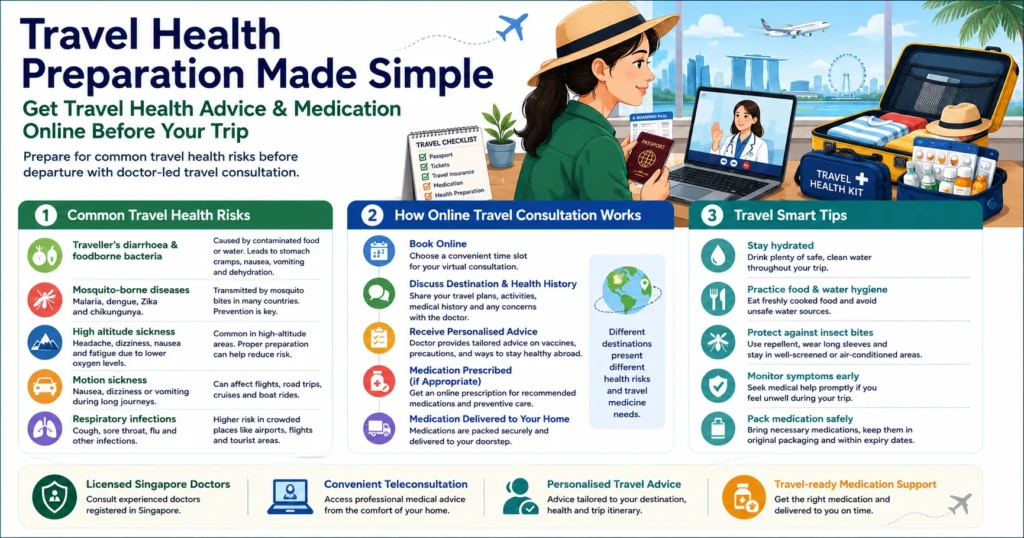
International travel exposes our bodies to new environments, from local food markets to high-altitude mountain trails. Understanding these common health risks helps travellers pack the right medication and take action if symptoms appear.
Traveller’s diarrhoea and foodborne bacteria
Traveller’s diarrhoea is one of the most common travel-related illnesses. It is often caused by contaminated food or fluid containing bacteria, viruses, or parasites. The risk varies depending on destination, season, travel behaviour, and food hygiene practices, with the CDC estimating attack rates of 30% to 70% among travellers to higher-risk destinations during a two-week stay.
| Contamination Source | Common High-Risk Examples | Expected Impact on Trip |
|---|---|---|
| Improper Food Handling | Raw or undercooked seafood, unwashed street market produce. | Severe stomach cramps, nausea, and sudden vomiting. |
| Unpasteurised Dairy | Local cheeses, raw milk, and unpasteurised artisanal desserts. | Acute gastric inflammation and potential bacterial infection. |
| Unsafe Water Sources | Tap water, ice cubes made from untreated local water supplies. | Rapid fluid loss, severe diarrhoea, and sudden dehydration. |
Understanding mosquito-borne disease and malaria transmission
Mosquito and insect bites can transmit infectious diseases in certain countries. Depending on the destination, travellers may face exposure to:
- Malaria
- Dengue fever
- Zika virus
- Chikungunya
During the session, a medical professional may advise on appropriate chemoprophylaxis based on the itinerary. Travellers also learn defensive habits to avoid insect contact entirely:
- Apply Chemical Barriers: Use an approved insect repellent containing DEET or Picaridin on exposed skin.
- Wear Protective Apparel: Choose long-sleeved shirts and thick trousers, tucking pants directly into socks.
- Secure Sleeping Quarters: Utilise a mosquito net when staying in rural or remote areas.
Managing high altitude sickness and respiratory issues
Travellers visiting high-altitude areas may experience symptoms such as headache, dizziness, nausea, or fatigue due to reduced oxygen levels.
Overseas travel may also increase exposure to respiratory infections in crowded airports, on flights, and in tourist areas. Those experiencing cough, fever, or worsening symptoms should seek medical attention promptly.
Who should consider a travel health consultation?
While travel health advice can benefit most people, some individuals may face higher medical risks overseas. This includes:
- Older adults
- Pregnant women
- Individuals experiencing weakened immunity
- Individuals with chronic conditions
- Those visiting remote or rural destinations
- Long-term overseas travellers
People managing conditions such as asthma, diabetes, or cardiovascular disease may require additional medical planning before departure. Individuals travelling to areas with limited access to healthcare may also benefit from carrying standby medication and obtaining personalised medical advice before travelling.
How does GoMed streamline the pre-travel consultation process in Singapore?
Telemedicine makes travel medicine more accessible and convenient for busy individuals preparing for overseas trips. At GoMed Singapore, the process generally includes:
Online booking for a virtual medical assessment
Planning a safe trip begins with a simple digital booking. The user selects a convenient time slot on GoMed’s platform that fits their daily schedule. This remote approach completely removes the need to travel to a physical clinic. It helps busy individuals fit essential health planning easily into their travel preparations.
Review of medical history and travel plans
During the live video call, the doctor performs a complete medical and travel review. The patient shares their destinations, planned activities, and any past medical records. Individuals with chronic conditions or lower immunity receive personalised professional opinions for their health needs. The doctor will assess the situation and provide an opinion on whether the patient’s condition is safe for online care.
Online prescription and home delivery
If the doctor decides that preventative treatment is necessary, they will issue a digital prescription online. GoMed’s platform processes the prescription details and payment instantly and securely. Thereafter, a reliable courier service delivers the medication directly to the patient’s door. This ensures the patient receives their medical supplies well before their departure date.
What types of travel medication can be obtained online?
Travel medicine services provide access to prescriptions that are safe for international travel. Instead of guessing which over-the-counter tablets to buy, patients receive a targeted medical kit.
Securing preventative medications and symptom packs
Depending on the specific country profile, a physician can construct a targeted pharmaceutical defence kit:
- Antimalarial Chemoprophylaxis: Targeted malaria pills designed to prevent bloodborne parasites from establishing an infection.
- Altitude Acclimatisation Tablets: Prescription options that help the body breathe deeper and adjust to lower oxygen levels at high elevations.
- Gastrointestinal Rescue Packs: Standby medications to halt severe diarrhoea and ease painful abdominal cramping.
- Transit and Motion Sickness Support: Clinical solutions to prevent severe nausea caused by travel and help balance sleep cycles.
Understanding the limits of online travel medicine
While telemedicine services are highly convenient, they are strictly designed for non-emergency care. Controlled medications, strong sedatives, and sleeping pills are not provided online.
Those with severe symptoms such as persistent high fever, blood in stool, severe abdominal pain, or dehydration may require in-person medical review at an appropriate healthcare facility.
What Practical Ways to Stay Healthy While Overseas?
Maintaining excellent daily hygiene and safety habits while abroad is critical to preventing illness. Implementing these simple, proactive measures ensures that your travel remains safe, comfortable, and disruption-free.
Maintain Food and Water Hygiene
Freshly cooked meals and sealed bottled water are generally safer options when travelling. Individuals should avoid:
- Raw seafood
- Unpasteurised products
- Untreated water
- Improperly handled food
Protect Against Insect Bites
Protective measures may help reduce exposure to mosquito-borne disease transmission.
This includes:
- Using insect repellent
- Wearing protective clothing
- Staying in screened or air-conditioned accommodation
Monitor Symptoms Early
Seeking medical attention early may help prevent more serious health complications. Individuals should not ignore symptoms such as:
- Severe diarrhoea
- Persistent cough
- Fever
- Breathing difficulty
- Severe dehydration
Handle Medication Safely
Medication should be carried in the original packaging and stored according to prescription instructions throughout the trip.
Preparing for a Secure Journey
Travel health preparation is not only about treating illness after symptoms appear. Proper pre-travel planning helps travellers reduce preventable health risks before departure.
With online travel medicine services in Singapore, travellers can now access professional health advice, obtain prescribed medication, and prepare for overseas travel more conveniently.
At GoMed Singapore, licensed doctors provide confidential teleconsultation and travel-related medical support for selected non-emergency conditions.
Frequently Asked Questions About Travel Medicine
What specific medications are included in a standard standby travel kit?
Standby kits include prescription treatments for traveller’s diarrhoea, oral rehydration salts, and anti-nausea medication. Doctors customise these kits based on individual health profiles and your specific destination.
Can a traveller arrange period delay medication through an online consultation?
Yes, eligible individuals can discuss menstruation adjustment options during a virtual session. If the doctor deems treatment clinically safe, the medication is prescribed and delivered directly to your doorstep.
What should a patient do if travel medication runs out while they are overseas?
Online services in Singapore cannot ship medication internationally. If supplies run out abroad, patients must visit a licensed local healthcare facility within that foreign jurisdiction to replicate their prescription.
Are there specific destinations where an online travel consultation is highly recommended?
Virtual consultations are critical when visiting developing nations or tropical regions. Areas across central Africa, South America, and rural Southeast Asia present higher rates of waterborne bacteria and insect-borne illnesses.
References
- Communicable Diseases Agency (CDA). Health and Safety Abroad. Available at: https://www.cda.gov.sg/public/health-and-safety-abroad. Accessed June 2026.
- Centers for Disease Control and Prevention. CDC Yellow Book 2026: The Pre-Travel Consultation. Available at: https://www.cdc.gov/yellow-book/hcp/preparing-international-travelers/the-pre-travel-consultation.html. Accessed June 2026.
- Centers for Disease Control and Prevention. CDC Yellow Book 2026: Travelers’ Diarrhea. Available at: https://www.cdc.gov/yellow-book/hcp/preparing-international-travelers/travelers-diarrhea.html. Accessed June 2026.
- Centers for Disease Control and Prevention. CDC Yellow Book 2026: Malaria. Available at: https://www.cdc.gov/yellow-book/hcp/travel-associated-infections-diseases/malaria.html. Accessed June 2026.
- Centers for Disease Control and Prevention. CDC Yellow Book 2026: High-Altitude Travel and Altitude Illness. Available at: https://www.cdc.gov/yellow-book/hcp/travel-for-work-other/high-altitude-travel-and-altitude-illness.html. Accessed June 2026.