

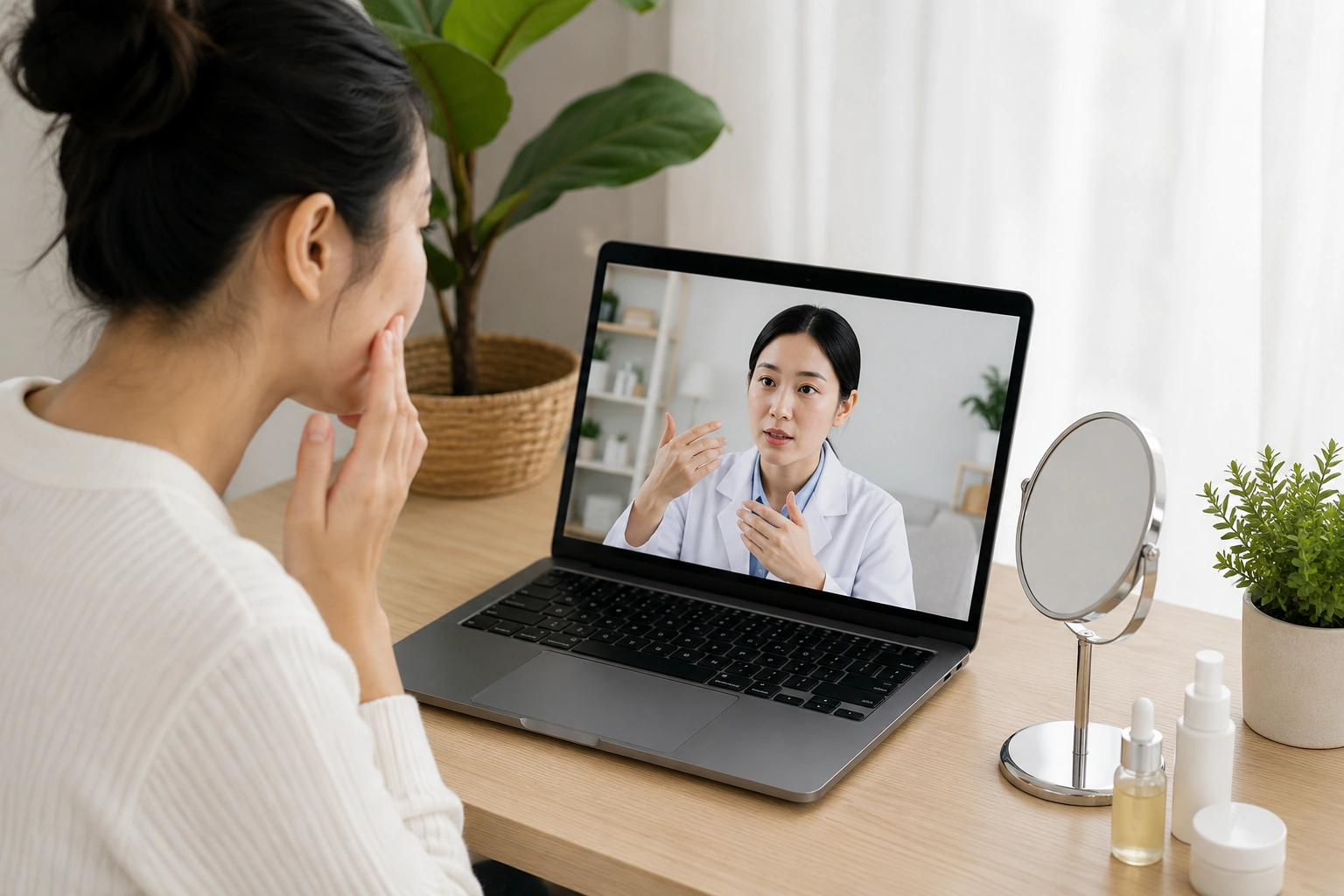
Skin conditions such as acne, eczema and rosacea are among the most common reasons for seeking medical care. Acne alone affects approximately 9.4% of the global population, making it one of the most prevalent skin diseases worldwide. Beyond the visible skin changes, chronic inflammatory skin conditions can significantly affect quality of life, self-esteem, mental well-being, and daily functioning.
More patients are turning to online/self-help skin treatment for convenient access to professional care without the need for repeated clinic visits. However, with the improving innovation and access to professional opinion through teledermatology and teleconsultation services, licensed doctors can assess common skin conditions remotely, recommend suitable treatment, and provide ongoing follow-up where appropriate.
What Should You Know About Online Skin Treatment in Singapore?
Teledermatology refers to the use of telemedicine to assess and manage skin conditions remotely through communication technologies such as video consultation and photo-based evaluation.
Common skin conditions, including acne, eczema, rosacea, and other inflammatory skin concerns, can often be visually assessed and managed through online consultation, particularly when symptoms are mild to moderate.
Evidence from Singapore suggests that teledermatology has become an increasingly established model of care. A systematic review of teledermatology services in Singapore found that common outpatient skin conditions such as acne and eczema were particularly suitable for remote assessment and ongoing management, especially when supported by good-quality clinical photographs and follow-up consultations.
In Singapore, telemedicine providers operate under regulations set by the Ministry of Health and are expected to provide safe, professional, and appropriate patient care.
However, online consultation may not be suitable for every condition. Certain severe symptoms, infections, or dermatological concerns may still require physical examination, laboratory testing, or specialist referral for further assessment.
How Does Online Skin Consultation Work?
Online skin consultation provides a structured and convenient way for patients to access dermatology-related care remotely.
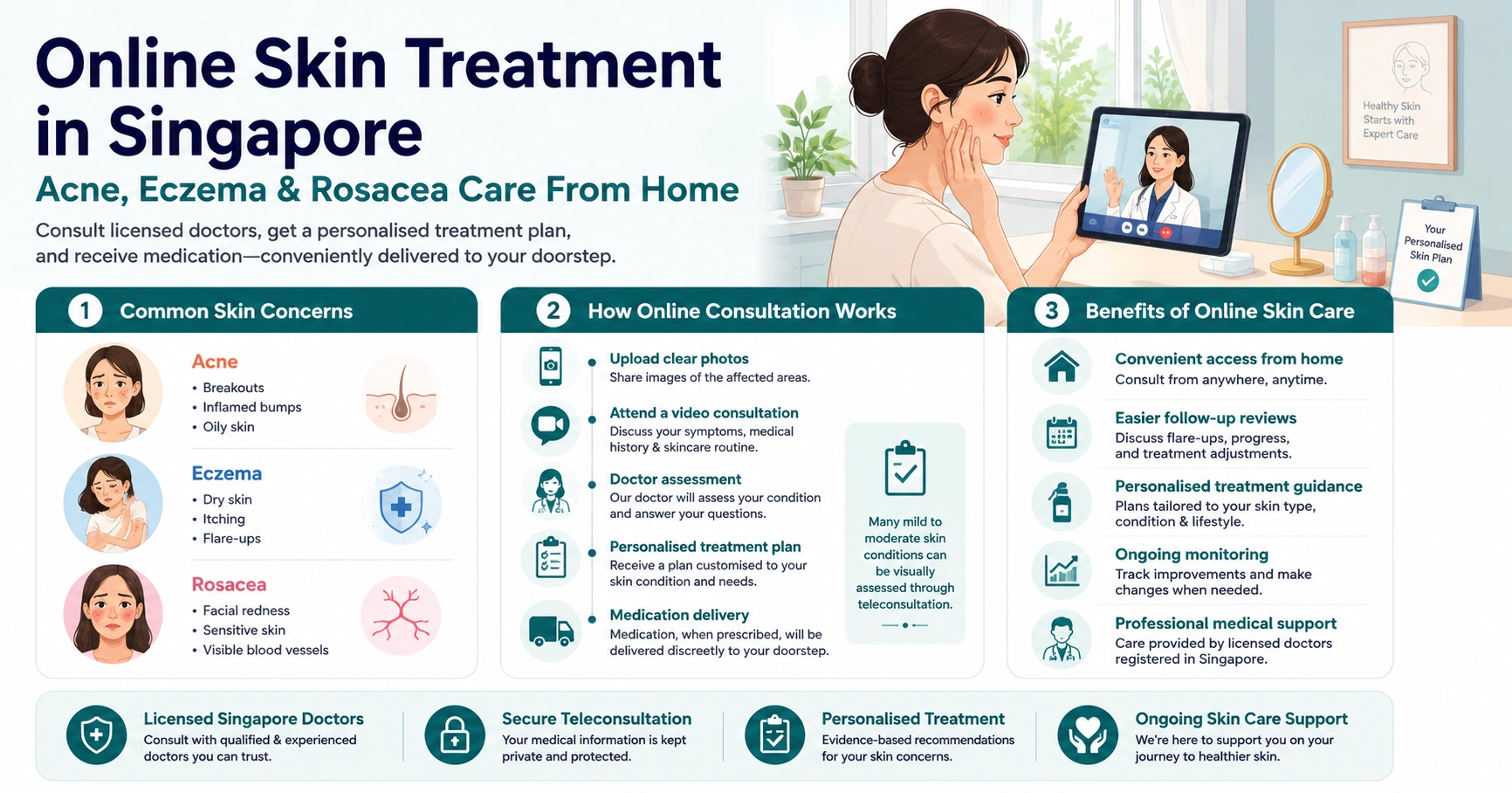
During a teleconsultation, patients typically discuss their symptoms, medical history, skincare routine, and factors that may be irritating or worsening the condition. Using video consultations and photo-based evaluations (in some cases), doctors can assess many common skin conditions, such as acne, eczema, rosacea, and other inflammatory skin concerns. Research comparing teledermatology with traditional face-to-face assessment has demonstrated good agreement in evaluating acne severity, supporting the use of teleconsultation for many appropriately selected patients.
If online treatment is suitable, a personalised treatment plan may be recommended. This can include prescription medication, medicated creams, skincare adjustments, and follow-up monitoring depending on the condition and severity.
Online skin treatment through platforms such as GoMed allows patients to consult licensed doctors remotely and receive treatment recommendations conveniently from home. Medication, when prescribed, can also be delivered discreetly to the patient’s doorstep.
What Types of Skin Conditions Can Be Treated Online?
Many common skin conditions can be managed effectively through teledermatology, particularly when symptoms are mild to moderate.
Acne
Acne is one of the most common dermatological conditions in Singapore and can affect both adolescents and adults. Local research has identified factors including family history, hormonal influences and lifestyle factors as contributors to acne severity and acne scarring among Singaporean patients.
It develops when pores become clogged with excess oil, bacteria, and dead skin cells, leading to inflammation and breakouts such as whiteheads, inflamed bumps, and pustules. Hormonal changes, genetics, stress, and certain skincare habits may also contribute to acne severity.
Depending on the condition and severity, treatment may involve topical creams, prescription medication, antibiotics for inflammatory acne, and adjustments to the patient’s skincare routine.
Early treatment and consistent management may help reduce inflammation, minimise recurring flare-ups, and lower the risk of acne scarring or post-inflammatory pigmentation.
Eczema
Eczema is one of the most common chronic inflammatory skin diseases worldwide. It commonly causes dry, itchy, irritated and inflamed skin, and often requires long-term management rather than one-time treatment. Because flare-ups tend to recur, regular review and treatment adjustment are important for maintaining good symptom control.
Symptoms may vary among individuals and can include redness, flaky skin, irritation, blisters, or cracked skin. Flare-ups may be triggered by allergens, stress, harsh skincare products, environmental factors, or weather changes.
Treatment focuses on reducing inflammation, repairing the skin barrier, and managing symptoms over time. This may involve medicated creams, moisturising skincare, trigger management, and prescription treatment where appropriate.
While many mild to moderate cases can be managed through teleconsultation, patients with severe infection, widespread symptoms, or persistent flare-ups may still require in-person assessment.
Rosacea
Rosacea is a chronic skin condition that typically affects the face and may cause persistent redness, visible blood vessels, sensitive skin, and acne-like bumps or pustules. Symptoms can fluctuate over time and may worsen due to triggers such as heat, alcohol, spicy food, stress, or certain skincare products that irritate the skin.
Rosacea treatment may help reduce inflammation, control flare-ups, and improve overall skin appearance. Prescription creams, anti-inflammatory medications, and gentle skincare recommendations tailored to the individual’s skin condition often help manage and maintain symptom control.
What Are the Benefits of Online Skin Treatment?
Online skin treatment offers a more accessible and convenient way for patients to manage their skin concerns, particularly conditions that require ongoing monitoring and follow-up care.
Easier Access to Professional Care
Patients can consult a licensed doctor remotely for conditions such as acne, eczema, rosacea, and other mild-to-moderate skin concerns without repeated clinic visits.
More Convenient Follow-Up
Conditions such as eczema and rosacea often require ongoing review and treatment adjustments over time. Teleconsultation allows patients to discuss flare-ups, treatment response, and skincare concerns more conveniently.
Visual Assessment Through Photos and Video Consultation
Many common dermatological conditions can be visually assessed through clear photos and video consultations, allowing doctors to evaluate symptoms and recommend appropriate treatment.
Personalised Treatment and Guidance
Treatment recommendations are tailored to the patient’s symptoms, skin type, medical history, and the severity of the condition. This may include prescription medication, medicated creams, and adjustments to the skincare routine.
Earlier Intervention and Ongoing Monitoring
Access to online consultation may encourage patients to seek treatment earlier, which can help reduce inflammation, minimise recurring flare-ups, and support better long-term skin management.
What Challenges and Considerations Should You Know About Online Skin Treatment?
While teledermatology can be convenient and effective for many common skin conditions, there are certain limitations and considerations patients should be aware of before starting online treatment.
Limitations of Online Diagnosis
Skin conditions are often assessed visually, so image quality, lighting, and symptom descriptions can affect the accuracy of the evaluation.
While many mild to moderate dermatological conditions can be managed via teleconsultation, some conditions may require physical examination, laboratory testing, or specialist assessment to confirm a diagnosis. Severe infections, rapidly worsening symptoms, unusual skin changes, or conditions that do not respond to treatment may require in-person dermatology care.
For this reason, doctors may sometimes recommend a follow-up examination or a referral, where necessary.
What to Expect During Online Skin Treatment
Online skin treatment usually begins with an initial consultation where patients discuss their symptoms, medical history, skincare routine, and concerns with a doctor.
To support visual assessment, patients may also be asked to upload clear photos or attend a video consultation so the affected skin area can be evaluated more accurately.
Depending on the condition, treatment may include:
- Prescription medication
- Medicated creams
- Skincare routine recommendations
Because skin conditions can change or fluctuate, ongoing communication and consistent follow-up are often important for achieving better long-term outcomes.
What Are the Next Steps for Online Skin Treatment in Singapore?
Skin conditions such as acne, eczema, and rosacea can affect comfort, confidence, and overall quality of life. Most common skin concerns also respond better when addressed early and managed consistently over time.
Teledermatology now allows patients in Singapore to access professional skin treatment more conveniently through secure teleconsultation, particularly for mild to moderate dermatological conditions that can be assessed remotely.
GoMed Singapore provides access to licensed doctors who can assess common skin conditions online and recommend appropriate treatment options. If you are experiencing persistent skin concerns or would like guidance on managing your skin condition, GoMed’s online consultation can help you better understand your next steps.
FAQs About Online Skin Treatment in Singapore
Can skin conditions really be assessed accurately through online consultation?
Many common skin conditions can be assessed visually through clear photos and video consultation. However, certain severe or complex conditions may still require a physical examination or a specialist referral for an accurate diagnosis.
When should I seek in-person dermatology care instead of online treatment?
While most common skin conditions can be managed through teledermatology, some symptoms may still require physical examination or specialist care. This includes severe or rapidly worsening skin disease, spreading infection, painful blisters, open wounds, or symptoms that do not respond to treatment.
In some cases, a doctor may recommend referral to a dermatologist or further testing, as appropriate.
Can I continue using my existing skincare products during treatment?
This depends on and is subject to your existing condition and treatment plan. Some skincare products may irritate inflamed skin or interfere with medication, so it is important to discuss your current routine during consultation.
References
- Ministry of Health Singapore. National Telemedicine Guidelines. Available at: https://www.moh.gov.sg. Accessed June 2026.
- Ministry of Health Singapore. Healthcare Services Act (HCSA). Available at: https://www.moh.gov.sg. Accessed June 2026.
- Chen L, Tan W, Tan A, et al. Teledermatology in Singapore: A Systematic Review. Singapore Medical Journal. 2023;64(4):197-205. Available at: https://pmc.ncbi.nlm.nih.gov/articles/PMC10122560/. Accessed June 2026.
- Heng AHS, Chew FT. Systematic Review of the Epidemiology of Acne Vulgaris. Scientific Reports. 2020;10:5754. Available at: https://www.nature.com/articles/s41598-020-62715-3. Accessed June 2026.
- Heng AHS. Epidemiological Risk Factors Associated with Acne Vulgaris Presentation, Severity and Scarring in a Singapore Chinese Population. National University of Singapore. Available at: https://scholarbank.nus.edu.sg/entities/publication/d3dabf6a-4458-4922-abb5-916bfa526d29. Accessed June 2026.
- Jusuf NK, et al. Assessing Acne Severity: Teledermatology Versus Face-to-Face Consultation. Journal of Clinical and Aesthetic Dermatology. 2023. Available at: https://jcadonline.com/acne-severity-teledermatology-covid-pandemic/. Accessed June 2026.
- Wollenberg A, Christen-Zaech S, Taieb A, et al. ETFAD/EADV Eczema Task Force 2020 Position Paper on Diagnosis and Treatment of Atopic Dermatitis in Adults and Children. Journal of the European Academy of Dermatology and Venereology. 2020.
- van Zuuren EJ, Fedorowicz Z, Carter B, et al. Interventions for Rosacea. Cochrane Database of Systematic Reviews. 2015;4:CD003262.