


Hair loss is a common concern affecting many men worldwide. For some, it starts as a receding hairline in their 20s or 30s. Others may notice thinning around the crown or reduced hair density over time. While hair loss is usually not dangerous to health, it can affect confidence, self-image, and emotional well-being.
The good news is that male pattern hair loss is treatable. Today, several treatment options are available, ranging from medications and topical treatments to hair restoration procedures. One of the most commonly prescribed and evidence-based oral medications for male pattern hair loss is finasteride.
In this article, we will discuss how finasteride works, what results to expect, possible side effects, and whether it may be suitable for you.
Key Takeaway
- Finasteride lowers DHT levels to slow male pattern hair loss.
- Early treatment may help preserve existing hair and reduce further thinning.
- Results take time, with improvements often appearing within 3–12 months.
- Consistent daily use is important to maintain treatment benefits.
- Side effects can occur, including reduced libido, erectile dysfunction and mood changes.
- A medical assessment helps determine suitability and whether additional treatments may be needed.
What Is Male Pattern Hair Loss?
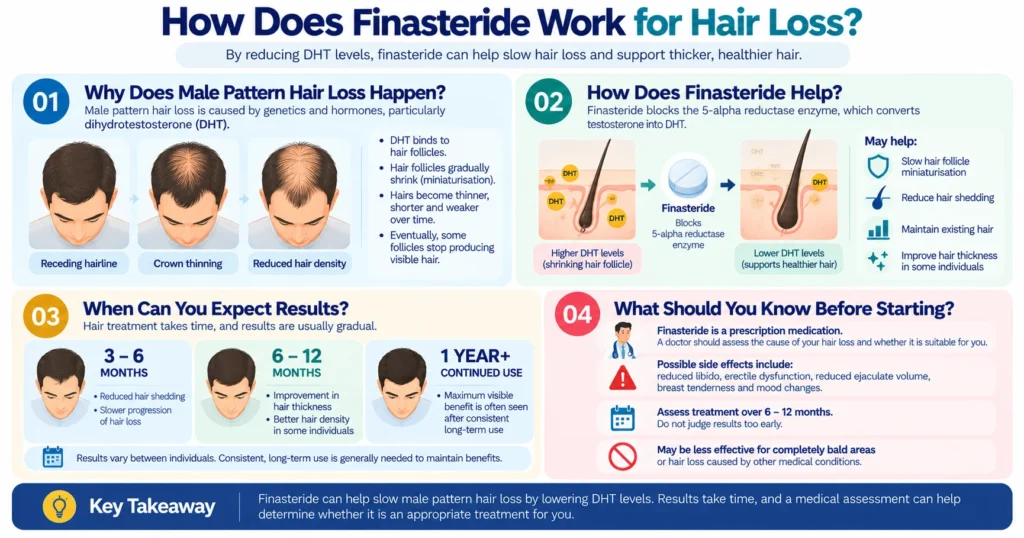
Male pattern hair loss, also known as androgenetic alopecia, is the most common cause of hair loss in men.
It typically presents as:
- A receding hairline
- Thinning at the crown
- Progressive reduction in hair density
- Widening scalp visibility
Genetics and hormones mainly influence this condition. In particular, a hormone called dihydrotestosterone (DHT) plays a major role in shrinking hair follicles over time.
As the hair follicles become smaller, the hairs produced become thinner, shorter, and weaker. Eventually, some follicles stop producing visible hair altogether.
Treatment Options for Hair Loss
Several treatment options are available for male pattern hair loss. The most suitable option depends on the severity of hair loss, age, treatment goals, and underlying causes.
Medications
- Finasteride (oral medication)
- Minoxidil (topical or oral forms)
Procedures
- Hair transplant surgery
- Platelet-rich plasma (PRP)
- Microneedling
Supportive Measures
- Improving nutrition
- Managing stress
- Optimising sleep
- Avoiding harsh hair treatments
Among these options, finasteride remains one of the most widely studied oral treatments for slowing male pattern hair loss.
What Is Finasteride?
Finasteride is an oral prescription medication commonly used to treat male pattern hair loss.
It was originally developed to treat prostate enlargement at higher doses, but researchers later found that lower doses could help reduce hair loss in men.
For hair loss treatment, finasteride is usually prescribed at:
- 1 mg once daily
Finasteride is approved in many countries for the treatment of male pattern hair loss in men.
How Does Finasteride Work for Hair Loss?
Finasteride works by reducing levels of dihydrotestosterone (DHT), the hormone largely responsible for male pattern hair loss.
Normally:
- Testosterone is converted into DHT by an enzyme called 5-alpha reductase
- DHT binds to hair follicles
- Over time, hair follicles shrink and produce thinner hairs
Finasteride blocks the 5-alpha reductase enzyme, leading to lower DHT levels in the scalp.
As DHT levels decrease:
- Hair follicle miniaturisation slows down
- Hair shedding may reduce
- Existing hairs may become thicker
- Progression of hair loss may stabilise
Finasteride is generally more effective at slowing ongoing hair loss than regrowing completely bald areas.
What Results Can You Expect?
Hair treatment requires patience, and results with finasteride are usually gradual.
Typical timeline:
3 to 6 months
- Reduced hair shedding
- Slower progression of hair loss
6 to 12 months
- Improvement in hair thickness
- Better hair density in some individuals
After 1 year
- Maximum visible benefit is often seen after consistent long-term use
It is important to understand that the goal of treatment is often:
- To slow or stop further hair loss
- To maintain existing hair
- To improve hair thickness where follicles are still active
Finasteride may be less effective in areas that are already completely bald.
How to Take Finasteride
Finasteride is usually taken:
- Once daily
- With or without food
Consistency is important because the medication works gradually over time.
Missing an occasional dose is usually not a major concern, but regular long-term use is generally needed for sustained benefit.
Patients should avoid stopping and restarting treatment repeatedly, as hair loss progression may continue when the medication is discontinued.
Noticing a Receding Hairline or Thinning Crown?
Finasteride may help slow male pattern hair loss, but it’s important to understand whether it’s suitable for you.
Who Is a Good Candidate for Finasteride?
Finasteride may be suitable for:
- Men with early male pattern hair loss
- Men noticing a receding hairline
- Crown thinning
- Progressive hair shedding
- Individuals with family history of male pattern baldness
Treatment often works best when started earlier, before extensive follicle loss has occurred.
Finasteride may be less helpful for:
- Completely bald scalp areas
- Hair loss caused by medical conditions unrelated to androgenetic alopecia
A medical assessment is important to confirm the correct diagnosis before starting treatment.
If you are unsure whether your hair loss is caused by male pattern baldness, a medical assessment may help clarify the diagnosis. At GoMed, our family physicians provide online consultations for hair loss assessment and treatment recommendations.
How Much Does Finasteride Cost?
The cost of finasteride varies depending on:
- Brand vs generic medication
- Clinic consultation fees
- Combination treatments used
In Singapore, generic finasteride is generally more affordable than branded versions.
As hair loss treatment is usually long-term, patients should consider the ongoing monthly cost before starting therapy.
Why Does Finasteride Not Work for Some People?
Not everyone responds equally to finasteride.
Possible reasons include:
- Advanced hair loss with inactive follicles
- Insufficient treatment duration
- Inconsistent medication use
- Incorrect diagnosis
- Individual genetic differences
- Unrealistic expectations
Some patients may require combination therapy, such as finasteride together with minoxidil, for better results.
How Long Before Declaring Treatment Failure?
Hair growth cycles are slow, and early assessment can be misleading.
In most cases:
- Finasteride should be assessed over at least 6 to 12 months before deciding whether it has failed
Stopping treatment too early is a common reason patients feel the medication “does not work.”
Photographic comparison over time may help monitor progress more accurately.
Side Effects of Finasteride
Most people tolerate finasteride well, but side effects can occur.
Possible side effects include:
- Reduced libido
- Erectile dysfunction
- Reduced ejaculate volume
- Breast tenderness
- Mood changes
These side effects are generally uncommon and may improve after stopping the medication.
Patients concerned about side effects should discuss risks and benefits with a doctor before starting treatment.
Other Lifestyle Factors That Affect Hair Loss
Hair health can also be influenced by lifestyle factors.
These include:
- Chronic stress
- Poor sleep
- Smoking
- Nutritional deficiencies
- Rapid weight loss
- Low protein intake
- Excessive hairstyling damage
Optimising overall health may help improve scalp and hair condition alongside medical treatment.
Considering Treatment for Hair Loss?
If you are experiencing progressive hair thinning, receding hairline, or crown thinning, early treatment may help preserve existing hair follicles.
At GoMed, our family physicians provide confidential online consultations for hair loss assessment and treatment recommendations, including finasteride suitability assessment where appropriate.
Frequently Asked Questions
Can Finasteride Regrow Hair?
Finasteride may help thicken existing hair and improve hair density in some individuals. However, it tends to work better at slowing further hair loss than regrowing completely bald areas.
What Happens If I Stop Finasteride?
If finasteride is stopped, DHT levels will gradually rise again. Over time, hair loss progression may continue, and treatment benefits may be lost.
Is Finasteride Permanent?
No. Finasteride only works while it is being taken consistently. Long-term maintenance treatment is usually required to sustain results.
Can Women Take Finasteride?
Finasteride is generally not routinely used in women, especially during pregnancy, due to potential risks to a developing male fetus. Women experiencing hair loss should seek proper medical evaluation for suitable treatment options.
Can I Get Finasteride Over the Counter?
In Singapore, finasteride is a prescription-only medication and is not available over the counter. A doctor’s assessment is recommended to confirm the diagnosis and determine whether treatment is appropriate.
References
- Kaufman KD. Androgens and alopecia. Molecular and Cellular Endocrinology.
- American Academy of Dermatology Association – Hair Loss Resources.
- Olsen EA et al. Finasteride in the treatment of men with androgenetic alopecia.
- FDA prescribing information for finasteride.
- Sinclair R. Male androgenetic alopecia. Journal of Men’s Health.