

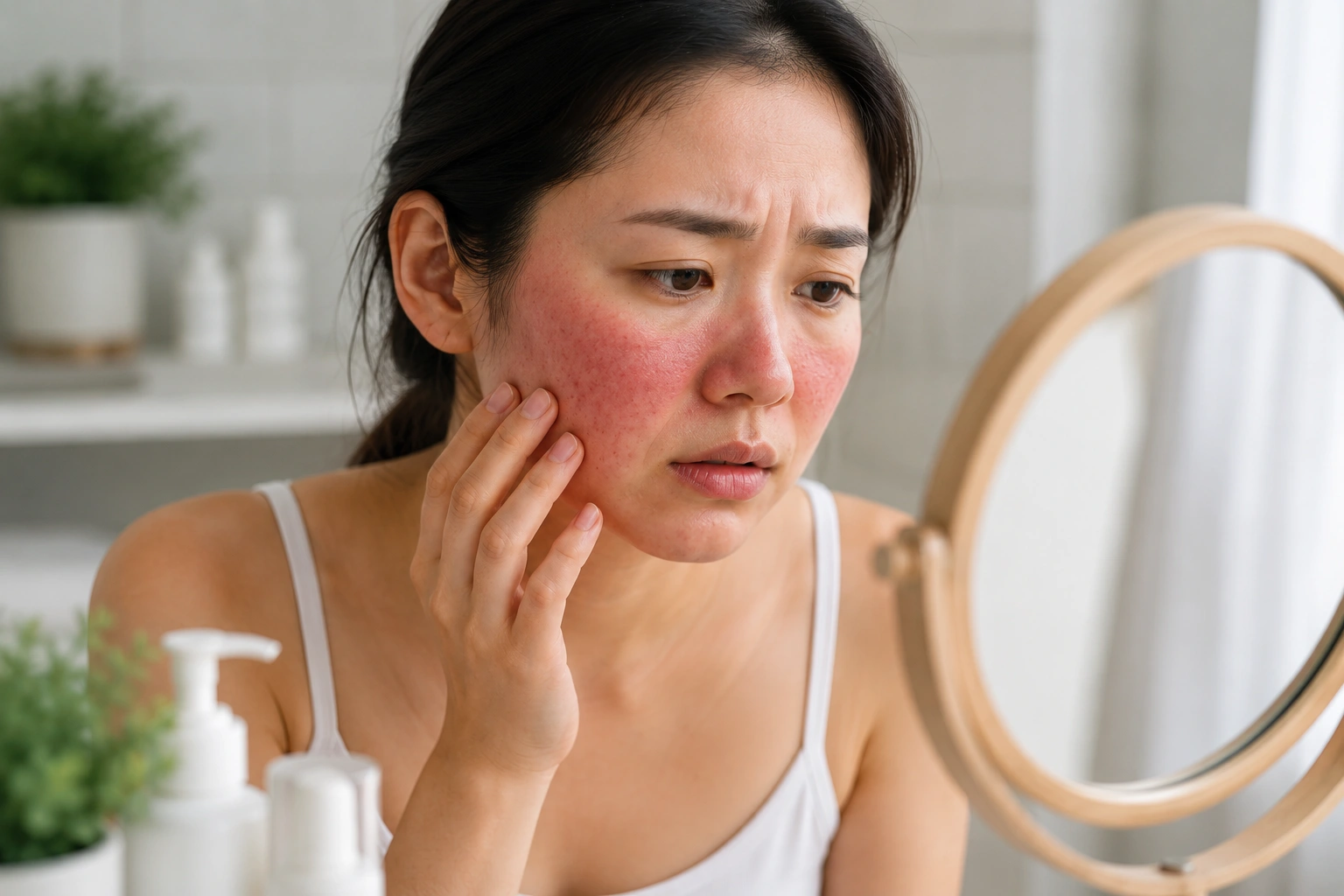
Blushing easily after spicy foods or noticing redness that never fully goes away might seem harmless at first.
But for many people with rosacea, the redness gradually becomes harder to ignore.
What starts as occasional flushing across the nose and cheeks can slowly turn into persistent redness, visible blood vessels, irritation, and recurring flare-ups that affect confidence and daily comfort.
Rosacea is a skin condition that primarily affects the face by causing inflammation. Early recognition of the signs and symptoms makes it much easier to keep symptoms under long-term control. Through licensed digital health platforms such as GoMed Singapore, patients can access professional guidance and tailored treatment plans from the comfort of their homes.
What Is Rosacea?
Rosacea is a common chronic skin condition characterised by facial inflammation, flushing, and persistent redness, usually centred around the cheeks, forehead, nose, and chin, and commonly affecting people aged 30 to 60 years. Rosacea is estimated to affect around 5% of adults worldwide.
Rosacea tends to fluctuate over time, with symptoms worsening during flare-ups and improving with treatment. Most people can achieve good symptom control through trigger avoidance, proper skincare, prescribed medications, and selected procedural treatments.
What Are the Common Signs and Symptoms of Rosacea?
Because rosacea is a progressive condition, its symptoms can evolve if left unmanaged. Primary signs and symptoms include:
- Flushing and Persistent Redness: An easily triggered flush response that eventually turns into a baseline persistent redness across the nose and cheeks.
- Visible Blood Vessels: Tiny, dilated capillaries become apparent right beneath the skin surface, commonly branching across the cheek area.
- Bumps or Pus-Filled Pimples: Small, solid red bumps or inflammatory pustules. Because these blemishes mimic acne, the condition is frequently misdiagnosed.
- Skin Irritation and Sensitivity: An intense burning, stinging, or itching sensation, indicating a compromised and highly fragile skin barrier.
- Dry, Rough Texture: Facial skin may become rough, flaky, or exceptionally dry, indicating a compromised and highly fragile skin barrier.
Recognising these clinical indicators early makes it much easier to initiate a proactive treatment plan to suppress inflammation, soothe irritation, and effectively prevent flare-ups from worsening over time.
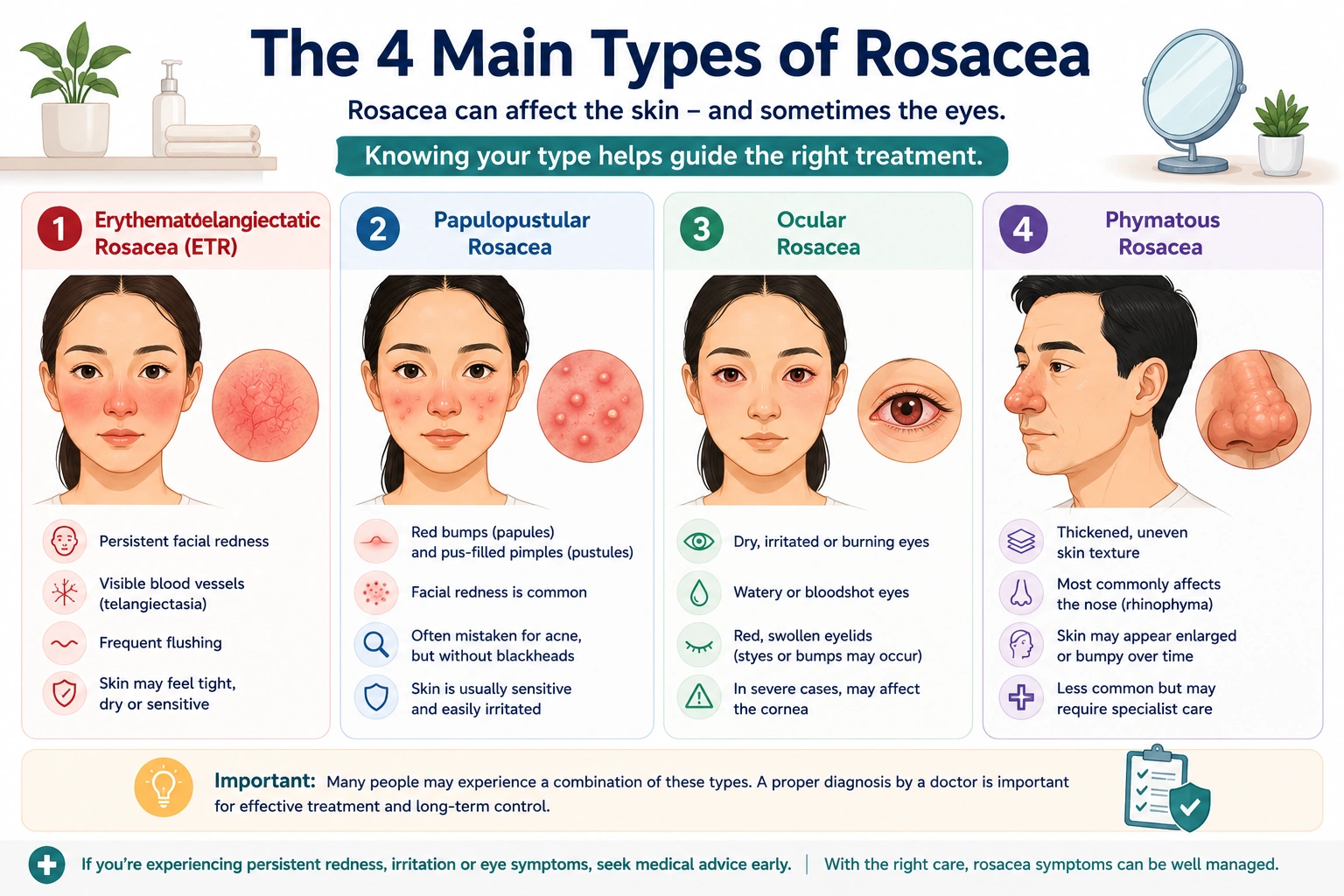
What Are the Main Types of Rosacea?
Medical professionals categorise this condition into specific classifications based on how symptoms manifest. Identifying the exact type of rosacea is essential, as treatment must be precisely aligned with the presenting characteristics.
Erythematotelangiectatic Rosacea
This specific type of rosacea is characterised primarily by vascular changes. It involves prolonged flushing, persistent redness, and clearly visible blood vessels of rosacea across the centre of the face. The skin often feels tight, dry, and highly sensitive to environmental shifts.
Papulopustular Rosacea
Papulopustular rosacea leads to distinct inflammatory changes, causing red bumps or pus-filled pimples alongside baseline facial redness. Because of these lesions, this subtype is frequently mistaken for standard adult acne. However, unlike regular acne, papulopustular rosacea does not present with blackheads and is accompanied by intense skin sensitivity.
Ocular Rosacea
Rosacea can affect more than just the skin surface; it frequently extends to the ocular region. Ocular rosacea affects the eyes and eyelids, often causing noticeable eye irritation, dryness, burning, and a watery or bloodshot appearance. In severe cases, untreated ocular symptoms can lead to corneal complications and require a formal medical review.
Phymatous Rosacea
Phymatous rosacea is a less common but advanced form of the condition that results in progressive skin thickening and an irregular, bumpy surface texture. This phymatous change most commonly targets the nose. Over time, advanced tissue hypertrophy can lead to rhinophyma, in which the skin around the nose becomes distinctly bulbous and structurally altered.
What Causes Rosacea Flare-Ups?
The definitive cause of rosacea is not fully understood. Still, clinical evidence suggests symptoms are driven by neurovascular dysregulation, abnormal blood vessels, and an increased presence of microscopic Demodex skin mites.
While the root cause remains complex, specific external factors are widely recognised as worsening rosacea by triggering rapid blood vessel dilation. Common rosacea triggers include:
- Environmental Exposure: UV radiation from sunlight, hot weather, extreme heat, and high humidity.
- Dietary Factors: Spicy foods, hot beverages, and alcoholic beverages.
- Emotional Triggers: High levels of psychological stress or anxiety.
- Topical Irritants: Harsh skincare products, chemical exfoliants, or cosmetic products that contain alcohol.
What Are the Possible Complications of Rosacea?
Although rosacea is not a life-threatening condition, it can lead to complications if left untreated or poorly controlled.
Thickened Skin (Phymatous Rosacea)
In some people, particularly men, longstanding rosacea can cause the skin to thicken and become enlarged gradually. This most commonly affects the nose, resulting in a condition known as rhinophyma, where the nose appears swollen, bulbous, and irregular in texture.
Eye Problems (Ocular Rosacea)
Rosacea can also affect the eyes, leading to ocular rosacea. Symptoms may include dry, irritated, red, or watery eyes, sensitivity to light, and inflammation of the eyelids. In more severe cases, inflammation may involve deeper structures of the eye, potentially affecting vision if not treated promptly.
Ongoing Physical Discomfort
Persistent facial redness, burning, stinging, flushing, and eye irritation can cause significant discomfort and interfere with daily activities.
Emotional and Psychological Impact
The visible nature of rosacea may affect a person’s self-confidence and emotional well-being. Some individuals experience embarrassment, anxiety, low self-esteem, or depression, while others may avoid social situations because of concerns about their appearance.
Lifestyle Limitations
Many people with rosacea learn to avoid triggers such as sunlight, spicy foods, alcohol, hot drinks, or vigorous exercise to reduce flare-ups. While these strategies can help control symptoms, they may also restrict daily activities and affect quality of life.
Which Rosacea Treatment Options Actually Help?
Because rosacea is a chronic condition, the goals of clinical therapy focus on long-term symptom control and reducing the frequency of inflammatory episodes rather than providing a complete cure for rosacea. A comprehensive treatment plan typically combines trigger avoidance, gentle skincare habits, and prescription medical interventions.
Topical Medications
For mild to moderate rosacea, your doctor may prescribe topical medications to reduce inflammation and improve redness and bumps. Common options include metronidazole, clindamycin, and erythromycin, which are applied directly to the affected areas of the skin. These treatments can help control active symptoms and may also reduce the likelihood of future flare-ups when used as directed.
If your main symptom is frequent flushing, your doctor may recommend medications that help reduce the widening of blood vessels and lessen episodes of facial redness. Some topical creams or gels (topical brimonidine, topical oxymetazoline) are suitable for occasional use. At the same time, certain oral medications (oral beta-blockers (carvedilol), oral clonidine, CGRP antagonists, ie., erenumab) may help control persistent flushing in selected patients.
Researchers are also studying newer treatment options, including medications that target nerve-related pathways and non-invasive nerve stimulation therapies, although these are not yet considered standard treatment.
Oral Antibiotics
For more extensive or persistent rosacea, oral antibiotics such as doxycycline or erythromycin may be recommended. In addition to their antibacterial effects, these medications have anti-inflammatory properties that help calm the skin. Treatment is typically continued for several weeks to months, depending on the individual’s response. Some patients with recurrent rosacea may require additional courses of treatment under medical supervision.
Oral Isotretinoin
In selected patients whose symptoms do not respond adequately to conventional treatments, a dermatologist may consider prescribing oral isotretinoin. This medication can be effective in controlling severe or treatment-resistant rosacea but requires careful monitoring due to potential side effects. These may include dry skin and lips, muscle or joint aches, changes in liver function or blood lipid levels, and, in rare cases, mood changes. Because isotretinoin can cause serious congenital disabilities, it must not be used during pregnancy, and women of childbearing potential must follow strict pregnancy prevention measures while receiving treatment.
Laser and Light-Based Treatments
Laser and light therapies can be helpful for treating persistent facial redness and visible blood vessels that do not respond well to medications. Treatments such as pulsed dye laser (PDL) and intense pulsed light (IPL) are commonly used to reduce redness and improve the appearance of superficial blood vessels. For patients who develop rhinophyma, a thickened, enlarged nose caused by longstanding rosacea, carbon dioxide (CO₂) laser treatment may be used to reshape the affected tissue and improve its appearance.
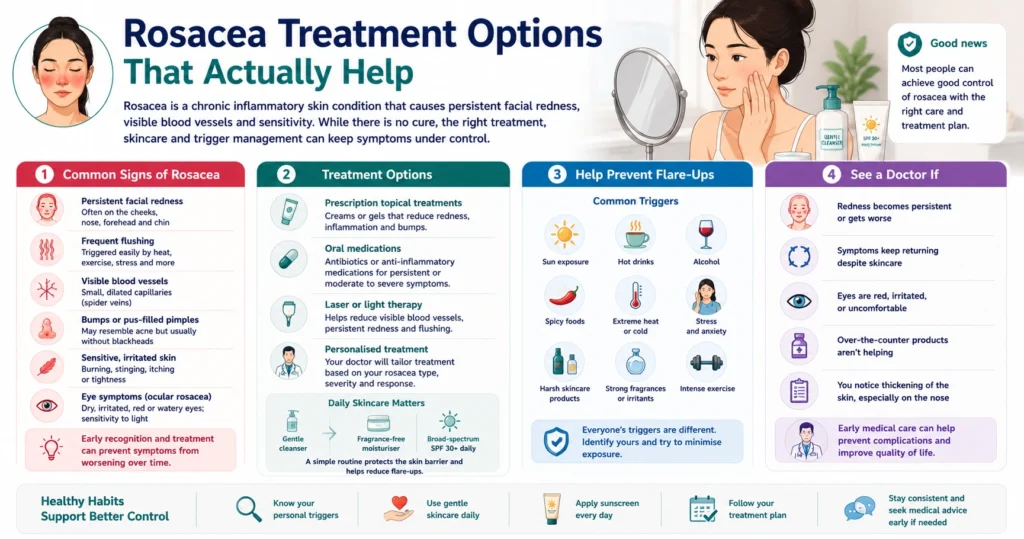
Lifestyle Changes Are an Important Part of Treatment
In addition to medical treatment, many people can reduce flare-ups by:
- Identifying and avoiding personal triggers
- Using gentle skincare products designed for sensitive skin
- Applying broad-spectrum sunscreen every day
- Avoiding excessive heat and prolonged sun exposure
- Limiting alcohol, spicy foods, or hot drinks if these trigger symptoms
- Following a consistent skincare routine recommended by your doctor
Through online teleconsultation platforms like GoMed Singapore, patients have direct access to these prescription regimens, which are carefully tailored to each patient’s skin tolerance, medical background, and specific lifestyle requirements, providing a convenient path to clinical management without the need to visit a physical clinic.
How Does a Daily Skincare Routine Support Rosacea Treatment?
Implementing a structured, gentle skincare routine is a fundamental component of clinical rosacea treatment. A proper daily regimen works alongside prescription medications to protect the face from environmental triggers.
Step 1: Gentle Cleansing
Patients should use a soap-free, non-abrasive cleanser twice daily. The product should be applied gently using only the fingertips to avoid physical irritation, rinsed with lukewarm water, and patted dry.
Step 2: Prescription Treatment Application
If a doctor has prescribed a topical cream or gel to control symptoms, apply it to clean, completely dry skin to reduce potential stinging or burning sensations.
Step 3: Barrier Repair and Sun Protection
A lightweight, fragrance-free moisturiser should be applied next to lock in hydration. Finally, because UV exposure is a major trigger of rosacea flare-ups, applying a broad-spectrum physical sunscreen (ie, zinc oxide/titanium oxide) with an SPF of 30 or higher every morning is essential to prevent them.
Avoid exfoliants and alcohol-based topical products. Avoid topical steroids, which may worsen the condition.
When Should an Individual Seek Professional Medical Advice?
Occasional, transient flushing from heat or exercise is normal. However, persistent redness, ongoing skin irritation, or recurring blemish flare-ups that do not improve with over-the-counter skincare products warrant a proper clinical assessment.
Living with rosacea can significantly impact an individual’s quality of life and confidence if left unmanaged. Seeking a professional medical evaluation allows a doctor to safely rule out other conditions, such as adult acne, contact dermatitis, or systemic lupus, and establish an accurate diagnosis.
Get expert rosacea care from home with GoMed Singapore. Consult licensed doctors online and enjoy fast, private doorstep delivery of your prescription treatment.
References
- Health Promotion Board Singapore. Rosacea: Symptoms and Treatment. HealthHub. Available at: https://www.healthhub.sg. Accessed June 2026.
- DermNet New Zealand. Rosacea. Available at: https://dermnetnz.org/topics/rosacea. Accessed June 2026.
- American Academy of Dermatology. Rosacea: Diagnosis and Treatment. Available at: https://www.aad.org/public/diseases/rosacea. Accessed June 2026.
- van Zuuren EJ. Rosacea. N Engl J Med. 2017;377(18):1754–1764.
- van Zuuren EJ, Fedorowicz Z, Carter B, et al. Interventions for rosacea. Cochrane Database of Systematic Reviews. 2015;(4):CD003262.