


Choosing the right contraception can feel confusing, especially when deciding between birth control pills vs patch options. Both methods are forms of hormonal contraception and can be highly effective when used correctly, but they differ in convenience, dosing schedules, side effects, and suitability for different lifestyles.
Some patients prefer the familiarity and flexibility of daily birth control pills, while others like the convenience of a weekly contraceptive patch. There is no single “best” option for everyone. The right choice often depends on factors such as medical history, menstrual symptoms, lifestyle, and how consistently a method can be used.
This article explains the differences between birth control pills and contraceptive patches, including their effectiveness, side effects, benefits, and what doctors assess before prescribing them.
How Hormonal Contraception Works
Both birth control pills and contraceptive patches work mainly by preventing ovulation. They also thicken cervical mucus to reduce sperm movement and alter the uterine lining to make pregnancy less likely.
Most commonly used pills and patches contain:
- oestrogen
- progestogen
Because both methods usually contain oestrogen, they share many similar precautions and contraindications. When used correctly, both are highly effective forms of contraception.
What are Birth Control Pills?
Birth control pills are oral hormonal medications taken daily. There are two main categories:
- Combined oral contraceptive pills (COCPs)
- Progestogen-only pills (POPs)
In Singapore, the most commonly prescribed pills are combined pills containing both oestrogen and progestogen. Different pill formulations may have slightly different hormone combinations, allowing doctors to tailor treatment according to the patient’s needs.
Advantages and Limitations of Birth Control Pills
Advantages
- Can regulate menstrual cycles
- May reduce cramps and heavy bleeding
- Some formulations may improve acne
- Familiar and widely used method
- Many formulations available for personalised treatment
Limitations
- Must be taken daily
- Missing pills reduces effectiveness
- Timing consistency is important
- Vomiting or diarrhoea may affect absorption
- Some patients dislike daily medication routines
Birth control pills are often popular because they provide flexibility and may help with symptoms such as acne, PMS, painful periods, and heavy bleeding. However, the biggest challenge is adherence. Patients who frequently forget medications may find daily pills difficult to maintain consistently.
What is The Contraceptive Patch?
The contraceptive patch is a small adhesive patch worn on the skin that continuously releases hormones into the body through the skin. It is commonly applied to areas such as the abdomen, upper arm, buttock, or upper body.
Unlike pills, the patch is changed weekly rather than taken daily. This makes it attractive for patients who prefer simpler routines or struggle to remember tablets every day.
Advantages and Limitations of The Contraceptive Patch
Advantages
- Weekly instead of daily dosing
- Convenient for patients who forget pills
- Less affected by vomiting or diarrhoea
- More stable hormone delivery
- Simplified routine
Limitations
- May cause skin irritation
- Patch may detach
- Some patients dislike visible patches
- Water exposure or sweating affect adherence
- Shares similar oestrogen-related risks as combined pills
Because hormones are absorbed through the skin, gastrointestinal absorption issues are avoided. However, some patients may experience redness, itching, or irritation where the patch is applied.
Who May Not be Suitable for Pills or Patches?
Because many birth control pills and contraceptive patches contain oestrogen, doctors carefully assess whether hormonal contraception is medically safe before prescribing.
Patients with the following conditions may not be suitable for combined hormonal contraception:
- migraine with aura,
- previous blood clots,
- stroke history,
- uncontrolled hypertension,
- smoking over age 35,
- severe cardiovascular disease,
- liver disease,
- or certain clotting disorders.
These patients may require progestogen-only contraception, non-hormonal methods, or further specialist review.
Are The Patch and Pill Equally Effective?
When used correctly, both birth control pills and contraceptive patches are highly effective. However, real-world effectiveness often depends on consistency of use.
The patch may reduce “missed dose” problems because it only requires weekly changes, while pills require daily adherence. That said, forgetting to replace a patch or improper application can still reduce effectiveness.
Birth Control Pills vs Patch Comparison
| Feature | Birth Control Pills | Contraceptive Patch |
|---|---|---|
| Frequency | Daily | Weekly |
| Hormone Delivery | Oral | Through skin |
| Affected by Vomiting or Diarrhoea | Yes | Less affected |
| Convenience | Requires daily routine | Simpler weekly routine |
| Acne Flexibility | More formulation options | Less customisation |
| Common Issue | Missed pills | Patch detachment / skin irritation |
Which Option is Better for Acne?
Some combined birth control pills may help improve acne depending on the hormonal formulation used. Certain progestogens are more acne-friendly than others, which allows doctors to individualise treatment for patients with hormonal acne concerns.
The patch may also improve acne in some individuals, but birth control pills generally offer more flexibility for acne-focused management. Doctors may also consider factors such as water retention, menstrual symptoms, and hormone sensitivity when selecting contraception.
Which Option is Better for Heavy or Painful Periods?
Both pills and patches may help reduce heavy menstrual bleeding, regulate cycles, and improve menstrual cramps.
Some patients respond better to specific pill formulations, while others prefer the convenience of a weekly patch. There is no universal “best” method, and the most suitable option often depends on symptom patterns, lifestyle, and personal preference.
Side Effects: Pills vs Patch
Possible side effects for both methods include:
- nausea,
- breast tenderness,
- spotting,
- bloating,
- headaches,
- mood changes,
- or mild hormonal symptoms.
The contraceptive patch may additionally cause:
- skin irritation,
- redness,
- or adhesive reactions.
Many side effects improve within the first few months as the body adjusts to hormonal changes.
What Doctors Assess Before Prescribing
Before prescribing hormonal contraception, doctors usually assess:
- smoking history,
- migraine history,
- blood pressure history,
- clotting risk,
- menstrual history,
- current medications,
- pregnancy risk,
- and contraception goals.
Doctors also consider lifestyle factors, adherence reliability, and whether telemedicine is appropriate for the patient.
Can Pills or Patches be Prescribed via Teleconsultation in Singapore?
Potentially yes, but only when the patient is suitable for telemedicine, appropriate screening is completed, and contraindications are properly assessed.
Patients with migraine with aura, previous blood clots, uncontrolled hypertension, severe symptoms, or uncertain medical history may still require an in-person review. Telemedicine providers in Singapore remain subject to HCSA regulations, MOH professional standards, and safe prescribing obligations.
At GoMed, our family physicians can assess your suitability for birth control pills or contraceptive patches through an online consultation where appropriate. We review your medical history, lifestyle, contraindications, and contraceptive goals before advising whether telemedicine prescribing is suitable for you.
Which Method is Right for You?
The best contraceptive method depends on more than just convenience. Doctors consider:
- medical safety,
- menstrual symptoms,
- acne concerns,
- lifestyle,
- adherence reliability,
- and personal preference.
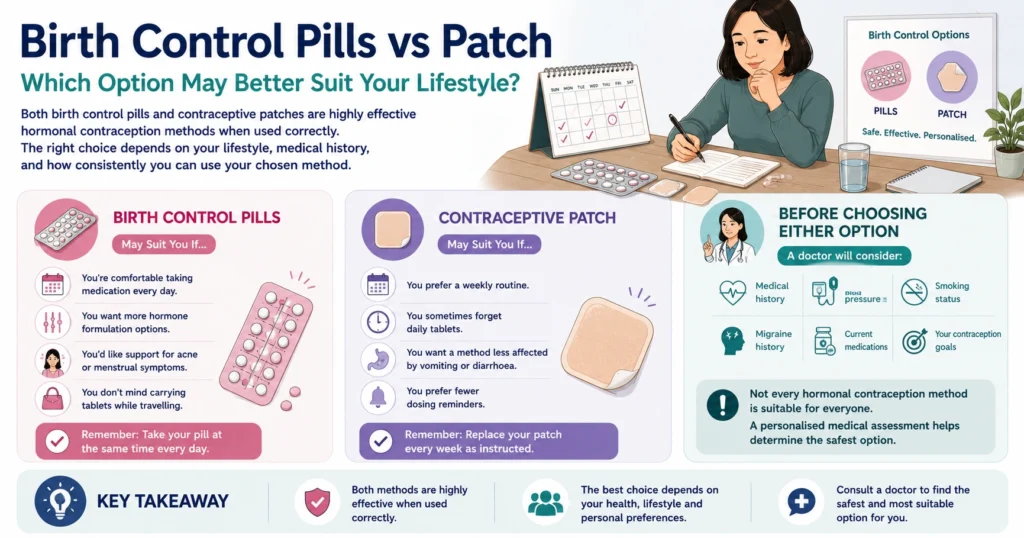
Birth control pills may suit patients who are comfortable with daily routines or want greater flexibility in hormonal formulations. The contraceptive patch may suit patients who prefer weekly dosing or struggle to remember daily tablets.
The safest approach is always individualised medical assessment and counselling before starting hormonal contraception.
The Bottom Line
Both birth control pills and contraceptive patches are effective hormonal contraception options, but they differ in convenience, hormone delivery, side effects, and lifestyle suitability.
There is no single “best” contraceptive method for everyone. The right choice depends on your medical history, menstrual symptoms, adherence patterns, and personal preferences.
A proper doctor-led consultation helps determine:
- which option is medically appropriate,
- which fits your lifestyle,
- and whether telemedicine prescribing is suitable for you.
The goal is not simply choosing contraception quickly, but selecting a method that is safe, effective, and sustainable for your long-term health needs.
Frequently Asked Questions
Is the patch better than the pill?
Not necessarily. The contraceptive patch may be more convenient for patients who struggle with daily pills, while birth control pills offer more flexibility in hormonal formulations. The “better” option depends on medical suitability, lifestyle, and personal preference.
Can I switch from pill to patch?
Potentially yes. Some patients switch because they prefer weekly dosing or experience difficulty remembering daily pills. However, the timing of the switch should be guided by a doctor to maintain contraceptive effectiveness.
Do I need a prescription?
References
- WHO Medical Eligibility Criteria for Contraceptive Use.
- Faculty of Sexual & Reproductive Healthcare (FSRH). Combined Hormonal Contraception Guidelines.
- CDC U.S. Medical Eligibility Criteria for Contraceptive Use.