

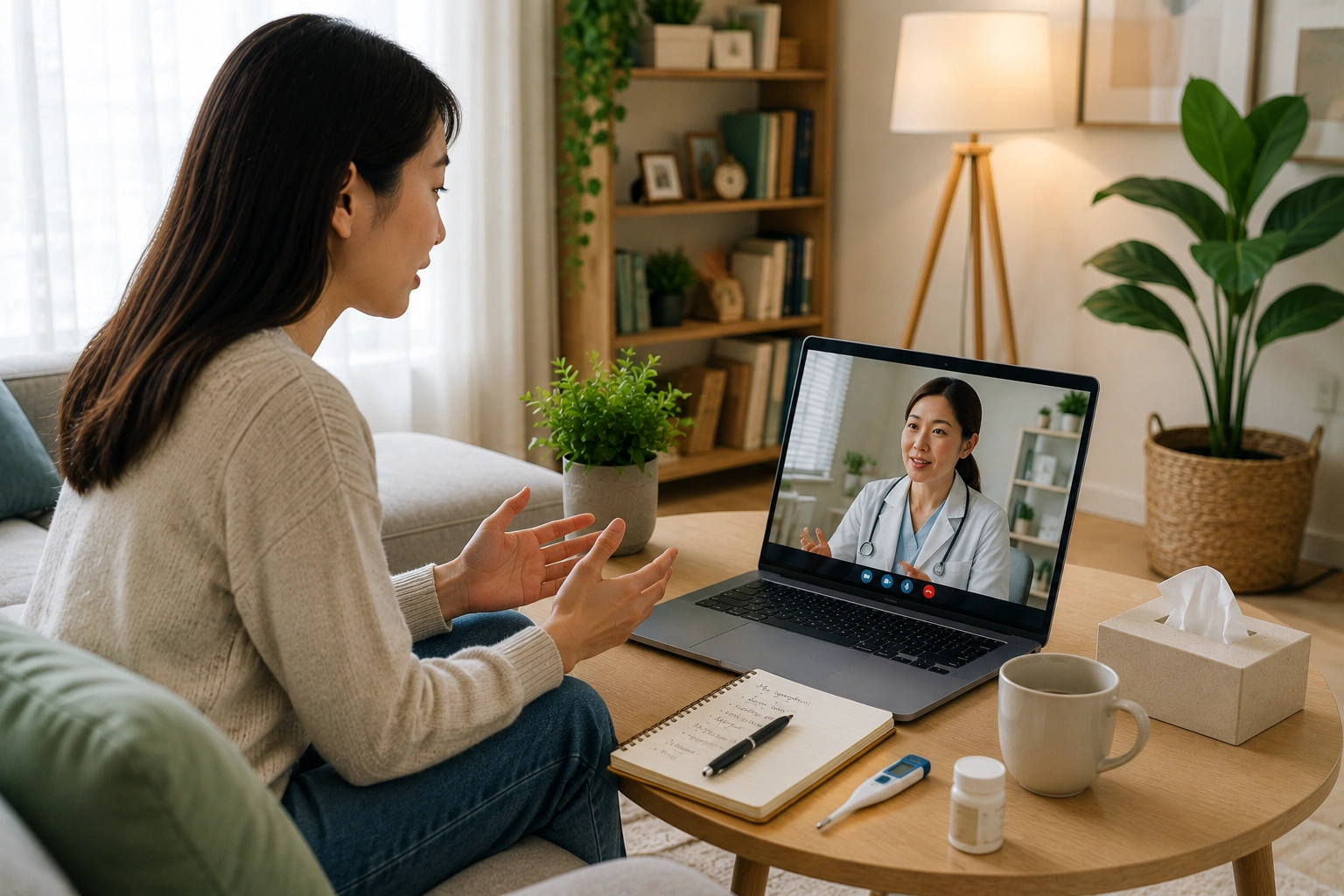
Teleconsultation has become an increasingly common way for patients in Singapore to access healthcare services. Whether seeking treatment for a minor illness, managing an ongoing health condition, or obtaining a prescription remotely, telemedicine services offer a convenient alternative to visiting a clinic.
While teleconsultation is suitable for many situations, it is not appropriate for every medical condition. Knowing when to use telemedicine and when an in-person visit is necessary helps ensure patients receive the right care at the right time.
Key Takeaway
- Teleconsultation is suitable for many non-urgent medical concerns that can be assessed remotely.
- It offers convenient access to medical advice and follow-up care without visiting a clinic.
- Some conditions still require in-person care, physical examinations or further tests.
- Urgent or life-threatening symptoms require immediate medical attention, not routine teleconsultation.
What Is Teleconsultation?
Modern teleconsultation allows patients and healthcare professionals to communicate remotely using technologies such as video calls, telephone calls or secure digital platforms. The appropriate communication method depends on the patient’s condition and the clinical information required.
Patients can receive medical advice, obtain prescriptions where appropriate, and access follow-up care without visiting a physical clinic. Teleconsultation is most suitable for selected non-urgent conditions and does not replace in-person medical care in every situation.
What Are the Benefits of Teleconsultation?
Teleconsultation makes healthcare more accessible by reducing travel and waiting times. It can also make it easier for patients to access follow-up care and routine medical advice without disrupting their daily schedules.
Other benefits include:
- Convenient access to healthcare services
- Improved continuity of care through follow-up consultations
- Prescription and medication delivery services
- Reduced disruption to work and daily commitments
- Greater convenience and discretion for some sensitive health concerns
When Should You Use Teleconsultation?
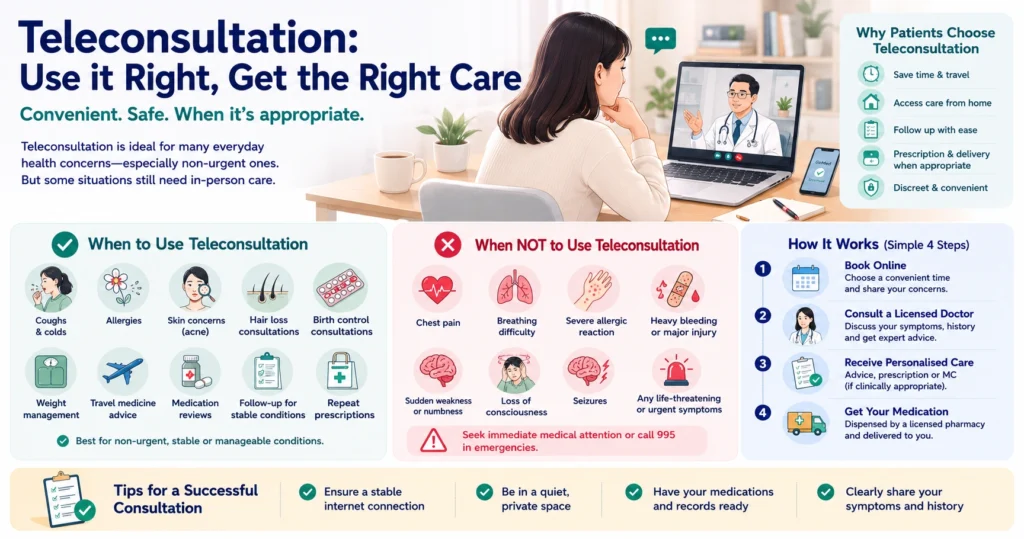
Teleconsultation is generally suitable for non-urgent medical conditions that can be safely assessed without a physical examination or emergency intervention.
Depending on the patient’s symptoms, medical history and need for physical examination or testing, teleconsultation may be suitable for concerns such as:
- Mild respiratory infection symptoms (such as cough, sore throat, runny nose)
- Coughs and colds
- Allergies
- Acne and other skin concerns
- Hair loss consultations
- Birth control consultations
- Erectile dysfunction assessments
- Weight management & follow-up care
- Travel medicine consultations
- Medication reviews
- Follow-up for selected stable chronic health conditions
Depending on the condition, patients may be asked to upload photographs through an approved secure channel to support the assessment. Images can support the assessment but cannot always replace an in-person examination.
Teleconsultation can also be used for repeat prescriptions, discussing test results, and follow-up consultations after an earlier medical review. If the doctor determines that an in-person examination or further investigations are required, they will recommend the appropriate next steps.
Need a Teleconsultation?
Consult a Singapore-licensed doctor online from the comfort of your home. Book your online consultation with GoMed today to receive medical care when and where you need it.
How Does a Teleconsultation Work?
Getting started with a teleconsultation is simple. If your condition is suitable for online care, you can complete the consultation from the comfort of your home in just a few steps.
1. Book Your Online Consultation
Choose a convenient appointment time and provide basic information about your symptoms or reason for seeking medical advice.
2. Consult A Doctor Registered With The Singapore Medical Council
During your teleconsultation, your doctor will discuss your symptoms, medical history, and any relevant concerns to assess your condition. If your condition cannot be safely managed online, you will be advised to attend an in-person consultation or seek further medical care where appropriate.
3. Receive Personalised Care
Following the consultation, your doctor will provide personalised medical advice. A prescription or medical certificate is not guaranteed and will only be issued when the doctor considers it clinically appropriate following an adequate assessment.
4. Receive Your Medication
If medication is prescribed, it may be dispensed by a licensed Singapore pharmacy and delivered to the patient, subject to the medication’s legal, clinical and storage requirements.
What Are the Limitations of Teleconsultation?
While teleconsultation is suitable for many non-urgent conditions, it may also be unsuitable when the doctor needs to examine the abdomen, ears, eyes, throat, heart, lungs, nervous system or an injury in person, or when reliable measurements such as blood pressure, oxygen saturation or temperature are unavailable.
Some medical concerns may require additional investigations before a diagnosis can be made. These may include:
- Blood tests
- Imaging scans
- Laboratory screening
- Diagnostic procedures
If your condition cannot be safely assessed online, the doctor will recommend the appropriate next steps, which may include an in-person consultation or referral to a suitable healthcare facility.
When Should You Not Use Teleconsultation?
Teleconsultation is not suitable for urgent or life-threatening medical situations that require immediate medical attention.
If you experience any of the following symptoms, seek emergency medical care immediately:
- Chest pain
- Difficulty breathing or severe breathlessness
- Severe allergic reaction, facial or tongue swelling
- Sudden weakness or numbness on one side of the body
- Sudden confusion or difficulty speaking
- Loss of consciousness
- Seizures
- Severe or uncontrolled bleeding
- Severe abdominal pain
- Major injury or suspected fracture
- Coughing or vomiting blood
- Suicidal thoughts, immediate risk of self-harm or acute psychiatric crisis
- Severe symptoms during pregnancy, such as heavy bleeding or severe abdominal pain
This list is not exhaustive. Patients with severe, rapidly worsening or potentially life-threatening symptoms should not wait for a routine teleconsultation. Seek urgent in-person care or call 995 where appropriate.
How Can You Prepare for a Successful Teleconsultation?
A little preparation can help ensure a smooth and productive consultation.
Before your appointment:
- Ensure you have a reliable internet connection
- Prepare a list of symptoms and concerns
- Have details of current medications available
- Keep any relevant medical records nearby
- Be ready to discuss your medical history
Patients should also choose a quiet and private environment where they can speak openly with the doctor.
Providing accurate information during the discussion allows the doctor to make a more informed assessment and recommend appropriate next steps.
How Do You Know If a Telemedicine Provider Is Trustworthy?
Teleconsultation services in Singapore are regulated under the Healthcare Services Act 2020. Providers offering outpatient medical care remotely must hold the relevant Ministry of Health licence, while doctors must be registered with the Singapore Medical Council and hold a valid practising certificate. When choosing a provider, ensure consultations are conducted by licensed doctors using secure telemedicine platforms that safeguard personal health information. Patients may verify whether a healthcare provider is licensed through the HealthHub Healthcare Services Directory.
It is also important to understand that a teleconsultation does not automatically guarantee a prescription or medical certificate (MC). Doctors must first evaluate each patient to determine whether online treatment is clinically appropriate or if an in-person review is necessary.
Reliable platforms will also partner with licensed local pharmacies for secure medication delivery and maintain clear protocols for transitioning patients to in-person care when needed.
The Future of Teleconsultation in Singapore
Teleconsultation has become an established component of healthcare delivery in Singapore and continues to complement traditional in-person medical care.
Whether you need advice for a mild illness, a medication review, or routine follow-up care, GoMed connects you with licensed Singapore doctors from the comfort of your home, offering personalised care and discreet medication delivery when appropriate.
References
- Ministry of Health, Singapore. National Telemedicine Guidelines. Singapore: Ministry of Health; 2015. Available from the MOH Health Professionals Portal.
- Ministry of Health, Singapore. Healthcare Services Regulation and Licensing. Singapore: Ministry of Health. Updated 4 May 2026.
- Ministry of Health, Singapore. Phase 2 of Healthcare Services Act to Start on 26 June 2023. Published 18 May 2023.
- WHO guideline: Recommendations on Digital Interventions for Health System Strengthening. Geneva: WHO; 2019.
- Ministry of Health, Singapore. Services and Diagnoses That Can Be Made Through Telemedicine. Published 7 October 2019.
- Singapore Medical Council. Ethical Code and Ethical Guidelines and Handbook on Medical Ethics. Singapore: Singapore Medical Council; 2016.
- Singapore Medical Council. Register of Medical Practitioners. Singapore: Singapore Medical Council.
- Ministry of Health, Singapore. Using Telemedicine the Safe Way. HealthHub Singapore.
- Health Sciences Authority, Singapore. Supply of Registered Therapeutic Products Through E-pharmacy. Singapore: Health Sciences Authority.
- Ministry of Health, Singapore. Voluntary Listing of Direct Telemedicine Service Providers to Help Patients Make Informed Choices. Published 26 February 2021.
- Ministry of Health, Singapore. Inappropriate Telemedicine Practices. Published 7 January 2025.