

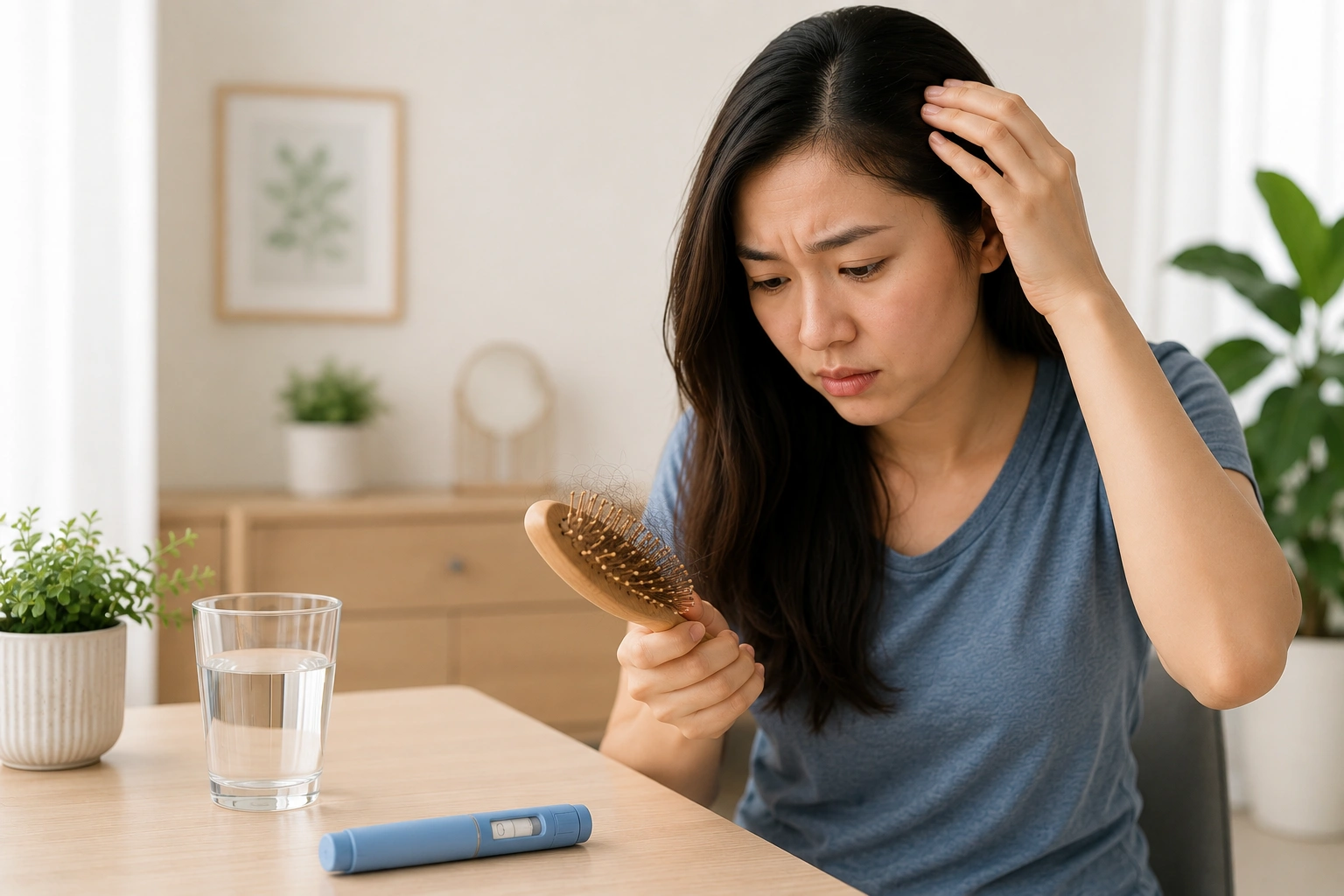
Hair loss has become one of the most talked-about concerns surrounding GLP-1 weight loss medications. Many people are excited to see the numbers on the scale go down, only to become worried when they notice more hair falling out in the shower, on their pillow, or while brushing their hair.
If this has happened to you, you’re not alone.
Hair shedding has been reported in people taking GLP-1 medications, particularly those used for obesity treatment. As more people achieve substantial weight loss with these medications, doctors are increasingly seeing questions such as:
- “Does GLP-1 cause hair loss?”
- “Is Mounjaro making my hair fall out?”
- “Will my hair grow back?”
- “Should I stop my medication?”
The good news is that current evidence suggests GLP-1 medications do not directly damage hair follicles.
Instead, the hair shedding appears to be a temporary response to rapid weight loss and the body’s adaptation to significant metabolic changes. In most cases, the condition is known as telogen effluvium (TE)—a common and reversible type of hair shedding that can occur after many forms of physical stress.
Understanding why this happens can be reassuring. For most people, the shedding is temporary, and hair gradually regrows once the body adjusts and weight stabilises.
In this article, we’ll explain what the latest research shows, why hair shedding occurs, who is most at risk, and what you can do if you notice increased hair loss during your weight loss journey.
At a Glance
| Question | Answer |
|---|---|
| Can GLP-1 medications cause hair shedding? | Hair shedding has been reported with GLP-1 medications, particularly at obesity treatment doses. Current evidence suggests rapid weight loss—not the medication itself—is the main trigger. |
| What type of hair loss occurs? | Most cases are telogen effluvium (TE), a temporary form of diffuse hair shedding. |
| Is the hair loss permanent? | Usually not. Most people experience gradual regrowth once their weight and nutritional status stabilise. |
| Who is more likely to experience it? | People with rapid weight loss, inadequate protein intake, iron deficiency, or underlying pattern hair loss may have a higher risk. |
| Should I stop my GLP-1 medication? | Usually no. Most cases improve without stopping treatment. Speak with your doctor before making any changes. |
Does GLP-1 Cause Hair Loss?
The short answer is yes—but probably not in the way many people think.
Hair shedding has been reported in people taking GLP-1 receptor agonists such as semaglutide and tirzepatide. Clinical trials and post-marketing reports have identified hair loss as a possible side effect, particularly in people receiving higher doses for obesity treatment rather than lower doses used for diabetes.
However, this does not necessarily mean the medication itself is damaging your hair.
Current research suggests that the strongest predictor of hair shedding is how much weight you lose, and how quickly you lose it, rather than the GLP-1 medication itself.
This distinction is important.
Rapid weight loss—regardless of how it is achieved—has long been recognised as a trigger for temporary hair shedding. The same phenomenon has been observed after severe illness, COVID-19 infection, childbirth, crash dieting, bariatric surgery, and major surgery.
In other words, hair shedding during GLP-1 treatment appears to follow the same biological process that has been recognised for decades after other forms of physiological stress.
This helps explain why people who lose more weight tend to report hair shedding more often. In clinical studies, medications associated with greater average weight loss also tend to have higher reported rates of hair shedding—not because they are necessarily more harmful to hair follicles, but because they produce a larger metabolic change.
A recent systematic review published in 2025 analysed 24 studies, including clinical trials, observational studies and pharmacovigilance databases. The authors concluded that:
- Hair shedding has been reported most commonly with semaglutide and tirzepatide.
- Most reported cases are consistent with telogen effluvium, rather than permanent hair loss.
- Women appear to report hair shedding more frequently than men.
- Hair shedding is reported more often at obesity-treatment doses than diabetes doses.
- The available evidence supports rapid weight loss—not direct drug toxicity—as the most likely explanation.
This is reassuring because telogen effluvium is generally a temporary condition. Unlike scarring forms of hair loss, the hair follicles remain healthy and are still capable of producing new hair once the body has recovered from the initial stress.
Another interesting observation is that some people with poorly controlled diabetes have reported improvements in hair quality after starting GLP-1 therapy. Better blood sugar control can improve overall metabolic health, suggesting that the relationship between GLP-1 medications and hair is more complex than simply “the medication causes hair loss.”
Overall, the latest evidence suggests that GLP-1 medications are unlikely to directly damage hair follicles. Instead, the temporary hair shedding seen in some people is more likely to reflect the body’s response to rapid weight loss and the significant physiological changes that accompany it.
What Is Telogen Effluvium?
The medical term telogen effluvium (TE) may sound unfamiliar, but it is actually one of the most common causes of temporary hair shedding seen by doctors and dermatologists.
Understanding telogen effluvium can be reassuring because it explains why hair shedding occurs during periods of physical stress—and why it usually improves over time.
Hair does not grow continuously. Instead, every hair follicle goes through a natural growth cycle consisting of three phases:
- Anagen (growth phase): The hair is actively growing. This phase lasts between two and seven years, and around 85–90% of your scalp hairs are in this phase at any given time.
- Catagen (transition phase): A short transitional stage lasting around two to three weeks.
- Telogen (resting phase): The hair stops growing and rests before naturally shedding. Around 10–15% of scalp hairs are normally in this phase.
Under normal circumstances, only a small proportion of hairs are shed each day because different follicles are at different stages of the growth cycle.
However, when the body experiences a significant physiological stress, a much larger number of hair follicles enter the resting (telogen) phase at the same time.
Approximately two to four months later, these resting hairs begin to shed together. This delayed shedding is what doctors call telogen effluvium.
Importantly, the hair follicles themselves are not permanently damaged. They remain alive and capable of producing new hair. Once the triggering event resolves and the body recovers, the follicles gradually return to the normal growth cycle, allowing new hair to grow.
Telogen effluvium has been recognised for many years and can occur after many different events, including:
- Childbirth
- Major surgery
- Severe illness
- COVID-19 infection
- High fever
- Crash dieting
- Bariatric surgery
- Significant emotional or physical stress
- Rapid weight loss, including weight loss associated with GLP-1 treatment
Because the mechanism is the same regardless of the trigger, many experts believe that the hair shedding observed during GLP-1 treatment is simply another example of telogen effluvium rather than a new medication-induced hair disorder.
For most people, this is reassuring. The condition is usually self-limiting, meaning the excessive shedding gradually slows and hair regrowth occurs as the body adapts and weight stabilises.
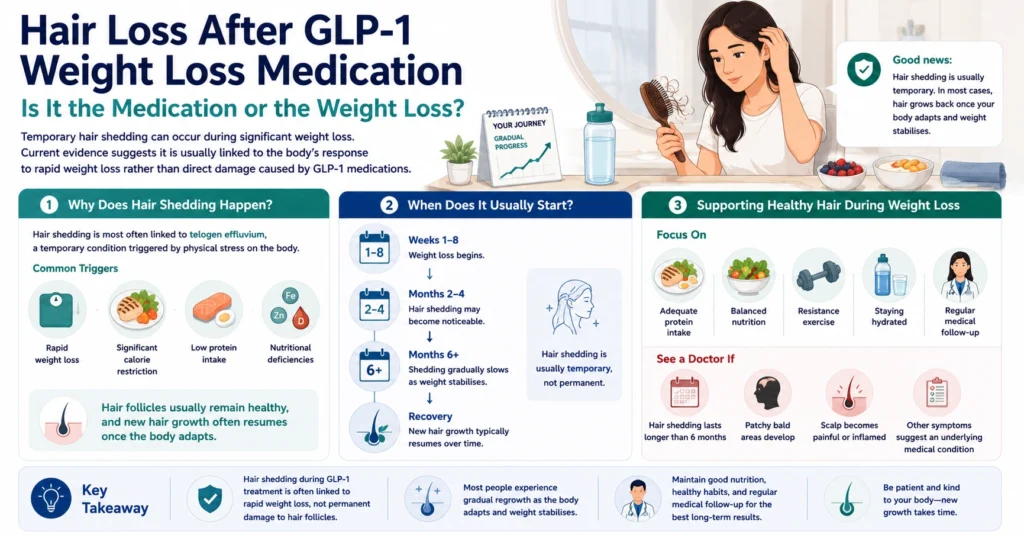
When Does Hair Shedding Usually Start?
One of the most common questions patients ask is:
“I started my GLP-1 medication a few weeks ago. Why am I only noticing hair loss now?”
The answer lies in the natural hair growth cycle.
Unlike medication side effects such as nausea, hair shedding does not occur immediately after starting treatment. Instead, it usually develops two to four months after the trigger, because hair follicles need time to progress through their normal growth cycle before shedding occurs.
A typical timeline looks like this:
| Timeline | What Typically Happens |
|---|---|
| Month 0 | Start GLP-1 medication. |
| Months 1–3 | Appetite decreases and weight loss begins. |
| Months 2–4 | Many hair follicles enter the resting (telogen) phase due to the physiological stress of rapid weight loss. |
| Months 3–5 | Hair shedding becomes more noticeable. |
| Months 6–9 | Shedding gradually slows as the body adapts. |
| Months 9–15 | New hair growth becomes increasingly visible. |
This timeline is typical of telogen effluvium and helps explain why hair shedding often appears several months after starting treatment.
The encouraging news is that the hair follicles remain healthy. Once the trigger settles and the body adapts, new hairs gradually begin growing again.
Who Is More Likely to Experience Hair Shedding?
Not everyone taking GLP-1 medication develops telogen effluvium.
Current evidence suggests that certain individuals may be more susceptible.
Rapid weight loss
The faster the weight loss, the greater the physiological stress placed on the body. Studies consistently suggest that the speed and magnitude of weight loss are among the strongest predictors of hair shedding.
Significant calorie restriction
Many people naturally eat much less after starting GLP-1 medication because of reduced appetite.
While this helps with weight loss, an excessively low calorie intake may reduce the nutrients needed to support healthy hair growth.
Inadequate protein intake
Hair is made primarily of keratin, a structural protein.
If protein intake becomes too low, the body prioritises essential organs over hair growth, making temporary shedding more likely.
Iron deficiency
Iron deficiency is one of the most common nutritional causes of diffuse hair loss, particularly in women.
Low iron stores may worsen telogen effluvium or delay hair regrowth.
Other nutritional deficiencies
Low levels of zinc, vitamin D, vitamin B12 and folate may also contribute to hair shedding in susceptible individuals.
Although not everyone requires supplements, correcting documented deficiencies is an important part of managing hair loss.
Female sex
Current studies suggest women report GLP-1-associated hair shedding more frequently than men.
This may partly reflect higher rates of iron deficiency and a greater tendency to seek medical advice for hair loss.
Pre-existing pattern hair loss
One important point is that telogen effluvium can unmask androgenetic alopecia (pattern hair loss).
In these individuals, the temporary shedding caused by telogen effluvium improves over time, but some thinning may persist because underlying pattern hair loss was already present before treatment.
Can Hair Shedding Be Prevented?
There is currently no guaranteed way to prevent telogen effluvium.
However, several strategies may reduce the risk and support healthy hair growth during weight loss.
Aim for sustainable weight loss.
Although GLP-1 medications can produce impressive results, extremely rapid weight loss is more likely to trigger telogen effluvium.
Your doctor can help adjust your treatment plan if weight loss is occurring faster than expected.
Eat enough protein
Reduced appetite should not mean inadequate nutrition.
Aim to include a source of high-quality protein with each meal, such as lean meat, fish, eggs, dairy products, soy products or legumes.
Adequate protein intake supports both muscle preservation and healthy hair growth.
Maintain a balanced diet.
Try to consume a variety of nutrient-rich foods, including fruits, vegetables, whole grains and healthy fats.
A balanced diet helps provide the vitamins and minerals needed for normal hair growth.
Correct nutritional deficiencies and underlying hormonal issues
If hair shedding is significant, your doctor may recommend blood tests to check for conditions such as:
- Iron deficiency
- Vitamin B12 deficiency
- Folate deficiency
- Vitamin D deficiency
- Thyroid disorders
Treating an underlying disorder may improve recovery.
Continue resistance exercise
Resistance training helps preserve lean muscle mass during weight loss and supports overall metabolic health.
While it has not been proven to prevent telogen effluvium, it forms an important part of healthy weight management.
When Should You See a Doctor?
Temporary hair shedding is common and often improves without treatment.
However, you should seek medical assessment if:
- Hair shedding continues for more than six months
- You develop patchy bald areas rather than diffuse shedding
- Your scalp becomes painful, itchy or inflamed
- Hair loss is accompanied by fatigue, dizziness or symptoms of iron deficiency
- You have symptoms suggestive of thyroid disease, such as heat or cold intolerance, unexplained fatigue or changes in heart rate
- You are unsure whether your hair loss is related to GLP-1 medication or another condition
Your doctor may recommend further assessment, including blood tests or referral to a dermatologist if another cause of hair loss is suspected.
Should You Stop Your GLP-1 Medication?
For most people, the answer is no.
If your hair shedding is consistent with uncomplicated telogen effluvium, it is usually temporary and improves as your weight and nutritional status stabilise.
Stopping your GLP-1 medication is generally not recommended solely because of temporary hair shedding, unless there are other compelling medical reasons.
Instead, management should focus on:
- Optimising nutrition
- Ensuring adequate protein intake
- Correcting any vitamin or mineral deficiencies
- Reviewing the rate of weight loss if necessary
- Excluding other causes of hair loss
Remember that GLP-1 medications provide important health benefits beyond weight loss, including improved blood sugar control, reduced cardiovascular risk and better long-term metabolic health.
Before making any changes to your treatment, discuss your concerns with your doctor. They can help determine whether your hair shedding is consistent with telogen effluvium or whether further investigation is needed.
Bottom Line
Hair shedding can be worrying, especially when you have worked hard to improve your health and lose weight.
Fortunately, the latest evidence suggests that GLP-1 medications are unlikely to directly damage hair follicles. Instead, the hair shedding reported during treatment is most commonly telogen effluvium, a temporary condition triggered by the physiological stress of rapid weight loss.
For most people, shedding begins two to four months after weight loss starts, gradually slows over time, and is followed by new hair growth as the body adapts.
Maintaining adequate protein intake, following a balanced diet, correcting nutritional deficiencies and aiming for sustainable weight loss may help reduce the risk of hair shedding.
If your hair loss is severe, persists beyond six months, or is associated with other concerning symptoms, seek medical advice to identify any underlying causes and discuss the most appropriate management.
Frequently Asked Questions
Does Mounjaro cause hair loss?
Does Wegovy cause hair loss?
Is GLP-1 hair loss permanent?
In most cases, no.
The majority of people experience telogen effluvium, which is a temporary condition. Hair usually begins to regrow once the body adapts and weight stabilises.
Will my hair grow back?
For most people, yes.
Because the hair follicles remain healthy, new hair growth usually occurs over several months once the underlying trigger has resolved.
Should I stop my GLP-1 medication because of hair loss?
Does losing weight itself cause hair loss?
References
- Alsuwailem OA, Alanazi R, Almutairi HM, et al. Hair Loss Associated With Glucagon-Like Peptide-1 (GLP-1) Receptor Agonist Use: A Systematic Review. Cureus. 2025;17:e92454.
- Wilding JPH, Batterham RL, Calanna S, et al. Once-Weekly Semaglutide in Adults with Overweight or Obesity. N Engl J Med. 2021;384(11):989–1002.
- Jastreboff AM, Aronne LJ, Ahmad NN, et al. Tirzepatide Once Weekly for the Treatment of Obesity. N Engl J Med. 2022;387(3):205–216.
- Malkud S. Telogen Effluvium: A Review. J Clin Diagn Res. 2015;9(9):WE01–WE03.
- Almohanna HM, Ahmed AA, Tsatalis JP, Tosti A. The Role of Vitamins and Minerals in Hair Loss: A Review. Dermatol Ther (Heidelb). 2019;9(1):51–70.
- Harrison S, Sinclair R. Telogen Effluvium. Clin Exp Dermatol. 2002;27(5):389–395.
- Messenger AG, Sinclair RD. Follicular Disorders. In: Rook’s Textbook of Dermatology. 9th ed. Wiley-Blackwell; 2016.