


Starting Mounjaro (tirzepatide) or another GLP-1 weight loss medication can change your appetite and how much food you naturally want to eat, which may make it easier to lose weight. But eating less does not automatically mean eating well.
These GLP-1 treatments can reduce appetite and food intake, and they can also slow gastric emptying, particularly during treatment initiation and dose escalation.
Some people may experience side effects like nausea, constipation, bloating, indigestion, or vomiting. Knowing what to eat and avoid can help you follow a balanced diet while taking these treatments, meet your nutritional needs, and make treatment easier to manage
Key Takeaway
- GLP-1 therapy helps you eat less; good nutrition helps you stay well.
- Choose a personalised eating pattern rather than following a restrictive diet.
- Use Quarter–Quarter–Half as a practical guide for building balanced meals.
- Include protein at each meal and increase fibre gradually.
- Stay appropriately hydrated, especially if appetite or food intake has decreased.
- Seek early medical help if food or fluid intake becomes inadequate.
Why Does a Healthy Diet Matter for People Taking Weight Loss Medication?
A healthy diet helps provide the nutrients your body needs while supporting weight management during treatment.
Medications like Mounjaro contain tirzepatide, which acts on GLP-1 and GIP receptors to influence appetite and regulate blood sugar levels, food intake, and digestion. GLP-1 refers to glucagon-like peptide-1, a hormone involved in appetite regulation.
As your appetite decreases, it may become harder to eat enough protein, fibre, and other essential nutrients. Following an overly restrictive diet may increase the risk of nutrient deficiencies, while eating nutritious foods can help support weight loss.
Recent nutrition guidance for people using incretin-based treatments highlights the importance of adequate protein, overall dietary quality, and physical activity to support lean mass and general health.
Rather than following a restrictive Mounjaro diet plan, focus on balanced meals that are realistic to maintain.
What to Eat While Taking Mounjaro to Improve Your Overall Health?
Focus on protein, fruits and vegetables, fibre-rich foods, and other nutrient-dense options while limiting foods that may worsen digestive symptoms.
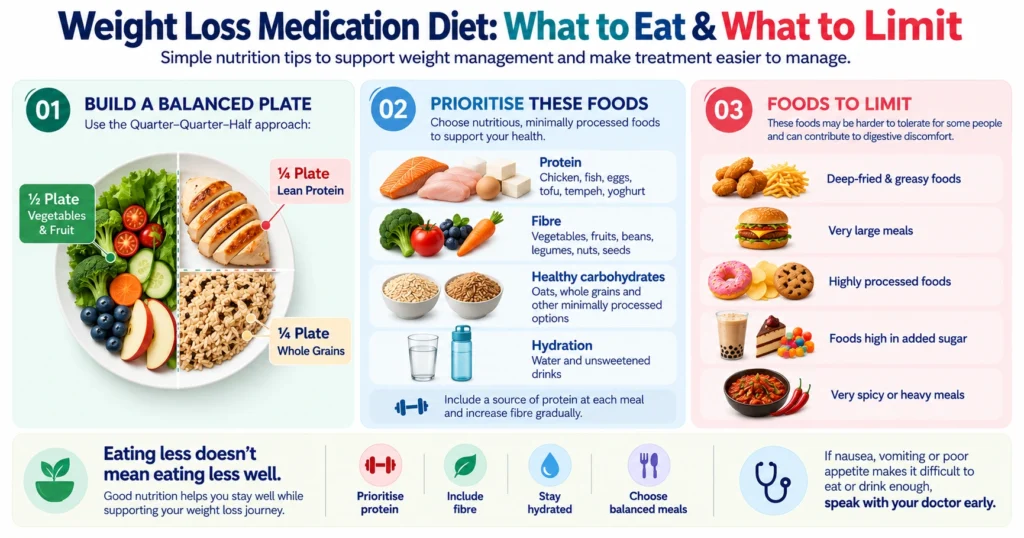
A simple way to structure your meals is Singapore’s My Healthy Plate approach:
- ½ plate: vegetables and fruit
- ¼ plate: lean protein
- ¼ plate: whole grains
HealthHub recommends this Quarter, Quarter, Half approach for building balanced meals.
Which Foods Should You Prioritise?
Prioritise lean protein, fibre-rich foods, minimally processed carbohydrates, and healthy fats in moderate portions.
Good protein sources include:
- Chicken, fish and seafood
- Eggs
- Tofu and tempeh
- Beans and legumes
- Greek yoghurt and low-fat dairy
Vegetables, fruits, beans, legumes, nuts, and seeds are rich in fibre. When choosing carbohydrates, minimally processed options such as oats and whole grains can provide more fibre than refined choices such as white bread.
Adequate protein can help support muscle mass during weight loss, particularly when combined with resistance training. Including a source of protein with each meal can make smaller portions more satisfying, particularly for people on weight loss medications whose appetite has changed.
Portion size matters too. Start with smaller portions if your appetite has decreased, eat slowly, and stop when you feel comfortably full. You do not need to overeat simply to finish everything on your plate.
If you are increasing your fibre intake, do so gradually. A sudden increase may worsen bloating for some people. Drinking plenty of water can help you stay hydrated and support normal bowel function.
What Foods Should You Limit While Taking Mounjaro?
Limit foods that are highly processed, very high in added sugar, or high in fat, particularly if they contribute to overeating or digestive discomfort.
Deep-fried or greasy foods, large portions, and very spicy foods may be harder to tolerate for some people. Large or heavy meals can also cause discomfort when stomach emptying is slowed.
Sugary and highly processed foods can also be easy to overeat and may provide fewer nutrients. Choose minimally processed items where possible, and prioritise whole foods like fruits, vegetables, and protein. Pay attention to your food choices if certain foods worsen your appetite or digestive symptoms.
For drinks, stay hydrated by drinking plenty throughout the day. Diet soda can be an occasional alternative to sugary drinks, but water remains the simplest choice for hydration.
You do not need to completely eliminate your favourite foods. Instead, focus on a balanced eating pattern that you can maintain throughout treatment.
What About Hawker Food?
You can still enjoy Singapore’s hawker food while following a balanced diet and supporting your weight loss.
Try simple swaps such as:
| Food Choices | Practical Adjustment |
|---|---|
| Cai Fan / Economy Rice | Choose two vegetables and one lean protein. Ask for less rice and gravy, and limit deep-fried dishes. |
| Fish Soup | Choose clear soup with sliced fish, vegetables and tofu or egg. Reduce the rice or noodle portion if appetite is low. |
| Yong Tau Foo | Select mostly vegetables, mushrooms, tofu and non-fried items in clear soup. Use sweet and chilli sauces sparingly. |
| Chicken Rice | Choose steamed chicken without visible skin, less rice and extra vegetables. Limit oil and sauces. |
| Nasi Padang / Nasi Campur | Choose less rice, two vegetables and one grilled or lean protein. Limit fried food and coconut-rich gravy. |
| Nasi Lemak | Choose a smaller portion of coconut rice with cucumber, egg and grilled chicken or fish. Limit fried sides and large portions of peanuts, ikan bilis, sambal and sweet drinks. |
| Soto Ayam / Sup Ayam | Choose clear soup with more chicken and vegetables. Reduce rice cakes, noodles, begedil, fried shallots and added oil. |
| Ikan Bakar | Pair grilled fish with ulam or vegetables and a modest rice portion. Request sambal and sauces separately. |
| Chapati / Thosai | Pair wholemeal chapati or plain thosai with dhal, vegetables and lean protein. Limit ghee, creamy curries and fried sides. |
| Biryani | Choose a smaller rice portion, prioritise chicken or fish, and add vegetables or raita. Skip fried starters and sweet drinks. |
| Prata | Keep it occasional: choose one plain prata with dhal rather than rich curry. Avoid filled versions and sweetened teh tarik. |
| Western Meal | Choose grilled, baked or roasted protein with vegetables and a moderate carbohydrate portion. Request creamy sauces and dressings separately. |
Taking Mounjaro and Unsure If Your Treatment Is Right for You?
Speak with a licensed GoMed doctor online for personalised medical guidance throughout your weight management journey.
What Should a Mounjaro Diet Plan Look Like?
There is no single Mounjaro diet plan that works for everyone, but a balanced day can include protein, vegetables, fruit, whole grains, and enough fluids.
For example:
- Breakfast: Greek yoghurt with oats and berries, or wholemeal toast with eggs and fruit.
- Lunch: A palm-sized portion of steamed chicken or fish, ½ plate of vegetables, and about ¼ plate of rice.
- Snack: Fruit, plain yoghurt, or a small portion of unsalted nuts if needed.
- Dinner: A palm-sized portion of tofu, fish, or lean chicken with vegetables and ¼ plate of rice.
- Drinks: Plain water throughout the day.
Portion size can be adjusted based on your appetite. Start with smaller portions if you fill up quickly, and eat slowly rather than forcing yourself to finish everything on your plate.
If you are taking the medication and finding it difficult to eat enough, prioritise nutrient-dense foods in the portions you can comfortably manage.
How Can Smaller Portions Help Manage the Side Effects?
Smaller portions, lighter meals, and adequate hydration may help reduce common side effects and make some gastrointestinal symptoms easier to manage.
If you experience nausea, bloating, or indigestion, try eating smaller meals slowly and avoiding large, greasy meals. If vomiting occurs, maintaining fluid intake is particularly important to help prevent dehydration.
For many adults, around 25–30 g of fibre per day is a useful general target, but increase it gradually if you are prone to bloating or constipation.
Diet cannot prevent every side effect. If symptoms are severe, persistent, or worsening, speak with your doctor rather than trying to manage the side effects through food alone.
When to Seek Medical Review
Dietary changes may help manage mild digestive symptoms, but some symptoms should not be managed through diet alone. Contact a doctor promptly if you experience:
- persistent vomiting or diarrhoea;
- inability to keep fluids down or signs of dehydration;
- severe or persistent abdominal pain;
- very poor food intake, marked weakness or fainting;
- constipation that is severe or not improving; or
- unexpectedly rapid or excessive weight loss.
If your weight loss remains above about 1.5 kg per week after the first month, discuss it with your doctor, especially if you also have weakness, very poor food intake, food avoidance, or other concerning symptoms.
How Does Physical Activity Complement Your Diet?
Regular physical activity can help maintain muscle mass, support weight loss, and promote overall health.
Resistance training is particularly important for helping preserve muscle mass during weight loss. Aim to include strength-based exercise regularly, alongside aerobic activity, according to your fitness level and medical circumstances.
Physical activity also complements a healthy diet by supporting overall fitness and helping you maintain sustainable habits.
Your exercise routine should reflect your fitness level and health needs. If you have an underlying condition or are new to exercise, seek medical advice before starting a new programme.
How Can Healthy Eating Support Your Weight Loss Treatment?
A weight loss medication works best as part of a broader approach to healthy weight management.
Focus on nutritious meals with adequate protein, vegetables, fruit, whole grains, fibre, and fluids. Choose smaller portions when needed and limit foods that consistently worsen digestive discomfort.
A balanced diet can also support blood sugar control. Choosing to limit foods with added sugar can help maintain more stable blood sugar levels, particularly for people managing diabetes.
The goal is not to follow an extreme or restrictive plan or try to lose weight quickly. Instead, develop healthy eating habits that support your nutritional needs, physical activity, and long-term health.
If you are unsure about your diet while taking Mounjaro or another GLP-1 medication, a doctor or dietitian can help you make changes based on your individual needs.
Speak to a GoMed doctor for a confidential, personalised review of your medication response, side effects and nutrition plan.
Disclaimer: This article provides general patient education and does not replace individual medical or dietetic advice. Protein, fibre, and fluid targets may need adjustment based on your health conditions and treatment plan.
References
- Health Promotion Board, Singapore. My Healthy Plate: Plan Your Meals. HealthHub – My Healthy Plate
- Mozaffarian D, Agarwal M, Aggarwal M, et al. Nutritional priorities to support GLP-1 therapy for obesity: A joint advisory from the American College of Lifestyle Medicine, the American Society for Nutrition, the Obesity Medicine Association, and The Obesity Society. Am J Clin Nutr. 2025;122(1):344-367. doi:10.1016/j.ajcnut.2025.04.023.
- Wharton S, Davies M, Dicker D, et al. Managing the gastrointestinal side effects of GLP-1 receptor agonists in obesity: recommendations for clinical practice. Postgraduate Medicine, 2022;134(1):14–19. PubMed – GI Side-Effect Management
- Sievenpiper JL, Ard J, Blüher M, et al. Nutritional and lifestyle supportive care recommendations for management of obesity with GLP-1-based therapies: An expert consensus statement using a modified Delphi approach. Obes Pillars. 2026;17:100228. doi:10.1016/j.obpill.2025.100228. PMC – Expert Consensus