


GLP-1 weight loss medications have transformed the management of overweight and obesity, offering clinically proven treatment alongside lifestyle changes. Among the most well-known are Mounjaro (tirzepatide), Wegovy, and Ozempic (semaglutide). While all three are injectable treatments that can support appetite control and weight loss, they differ in their ingredients, approved uses, and expected outcomes.
Obesity is a long-term health condition associated with an increased risk of conditions such as type 2 diabetes, cardiovascular disease and hypertension. Clinical practice guidelines recognise these receptor agonists as an evidence-based option for suitable patients.
Key Takeaway
- Mounjaro, Wegovy and Ozempic work differently and have different approved uses, so one option may be more suitable than another.
- There is no single GLP-1 medication that is right for everyone; suitability depends on your health, medical history and weight management goals.
- GLP-1 medications can support significant weight loss, but individual results and side effects can vary.
- Lifestyle changes remain important while taking GLP-1 medication, including balanced nutrition, regular physical activity and adequate sleep.
- A doctor should assess your suitability before starting or switching treatment and provide ongoing medical supervision.
How Do GLP-1 Weight Loss Medications Work?
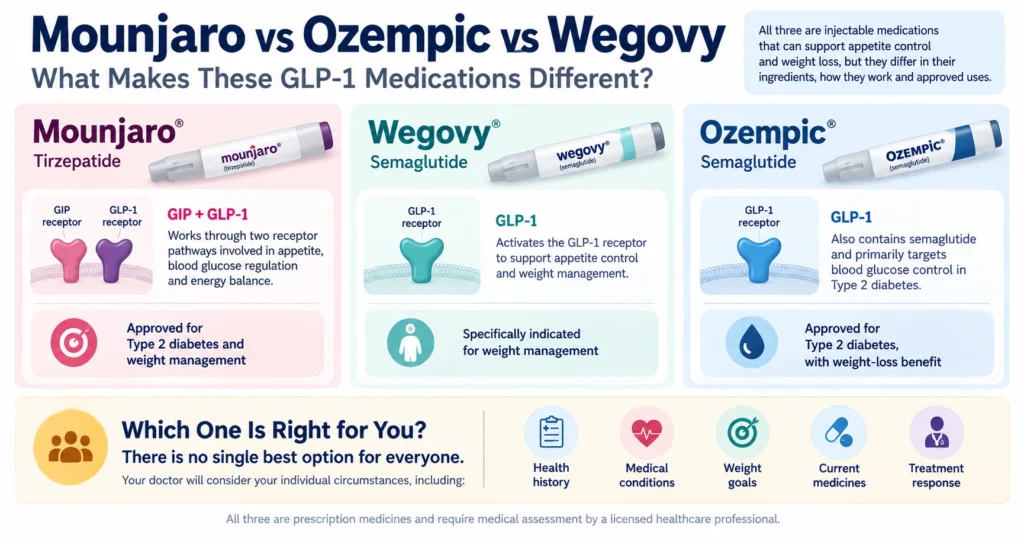
GLP-1-weight loss medications work by activating pathways involved in appetite, blood glucose regulation and digestion. Semaglutide mimics the effects of GLP-1, while tirzepatide (Mounjaro) activates both GIP and GLP-1 receptors.
This hormone is naturally released after eating. The medication acts on related pathways to support appetite control. It slows stomach emptying and signals the brain that you are full, helping you feel fuller for longer and reducing appetite.
By activating these receptors, these treatments can reduce hunger and calorie intake, which can lead to weight loss while promoting weight loss alongside healthy habits. They can also support long-term weight management alongside healthy lifestyle changes such as a balanced diet and regular physical activity.
Mounjaro (tirzepatide) works differently from semaglutide because it activates both GIP and GLP-1 receptors. GIP is an incretin hormone that helps regulate insulin secretion and energy balance, while GLP-1 also influences blood glucose, appetite and food intake. The combined activity contributes to reduced appetite and improved metabolic control.
Some of these treatments are used to treat conditions such as type 2 diabetes. Others are approved specifically for the treatment of obesity and chronic weight management in suitable patients. This treatment helps regulate blood sugar and keep levels within a healthier range.
Mounjaro vs Ozempic vs Wegovy: What’s the Difference?
The main differences are their ingredients, how they work, approved uses, and expected weight loss outcomes.
| Feature | Mounjaro | Wegovy | Ozempic |
|---|---|---|---|
| Active Ingredient | Tirzepatide | Semaglutide | Semaglutide |
| Drug Class | Dual GIP/GLP-1 receptor agonist | GLP-1 receptor agonist | GLP-1 receptor agonist |
| Approved Use | Type 2 diabetes + weight management | Weight management | Type 2 diabetes, with weight-loss benefit |
| Injection | Once weekly | Once weekly | Once weekly |
| Average Weight Loss | Substantial; greater than semaglutide in SURMOUNT-5 | Substantial | Weight loss occurs, but Ozempic is not the semaglutide product specifically approved for obesity |
| Best Suited For | Medical weight management | Obesity management | Diabetes with weight loss benefit |
Thinking About Medical Weight Loss?
Not every weight loss medication is suitable for everyone. A licensed GoMed doctor can help determine which treatment aligns with your medical history, health goals, and eligibility.
Comparing the Efficacy of GLP-1 for Body Weight Reduction
Current evidence suggests that tirzepatide generally produces greater weight loss than semaglutide in adults with overweight or obesity.
In the SURMOUNT-5 head-to-head trial, adults with obesity without type 2 diabetes were treated with either tirzepatide or semaglutide for 72 weeks. Average weight loss was 20.2% with tirzepatide compared with 13.7% with semaglutide.
Earlier trials also demonstrated substantial weight loss with both medications. In SURMOUNT-1, the highest tirzepatide dose produced an average weight reduction of 20.9% at 72 weeks, while STEP 1 reported an average 14.9% reduction with semaglutide 2.4 mg at 68 weeks.
However, results from separate clinical trials should not be directly compared because the study populations, treatment protocols and trial designs differ.
Individual results can vary according to dosage, treatment duration, adherence, health conditions, and other factors.
Common Side Effects and How the Body Adjusts to the Medication
The most common side effects are gastrointestinal symptoms such as nausea, vomiting, diarrhoea, constipation, and stomach discomfort.
Common GLP-1 side effects include:
- Nausea
- Vomiting
- Diarrhoea
- Constipation
- Stomach discomfort
- Reduced appetite
Other potential adverse effects:
- Gallbladder disease/gallstones
- Dehydration
- Hypoglycaemia, particularly when combined with insulin or sulfonylureas
These treatments can cause side effects, particularly when treatment begins or the dose is increased. The usual approach is to start with a low dose and gradually increase it, giving time as the body adjusts to the medication.
For example, Mounjaro starts at 2.5 mg once weekly, and the dose is increased to 5 mg after four weeks under medical guidance. Further dose increases may be considered at appropriate intervals according to the prescribing information and individual tolerability.
Rare Risks and When to Seek Medical Assessment
Most gastrointestinal symptoms are temporary and may improve as treatment continues. However, if symptoms are severe, persistent, or affect your ability to eat, drink, or carry out your usual activities, contact your doctor for medical advice.
Researchers have rarely reported pancreatitis with these medicines. However, people with a previous history of pancreatitis should discuss the potential risks and benefits with their doctor before treatment. Severe or persistent abdominal pain, particularly if it radiates to the back, requires prompt medical assessment.
Which GLP-1 Weight Loss Medications May Be Right for You?
There is no single option that is right for everyone; the most suitable choice depends on your health, medical history, weight loss goals, and individual circumstances.
In general:
- Mounjaro (tirzepatide) may be considered for people who may benefit from its dual GIP and GLP-1 mechanism.
- Wegovy (semaglutide) is designed specifically for people with overweight or obesity who are seeking long-term weight management.
- Ozempic (semaglutide) is primarily used for people with type 2 diabetes who also wish to support weight loss where clinically appropriate.
In Singapore, eligibility for treatment depends on clinical factors such as BMI, existing health conditions, and individual treatment needs. A doctor will assess your medical history, current medicines, and weight management goals before determining whether treatment is appropriate.
A treatment may be suitable for someone with diabetes and obesity, for example, while another option may better fit a person whose primary goal is weight management. Professional medical advice is important before starting, stopping, switching, or adjusting treatment.
Regardless of which option is prescribed, lifestyle changes remain important. A balanced diet, regular physical activity, adequate sleep, and consistent healthy habits can support the weight management journey.
Conclusion
Choosing among Mounjaro, Wegovy, and Ozempic is not simply about comparing weight-loss results. Each has different approved uses and may suit different patients. A doctor can assess your medical history, health needs, and weight management goals to determine whether treatment is appropriate and which option is most suitable.
If you are considering a GLP-1 weight loss treatment, speaking with a licensed doctor can help you make an informed decision and develop a personalised weight management plan.
Frequently Asked Questions
Who may be eligible for GLP-1 weight loss medications in Singapore?
Adults with a Body Mass Index (BMI) of 30 kg/m² or higher (obesity), or a BMI of 27kg/m² or higher (overweight) with at least one weight-related condition, may be eligible for GLP-1 weight loss medication in Singapore.
These conditions may include type 2 diabetes, high blood pressure, high cholesterol, or obstructive sleep apnoea. A doctor will assess your full medical profile, including your BMI, waist circumference, existing health conditions, current medicines, and weight loss history, before determining whether a GLP-1 agonist is appropriate.
BMI thresholds are only one part of the assessment. A doctor will also consider factors such as existing medical conditions, medications, treatment goals, previous weight-management efforts and whether the medication is clinically appropriate.
Can I get Mounjaro, Wegovy or Ozempic online in Singapore?
Yes. Eligible patients may be assessed through a licensed telemedicine service, where appropriate. These medicines are prescription-only and require a medical assessment before they can be prescribed.
Mounjaro, Wegovy, and Ozempic are prescription medicines, so a licensed doctor must first assess whether treatment is appropriate. During a telemedicine consultation, the doctor can review your health history, weight goals, and existing medications before deciding whether one of these options is suitable. If prescribed, the medicine can be dispensed through an authorised pharmacy where appropriate.
How Much Do GLP-1 Weight Loss Medications Cost in Singapore?
The cost varies depending on the treatment, dosage, and individual treatment plan.
At the time of publication, GoMed injectable GLP-1 treatment starts from S$445 per month with a S$20 consultation fee. Prices may vary depending on the medication, dosage and treatment plan and may change over time. As pricing may change, patients should check the latest treatment options and costs before starting the medication. The medication should be used only as directed by a doctor.
Are GLP-1 medications safe for long-term use?
These treatments can be used long-term in suitable patients, but ongoing medical supervision is important.
Regular follow-up allows doctors to monitor body weight, treatment response, side effects, and overall metabolic health, and to review whether treatment remains appropriate. The long-term effects of GLP-1 treatment continue to be studied as these medicines are used more widely. Patients with certain health conditions, including a history of pancreatitis, should discuss their medical history with a doctor before treatment.
Do I still need diet and exercise when taking a GLP-1 medication?
Yes, lifestyle changes remain an important part of weight management while taking a GLP-1 medication.
These treatments can help people feel fuller for longer and support weight loss, but a balanced diet, regular physical activity, adequate sleep, and sustainable eating habits remain important for achieving and maintaining long-term results.
At GoMed, patients may also receive additional support as part of their treatment plan, including personalised diet guidance from the care team to help build healthy, sustainable habits alongside treatment.
Can I switch between Mounjaro, Wegovy and Ozempic?
Yes, it may be possible to switch between these treatments, but this should only be done with professional medical advice.
Mounjaro, Wegovy, and Ozempic have different active ingredients, approved uses, and dosing schedules. A doctor can assess why a change may be needed, review your treatment response and medical history, and determine the safest approach. You should not stop, switch, or change the dose of a GLP-1 medication without medical guidance.
References
- Aronne LJ, Horn DB, le Roux CW, et al; SURMOUNT-5 Trial Investigators. Tirzepatide as compared with semaglutide for the treatment of obesity. N Engl J Med. 2025;393(1):26-36. doi:10.1056/NEJMoa2416394.
- Jastreboff AM, Aronne LJ, Ahmad NN, et al. Tirzepatide once weekly for the treatment of obesity. N Engl J Med. 2022;387(3):205-216. doi:10.1056/NEJMoa2206038.
- Wilding JPH, Batterham RL, Calanna S, et al. Once-weekly semaglutide in adults with overweight or obesity. N Engl J Med. 2021;384(11):989-1002. doi:10.1056/NEJMoa2032183.
- American Diabetes Association Professional Practice Committee. 8. Obesity and weight management for the prevention and treatment of type 2 diabetes: Standards of Care in Diabetes—2025. Diabetes Care. 2025;48(Suppl 1).
- Health Sciences Authority, Singapore. Listing of approvals and post-registration actions: Wegovy (semaglutide), Mounjaro (tirzepatide), Ozempic (semaglutide). Singapore: Health Sciences Authority; 2026.
- Health Sciences Authority, Singapore. HSA is assessing the potential risk of suicidal thoughts and self-harm with glucagon-like peptide-1 receptor agonists (GLP-1 RA). Singapore: Health Sciences Authority.