

Is Contraception part of Women’s Healthcare in Singapore?
- Contraception and family planning
- Menstrual irregularities and heavy bleeding
- Hormonal changes across life stages
- Vaginal health and infections
What Is Birth Control and How Does It Work?
- Prevent ovulation
- Thicken cervical mucus to block sperm
- Thin the uterine lining to reduce the likelihood of implantation
Why Is Choosing the Right Birth Control Important?
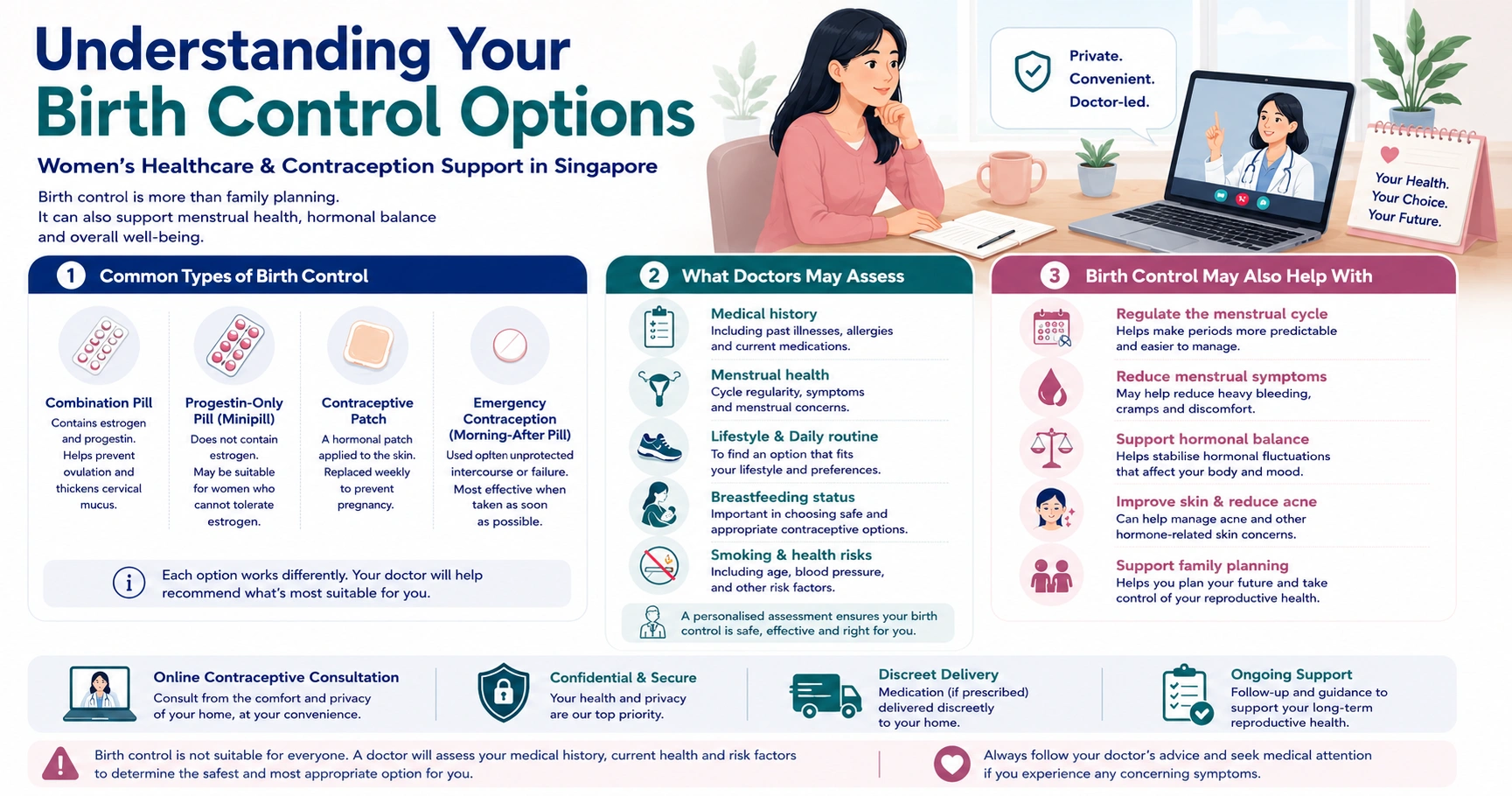
Every woman has different health needs and reproductive goals. Age, smoking status, breastfeeding, migraine history, blood clot risk, and existing medical conditions all influence which contraceptive methods are appropriate.
Research in Singapore also found that healthcare professionals remain one of the most trusted sources of contraceptive information. This highlights the value of discussing your individual health profile with a doctor before choosing a birth control method.
What Types of Birth Control Are Available?
Hormonal Birth Control Pills
- Combination pill
Contains both estrogen and progestin hormones. - Progestin-only pill (minipill)
Does not contain estrogen and may be suitable for women who cannot tolerate estrogen.
Contraceptive patch
Emergency contraception (morning-after pill)
Are Birth Control Pills Safe for Everyday Use?
- Blood clot formation
- Cardiovascular conditions such as heart disease
- Hormone-related sensitivities
- Smoke or have a history of nicotine use
- Manage chronic health conditions
- Are currently breastfeeding
- Inability to take estrogen
What Are the Possible Side Effects of Birth Control Pills?
- Nausea or mild discomfort
- Changes in the menstrual cycle
- Breast tenderness
- Mood changes
How Does Online Contraceptive Consultation Work?
- Review your medical history
- Assess your health conditions and risk factors
- Recommend suitable birth control options
- Prescribe medication if appropriate
What Are the Benefits of Birth Control, aside from Family Planning?
Prevent Pregnancy Safely and Effectively
Regulate the Menstrual Cycle
Reduce Menstrual Symptoms
Support Hormonal Balance
Improve Quality of Life and Confidence
Is Current Health Condition a Factor when Choosing the Type of Birth Control?
- Lifestyle and daily routine
- Medical history and existing health conditions
- Whether you are breastfeeding
- Risk factors such as smoking or chronic illness
- Personal preferences and long-term family planning goals
How Can You Take Control of Your Reproductive Health in Singapore?
Recent Singapore research reported a 60% increase in women seeking referrals for abortion from public polyclinics between 2017 and 2020, highlighting the ongoing importance of timely access to contraception and family planning services.
FAQs About Women’s Health and Birth Control in Singapore
Can I start birth control without visiting a clinic in person?
Yes. Teleconsultation allows you to consult a licensed doctor online. If suitable, birth control can be prescribed and delivered to your home.
Do birth control pills affect long-term fertility?
No. Birth control pills do not affect long-term fertility. Most individuals regain normal reproductive function after stopping the medication.
How often should I review my birth control method?
It is recommended to review your contraception annually or when there are changes in your health, lifestyle, or reproductive goals.
References
- Ministry of Health Singapore. National Telemedicine Guidelines. Available at: https://www.moh.gov.sg. Accessed June 2026.
- Ti AJ, Ng YY, et al. Knowledge and Attitudes Towards Contraception in Singapore. Singapore Medical Journal. Available at: https://pmc.ncbi.nlm.nih.gov/articles/PMC5331135/. Accessed June 2026.
- Association of Women for Action and Research (AWARE). Contraception and STI Testing. Available at: https://www.aware.org.sg/information/contraception-sti-testing/. Accessed June 2026.
- Channel NewsAsia. Why Better Access to Contraception Matters in Singapore. Available at: https://www.channelnewsasia.com/commentary/singapore-unplanned-pregnancies-abortions-contraceptive-pill-4032436. Accessed June 2026.
- World Health Organization. Family Planning/Contraception. Available at: https://www.who.int/news-room/fact-sheets/detail/family-planning-contraception. Accessed June 2026.