

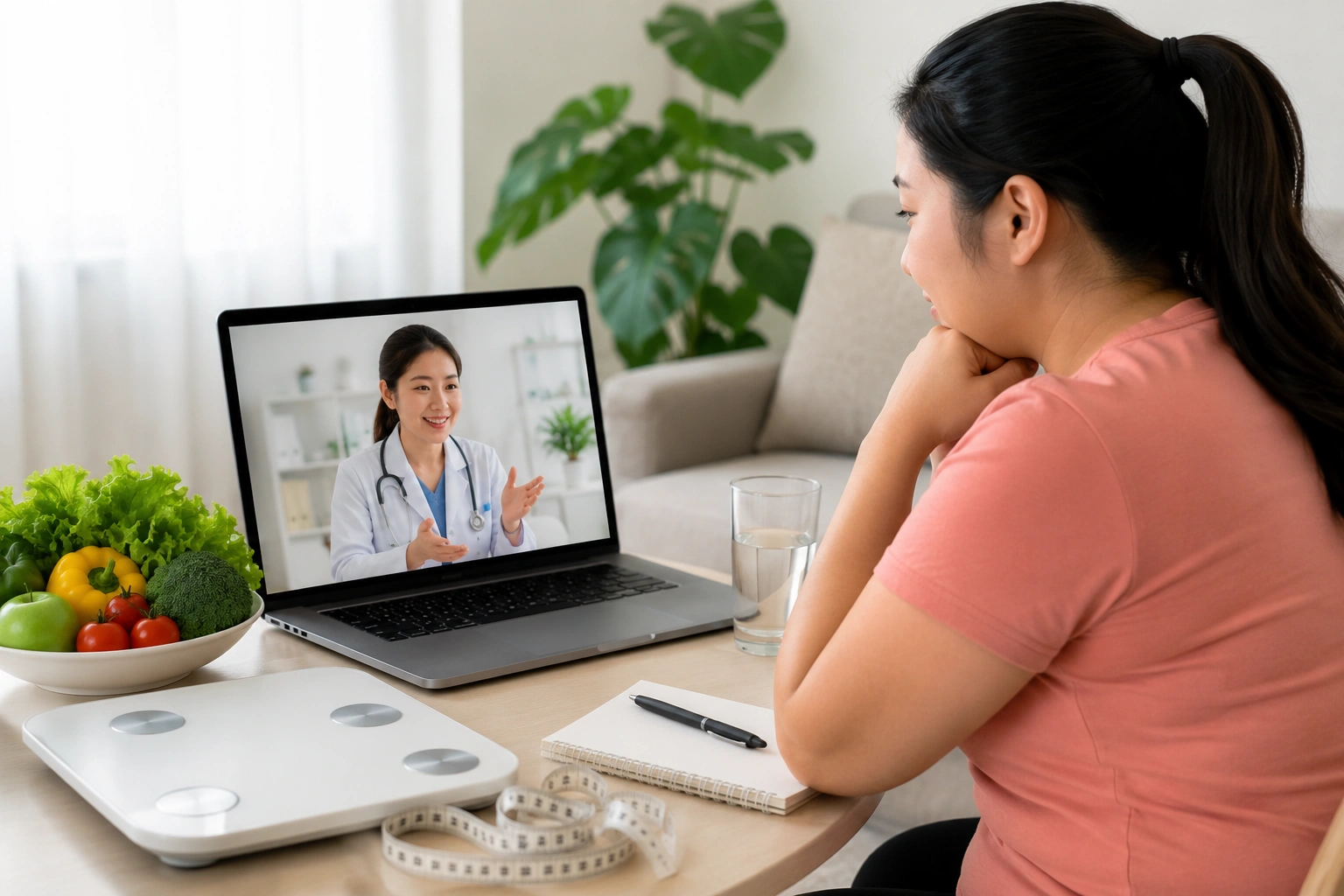
Many people in Singapore are now turning to online doctor consultations for medically supervised weight loss. With the rise of telemedicine, patients can now access weight management support, medications, lifestyle guidance, and follow-up care — all from home.
Online weight loss programmes have become increasingly popular among busy working adults, parents, and individuals who struggle to attend regular clinic visits. For suitable patients, telemedicine may offer a more convenient and sustainable way to manage obesity and long-term weight health.
But can online consultation actually help with weight loss — and is it safe?
Studies suggest that telemedicine-based obesity treatment may improve convenience, treatment adherence, and long-term follow-up when combined with proper medical supervision, evidence-based treatment, and lifestyle modification.
For some patients, online medical weight management may also improve accessibility and consistency by making regular follow-up easier to maintain.
How Online Weight Loss Consultation Works in Singapore
Most online weight loss programmes in Singapore follow a structured telemedicine process to assess suitability, medical safety, and long-term weight management goals.
A typical online consultation may involve:
- Completing a medical questionnaire
- Attending a video consultation with a licensed doctor
- Discussing weight goals, medical history, lifestyle habits, and previous weight loss attempts
- Receiving a personalised treatment and lifestyle plan
- If clinically appropriate, obtaining prescription weight loss medication
- Continuing follow-up reviews and progress monitoring remotely
Several MOH-licensed Singapore telehealth providers now offer doctor-led weight management programmes through teleconsultation.
What Happens During an Online Weight Loss Consultation?
Most online weight loss consultations in Singapore involve more than just prescribing medication. The consultation is usually focused on understanding a patient’s overall health, lifestyle habits, and long-term weight management goals.
During a teleconsultation, the doctor may discuss:
- Your current weight and BMI
- Previous dieting or weight loss attempts
- Eating habits and lifestyle patterns
- Sleep quality and stress levels
- Existing medical conditions
- Current medications
- Weight-related health risks
Depending on your medical profile, some patients may also require blood tests or further in-person assessment before starting treatment.
The goal of medical weight management is not simply rapid weight loss, but improving long-term health outcomes safely, realistically, and sustainably.
Does Telemedicine Actually Help with Weight Loss?
Studies suggest telemedicine may support meaningful weight loss when combined with evidence-based medical care and long-term follow-up.
A recent Singapore-based obesity telehealth study, known as the OneSTOP programme, highlighted how digital obesity care may help improve:
- Treatment adherence
- Follow-up consistency
- Lifestyle monitoring
- Patient motivation between appointments
International obesity research has also shown that remote care programmes may help patients:
- Maintain accountability
- Access multidisciplinary support
- Improve long-term engagement
- Reduce dropout rates
This is important because obesity is now increasingly recognised as a chronic medical condition that often requires ongoing management rather than short-term dieting alone.
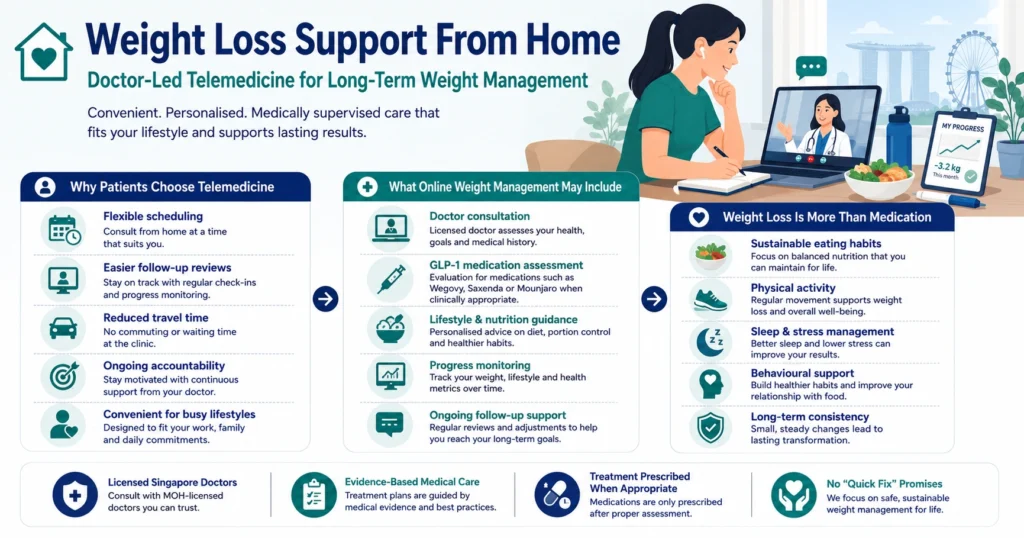
Why Some Patients Prefer Telemedicine for Weight Loss
Many patients choose online weight loss consultation because it may provide:
- Greater convenience
- Easier follow-up reviews
- Reduced travel time
- More flexible scheduling
- Ongoing accountability and monitoring
This may be particularly helpful for:
- Busy professionals
- Parents with limited time
- Individuals with irregular work schedules
- Patients requiring long-term follow-up
For obesity treatment, consistency, regular monitoring, and long-term lifestyle support often play an important role in achieving sustainable results.
What Treatments Can Online Doctors Prescribe?
In Singapore, licensed doctors may prescribe certain weight loss treatments via teleconsultation if clinically appropriate following a medical assessment.
Depending on an individual’s medical profile, treatment plans may include prescription medications, lifestyle intervention, and ongoing behavioural support.
GLP-1 Medications
GLP-1 medications are among the most commonly discussed prescription weight loss treatments today.
These medications work by helping to:
- Reduce appetite
- Increase fullness after meals
- Slow stomach emptying
- Reduce food cravings
When combined with lifestyle modification, GLP-1 medications may support meaningful long-term weight reduction in suitable individuals.
Clinical studies have shown that some GLP-1 therapies may help patients achieve significant weight loss when combined with diet, exercise, and ongoing medical follow-up.
However, these medications are not suitable for everyone, and a proper medical assessment is important before starting treatment.
Common Side Effects of GLP-1 Medications
Like all prescription medications, GLP-1 treatments may cause side effects in some individuals.
Commonly reported side effects may include:
- Nausea
- Constipation
- Bloating
- Diarrhoea
- Reduced appetite
- Fatigue
Many side effects are mild and may improve gradually as the body adjusts to treatment.
Patients experiencing severe or persistent symptoms should seek medical review.
Appetite Suppressants
Some telemedicine providers in Singapore may also prescribe appetite suppressants for selected patients.
These medications work differently from GLP-1 injections and may not be suitable for everyone, particularly individuals with:
- Heart disease
- Hypertension
- Anxiety disorders
- Certain psychiatric conditions
Doctors will usually assess a patient’s medical history and overall risk profile before prescribing these medications.
Lifestyle and Behavioural Support
Effective weight management usually involves more than medication alone.
Evidence-based telehealth programmes often include:
- Nutritional counselling
- Exercise guidance
- Habit tracking
- Behavioural coaching
- Ongoing doctor follow-up
Research consistently suggests that combining medical treatment with behavioural and lifestyle intervention may produce better long-term outcomes than medication alone.
For many individuals, sustainable weight loss often depends on long-term consistency, realistic lifestyle changes, and ongoing support rather than short-term dieting alone.
Who May Benefit Most from Online Weight Loss Consultation?
Telemedicine weight management may be suitable for individuals looking for a more convenient and accessible approach to long-term weight management and obesity care.
Online weight loss consultation may be particularly helpful for:
- Busy professionals
- Parents with limited time
- Individuals are uncomfortable attending clinics in person
- Patients requiring ongoing follow-up and monitoring
- People seeking early obesity intervention
For many patients, telemedicine may make it easier to maintain regular follow-up, lifestyle accountability, and long-term consistency throughout their weight loss journey.
Some Singapore telehealth providers may also offer medication delivery directly to patients’ homes, further improving convenience and accessibility for ongoing treatment and follow-up.
When Telemedicine May NOT Be Enough
Online weight loss consultation may not be suitable for every individual or medical situation.
Patients with:
- Severe obesity
- Complex medical conditions
- Eating disorders
- Serious medication side effects
- Uncontrolled diabetes
- Suspected hormonal or endocrine disorders
may still require in-person assessment, blood tests, imaging investigations, or specialist obesity care.
In some cases, referral for bariatric surgery evaluation, endocrinology assessment, or multidisciplinary obesity management may be more appropriate than telemedicine alone.
For certain individuals, physical examination and closer medical supervision may also be necessary to ensure safe and appropriate long-term treatment.
Are Online Weight Loss Treatments Safe?
Telemedicine-based weight loss treatment can be safe when conducted by licensed healthcare providers and with appropriate medical screening.
In Singapore, telemedicine providers are regulated under the MOH licensing frameworks, and consultations should be conducted by Singapore-registered doctors.
However, patients should remain cautious about:
- Buying unlicensed “slimming pills” online
- Using prescription medications without proper medical supervision
- Purchasing weight loss injections from unofficial online sellers
The Health Sciences Authority (HSA) has previously issued warnings regarding illegal weight loss products linked to serious medical complications, including heart problems and other potentially dangerous side effects.
Before starting treatment, patients should ensure that their healthcare provider performs a proper medical assessment, explains potential risks and side effects, and provides appropriate follow-up care.
What to Look for in a Singapore Online Weight Loss Clinic
Before starting online weight loss treatment, patients should consider whether the provider:
- Uses Singapore-registered and MOH-licensed doctors
- Performs appropriate medical screening and assessment
- Provides realistic and medically appropriate expectations
- Includes lifestyle and behavioural support
- Offers ongoing follow-up and monitoring
- Avoids exaggerated or “quick fix” marketing claims
Evidence-based obesity treatment should focus on long-term health improvement, sustainable lifestyle changes, and safe medical supervision rather than rapid “miracle” weight loss.
Patients should also be cautious of online providers that prescribe medications without proper assessment or fail to provide adequate follow-up care.
Limitations of Online Weight Loss Programmes
Although telemedicine offers convenience and accessibility, online weight loss programmes may not be suitable for every individual or situation.
Potential limitations may include:
- Limited physical examination
- Variable consultation quality between providers
- Reduced face-to-face interaction
- Overreliance on medication without adequate lifestyle support
- Difficulty assessing more complex medical conditions remotely
For some patients, in-person assessment, blood tests, or closer medical supervision may still be necessary to ensure safe and appropriate treatment.
This highlights the importance of choosing reputable, medically supervised telemedicine providers that offer proper assessment, follow-up, and long-term weight management support.
Weight Loss Treatment Is Not Just About Medication
Although weight loss medications have gained significant attention in recent years, long-term weight management usually still depends on a combination of:
- Sustainable nutrition habits
- Regular physical activity
- Sleep quality
- Behavioural and lifestyle changes
- Ongoing medical follow-up and support
Medication alone is rarely a complete solution for obesity or long-term weight control.
For many individuals, the most sustainable results often come from combining medical treatment with realistic lifestyle changes that can be maintained consistently over time.
Successful weight management is usually focused not only on losing weight but also on improving overall health, long-term habits, and quality of life.
The Bottom Line
Yes, it is possible to lose weight through online doctor consultation in Singapore — particularly when telemedicine is combined with evidence-based medical care, lifestyle modification, and ongoing follow-up.
Studies suggest that telehealth-based weight management may improve:
- Access to medical care
- Treatment continuity
- Patient engagement and accountability
- Long-term obesity management
However, telemedicine works best as part of a broader long-term health strategy rather than a standalone “quick fix”.
For many individuals, the most sustainable weight loss results often come from combining:
- Nutrition and dietary changes
- Regular physical activity
- Behavioural and lifestyle support
- Ongoing medical supervision
- Long-term consistency and follow-up
If you are considering online weight loss treatment, choosing a reputable Singapore telemedicine provider and consulting a licensed doctor is an important first step toward safe and sustainable weight management.
Frequently Asked Questions About Weight Loss Consultation
Can online doctors prescribe weight loss medication in Singapore?
Licensed Singapore doctors may prescribe certain weight loss medications via teleconsultation if clinically appropriate following a medical assessment.
Suitability for these medications depends on several factors, including:
- BMI and weight-related health risks
- Medical history
- Existing medical conditions
- Current medications
- Potential medication side effects or contraindications
Not every patient is suitable for prescription weight loss medication, and proper medical assessment is important before starting treatment.
How much weight can you lose with online weight loss treatment?
Weight loss results can vary significantly between individuals.
Factors that may affect progress include:
- Diet and nutrition habits
- Physical activity levels
- Sleep quality
- Long-term consistency
- Underlying medical conditions
- Individual medication response
Research suggests that some GLP-1 medications may help suitable patients achieve meaningful weight reduction when combined with lifestyle modification and ongoing medical follow-up.
Do I need blood tests before starting weight loss medication?
Some patients may require blood tests or further medical evaluation before starting treatment, particularly if there are concerns about:
- Diabetes
- Thyroid disorders
- Hormonal conditions
- Liver disease
- Other metabolic or endocrine conditions
Blood tests may help doctors assess medical suitability and identify possible underlying conditions contributing to weight gain or difficulty losing weight.
Are online weight loss consultations safe?
Telemedicine-based weight loss treatment can be safe when conducted by licensed healthcare providers and with appropriate medical screening.
Patients should avoid purchasing weight loss medications from unofficial online sellers or using prescription medications without proper medical supervision.
Before starting treatment, patients should ensure that their healthcare provider performs an appropriate medical assessment, explains the potential risks and side effects, and provides ongoing follow-up care, as needed.
References
- Khoo J, Leong AT, Rahul K, et al. OneSTOP (One-Stop Telehealth Obesity Program): Study protocol for an open-label randomized controlled trial on the use of telecare and digital platforms for multidisciplinary management of weight management and related comorbidities. Trials. 2026. Available at: PubMed – OneSTOP Telehealth Obesity Programme
- Wilding JPH, Batterham RL, Calanna S, et al. Once-Weekly Semaglutide in Adults with Overweight or Obesity. N Engl J Med. 2021;384:989–1002.
- Health Sciences Authority (HSA). Dubious weight loss products sold online can harm your health. Available at: HSA – Dubious Weight Loss Products Sold Online Can Harm Your Health
- Health Sciences Authority (HSA). HSA Alert: Three Weight Loss Products Sold Online Found to Contain Banned Substance Sibutramine. Available at: HSA – Weight Loss Products Found With Banned Substance Sibutramine
- Health Sciences Authority (HSA). HSA Alert: Four Slimming Products Found to Contain Banned Substance or Laxative. Available at: HSA – Four Slimming Products Found to Contain Banned Substances