


Obesity is increasingly recognised as a chronic medical condition rather than simply a lifestyle issue. While healthy eating and regular exercise remain the foundation of weight management, some individuals may benefit from medical treatment to support their weight loss journey.
In recent years, medications such as Mounjaro, Wegovy, and Saxenda have gained increasing attention for their role in supporting clinically meaningful and sustainable weight reduction in suitable patients.
However, weight loss medication is not suitable for everyone. So, who may benefit from medical weight management?
Why Is Obesity a Health Concern?
Excess body weight is associated with an increased risk of many chronic medical conditions, including:
- Type 2 diabetes
- High blood pressure
- High cholesterol
- Heart disease
- Stroke
- Fatty liver disease
- Obstructive sleep apnoea
- Joint pain and osteoarthritis
- Fertility and hormonal conditions such as PCOS
Beyond physical health, obesity can also affect mobility, energy levels, sleep quality, self-confidence, mental well-being, and overall quality of life.
Research suggests that even a modest weight reduction of 5–10% of total body weight may lead to meaningful improvements in metabolic health and obesity-related complications.
What Are the Benefits of Weight Loss?
Healthy and sustained weight loss may help improve:
- Blood sugar control
- Blood pressure
- Cholesterol levels
- Sleep quality
- Energy levels
- Joint pain and mobility
- Physical fitness and exercise tolerance
- Confidence and overall well-being
In some individuals, weight reduction may also help lower long-term cardiovascular and metabolic health risks.
What Is Considered Overweight or Obese?
Body Mass Index (BMI) is commonly used as a screening tool to assess whether a person is overweight or obese.
For Asian populations, the commonly used BMI classifications are:
- BMI 23–27.4 kg/m² → Overweight
- BMI ≥27.5 kg/m² → Obesity
- BMI ≥30 kg/m² → Severe obesity
However, BMI is only one part of the overall assessment. Doctors may also consider factors such as waist circumference, metabolic health, existing medical conditions, lifestyle factors, and obesity-related complications when determining the most appropriate treatment approach.
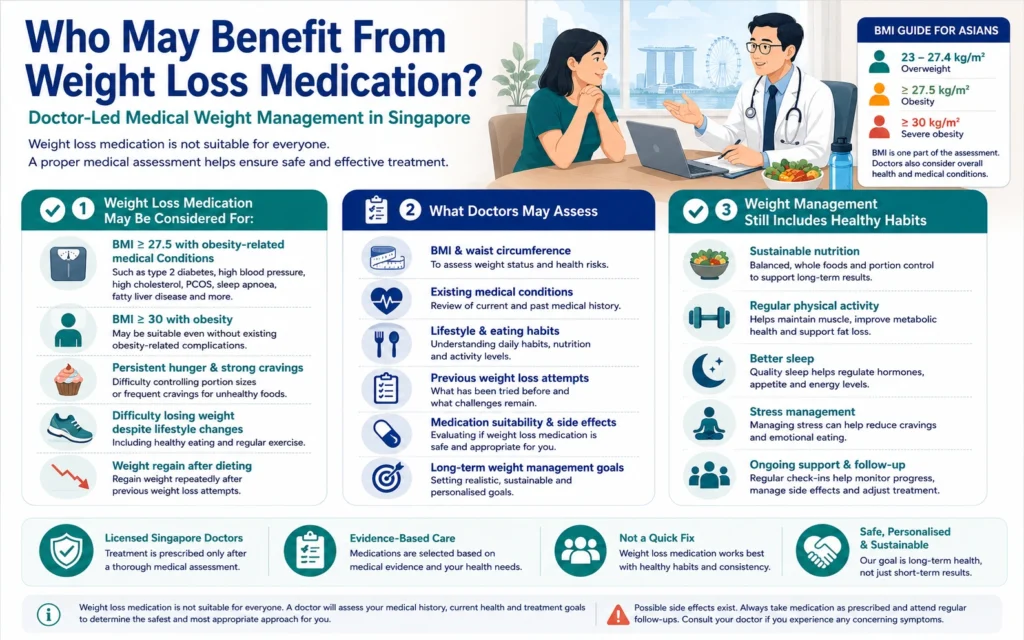
Who Is Suitable for Weight Loss Medication?
Weight loss medication may be considered for adults who meet specific clinical criteria, particularly when lifestyle modification alone has not resulted in sufficient or sustainable weight loss.
Individuals with BMI ≥27.5 kg/m² and obesity-related medical conditions
Examples of obesity-related conditions include:
- Type 2 diabetes
- Hypertension
- High cholesterol
- Obstructive sleep apnoea
- Fatty liver disease
- Polycystic ovary syndrome (PCOS)
Individuals with BMI ≥30 kg/m² without major comorbidities
Those with higher BMI may still be suitable for medical weight management even without existing obesity-related complications, as excess body weight may increase future cardiovascular and metabolic health risks.
Individuals who continue to struggle with weight loss despite lifestyle changes
Some individuals may experience:
- Persistent hunger
- Strong food cravings
- Difficulty controlling portion sizes
- Weight regain after dieting
- Slow progress despite regular exercise and calorie control
In suitable patients, weight loss medication may help regulate appetite, reduce food cravings, and improve adherence to long-term weight management strategies.
Who May Not Be Suitable?
Weight loss medication may not be appropriate for everyone, and suitability should be assessed on an individual basis.
Doctors may advise caution or avoid certain medications in individuals who:
- Is pregnant or breastfeeding
- Have a history of pancreatitis
- Have certain gastrointestinal conditions
- Have severe eating disorders
- Have specific endocrine or thyroid conditions
- Is taking medications that may interact with weight loss treatment
A proper medical assessment is important before starting any weight loss medication to ensure the treatment is safe and appropriate for the individual.
What Types of Weight Loss Medications Are Available?
Different weight loss medications work through different mechanisms to support weight management.
Some medications may help to:
- Reduce appetite
- Increase feelings of fullness
- Slow stomach emptying
- Reduce food cravings
- Improve blood sugar regulation
Examples of commonly prescribed medications may include:
- Mounjaro
- Wegovy
- Saxenda
- Rybelsus
Some medications are taken as daily tablets, while others are administered as weekly or daily injections.
The most suitable treatment depends on factors such as:
- Medical history
- Weight loss goals
- Existing medical conditions
- Lifestyle factors
- Medication tolerability
- Cost considerations
A doctor can help determine which option may be most appropriate based on individual needs and health profile.
What Are the Possible Side Effects of Weight Loss Medication?
Like all medications, weight loss treatments may cause side effects. The type and severity of side effects can vary depending on the medication used, the dosage, and the individual’s response to treatment.
Most side effects are gastrointestinal in nature and are often more noticeable during the early stages of treatment or during dose escalation. In many patients, these symptoms improve gradually as the body adapts to the medication.
Common Side Effects of Weight Loss Medication
Common side effects may include:
- Nausea
- Vomiting
- Diarrhoea
- Constipation
- Bloating or abdominal discomfort
- Reduced appetite
- Acid reflux
- Indigestion
- Early fullness after meals
Maintaining adequate hydration, eating smaller meals, and avoiding heavy or oily foods may help reduce gastrointestinal side effects in some individuals.
Are the Side Effects Permanent?
For many patients, side effects are usually mild to moderate and temporary. Doctors often start with a lower dose and gradually increase the dosage to improve tolerability and reduce side effects.
However, not all patients tolerate every medication equally well, and some individuals may require medication adjustment or discontinuation.
Rare but Serious Side Effects
Although uncommon, more serious complications may include:
- Pancreatitis
- Gallbladder problems, such as gallstones
- Severe dehydration due to prolonged vomiting or diarrhoea
- Allergic reactions
Patients should seek medical attention promptly if they develop severe abdominal pain, persistent vomiting, dehydration symptoms, breathing difficulty, or other concerning symptoms.
Why Medical Supervision Matters
Weight loss medication should ideally be prescribed as part of a comprehensive medical weight management plan rather than used alone without supervision.
Regular medical follow-up allows doctors to:
- Monitor weight loss progress
- Adjust medication dosage safely
- Manage side effects early
- Prevent unhealthy or excessive weight loss
- Support long-term weight maintenance
Medical supervision is also important because weight gain is often influenced by multiple factors beyond diet alone. During follow-up, doctors may assess:
- Nutrition and eating habits
- Exercise patterns
- Sleep quality
- Stress levels
- Existing medical conditions
- Medications that may contribute to weight gain
A personalised and medically supervised approach may help improve both safety and long-term treatment success.
Lifestyle Changes Still Matter
Weight loss medication is not a replacement for healthy lifestyle habits. Instead, it is usually most effective when combined with long-term lifestyle modification.
Sustainable weight management often involves a combination of:
- Healthy and sustainable dietary changes
- Regular physical activity
- Adequate sleep
- Stress management
- Behavioural and habit modification
- Ongoing medical support and follow-up
While medication may help reduce appetite and support weight loss, long-term success still depends heavily on maintaining healthy daily habits.
Weight management is often a gradual, long-term journey rather than a quick fix. A realistic, sustainable, and personalised approach is usually more effective than extreme dieting or rapid weight loss strategies.
The Bottom Line
Weight loss medication may be helpful for suitable individuals struggling with obesity or obesity-related health conditions, especially when lifestyle changes alone have not resulted in sufficient or sustainable weight loss.
However, weight loss medication is not necessary or suitable for everyone. Treatment should ideally be guided by a licensed doctor following a proper medical assessment and discussion of potential benefits, risks, and long-term goals.
When combined with healthy lifestyle modifications, ongoing medical follow-up, and sustainable habits, medical weight management may support safer, healthier, and more sustainable long-term weight loss outcomes.
Frequently Asked Questions About Weight Loss Medication
Can I take weight loss medication if I am not obese?
Not everyone with mild weight gain requires weight loss medication. Doctors usually assess factors such as BMI, obesity-related medical conditions, previous weight loss attempts, lifestyle habits, and overall health before recommending treatment.
In some cases, individuals who are overweight with additional medical risk factors may still be suitable for medical weight management.
Do I need to take weight loss medication forever?
Treatment duration varies from person to person. Some individuals use weight loss medication for a shorter period, while others may benefit from longer-term treatment to help maintain weight loss results.
The decision depends on factors such as treatment response, side effects, medical conditions, and the ability to sustain lifestyle changes over time.
How much weight can I lose with weight loss medication?
Weight loss results vary depending on:
- The type of medication used
- Lifestyle and dietary changes
- Exercise habits
- Treatment adherence
- Individual response to medication
Some patients experience modest weight reduction, while others may achieve more significant weight loss when medication is combined with sustainable lifestyle modification and ongoing medical support.
References
- World Health Organization. Obesity and overweight.
- Health Promotion Board Singapore. Obesity and Weight Management.
- American Diabetes Association Standards of Care 2025.
- Wilding JPH et al. Once-Weekly Semaglutide in Adults with Overweight or Obesity. NEJM. 2021.
- Jastreboff AM et al. Tirzepatide Once Weekly for the Treatment of Obesity. NEJM. 2022.