


Why Sleep Matters for Appetite and Energy
What Happens During Sleep
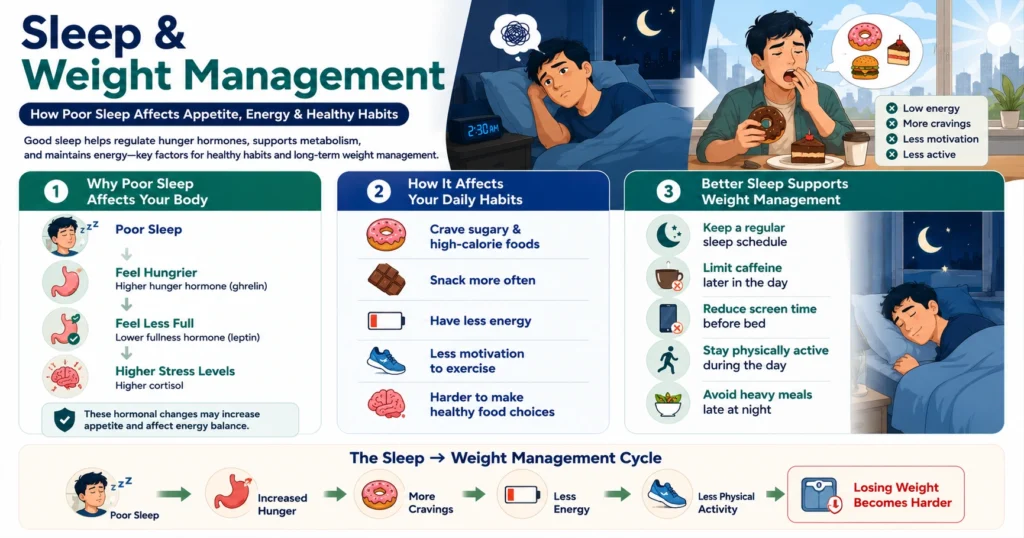
What Happens When We Do Not Get Enough Sleep
Insufficient sleep may affect appetite, metabolism, energy balance, and food choices through both physiological and neurological mechanisms.
Changes to Hunger Hormones
One of the main physiological changes involves hunger hormones. Poor sleep may cause ghrelin levels to increase while leptin levels decrease.
Ghrelin is known as the hunger hormone because it signals the body to eat and stimulates appetite. Leptin is the satiety hormone that helps signal fullness after meals and regulates long-term energy balance.
When ghrelin levels rise and leptin levels fall, people may feel hungrier throughout the day and less satisfied after eating. As a result, insufficient sleep may lead to:
- Increased cravings
- Overeating
- Increased snacking
- Preference for sugary, fatty, or high-calorie foods
Changes in the Brain’s Reward System
Research also suggests that sleep deprivation may affect the brain’s reward system. Areas of the brain involved in motivation, pleasure, and reward-seeking behaviour may become more responsive to highly palatable foods after inadequate sleep.
At the same time, the prefrontal cortex, the area responsible for decision-making, impulse control, and self-regulation, may become less active when people are sleep deprived. This combination may make it harder to resist cravings and maintain healthy eating habits, especially when exposed to calorie-dense foods.
Effects on Stress Hormones and Metabolism
Poor sleep may also influence stress hormones and metabolism. Sleep deprivation may increase cortisol levels, a stress hormone associated with increased appetite, fat storage, and metabolic changes. Elevated cortisol levels over time may contribute to increased cravings and emotional eating behaviours in some individuals.
Inadequate sleep may also reduce insulin sensitivity, meaning the body becomes less efficient at regulating blood sugar levels. This may affect energy metabolism and increase fluctuations in hunger and energy levels throughout the day.
Some studies also suggest that insufficient sleep may lower resting metabolic rate and reduce the body’s ability to use energy efficiently. Fatigue and daytime sleepiness may further reduce motivation to exercise and increase sedentary behaviour, leading to lower overall energy expenditure.
Effects on Decision-Making and Food Choices
Neurologically, sleep deprivation may impair concentration, attention, emotional regulation, and decision-making. Tired individuals may be more likely to choose convenient, high-calorie foods rather than preparing balanced meals or maintaining healthy routines.
Over time, the combined effects of hormonal imbalance, altered brain reward pathways, reduced physical activity, and metabolic changes may make long-term weight management more difficult.
How Poor Sleep May Affect Weight Management
- eating more calories
- increased cravings for high-calorie foods
- reduced physical activity
- lower exercise performance
- increased sedentary behavior
- difficulty maintaining healthy routines
Tips to Improve Sleep Quality
- maintaining a regular sleep and wake schedule
- limiting caffeine intake later in the day
- avoiding alcohol close to bedtime
- keeping electronic devices out of the bedroom
- creating a comfortable sleeping environment
- avoiding heavy meals late at night
- staying physically active during the day
Can Diet Affect Sleep Quality?
Frequently Asked Questions
Can poor sleep cause weight gain?
Does sleeping more help with weight management?
Why do I crave unhealthy food when I am tired?
Key Takeaway
References
- Liu S, Liu X, Li Z, Zhou Y. Sleep Deprivation and Central Appetite Regulation. Nutrients. 2022;14(23):5170. Available at:
- PubMed – Sleep Deprivation and Central Appetite Regulation
- St-Onge MP, Grandner MA, Brown D, et al. Sleep Duration and Quality: Impact on Lifestyle Behaviors and Cardiometabolic Health. Circulation. 2016;134(18):e367–e386. Available at:
- AHA Journals – Sleep Duration and Cardiometabolic Health
- Schmid SM, Hallschmid M, Jauch-Chara K, et al. A Single Night of Sleep Deprivation Increases Ghrelin Levels and Feelings of Hunger in Normal-Weight Healthy Men. Journal of Sleep Research. 2008;17(3):331–334. Available at:
- University of Lübeck – Sleep Deprivation and Ghrelin Levels
- Chaput JP. Sleep Patterns, Diet Quality and Energy Balance. Physiology & Behavior. 2014;134:86–91. Available at:
- ScienceDirect – Sleep Patterns, Diet Quality and Energy Balance
- Van Cauter E, Knutson KL. Sleep and the Epidemic of Obesity in Children and Adults. European Journal of Endocrinology. 2008;159(Suppl 1):S59–S66. Available at:
- PMC – Metabolic Consequences of Sleep and Sleep Loss