


If you’ve ever wondered, “Why is it so hard to lose weight even when I eat less and exercise?” — you are not alone.
Many people blame themselves when weight loss becomes difficult, slow, or frustrating. But modern medical research shows that body weight is influenced by far more than willpower or calorie counting alone.
Hormones, metabolism, sleep, stress, genetics, medications, medical conditions, and even brain chemistry can all affect how the body stores fat and burns energy.
In fact, science now shows that the body often actively resists weight loss through complex biological mechanisms. Understanding these factors may help explain why losing weight can feel much harder than expected.
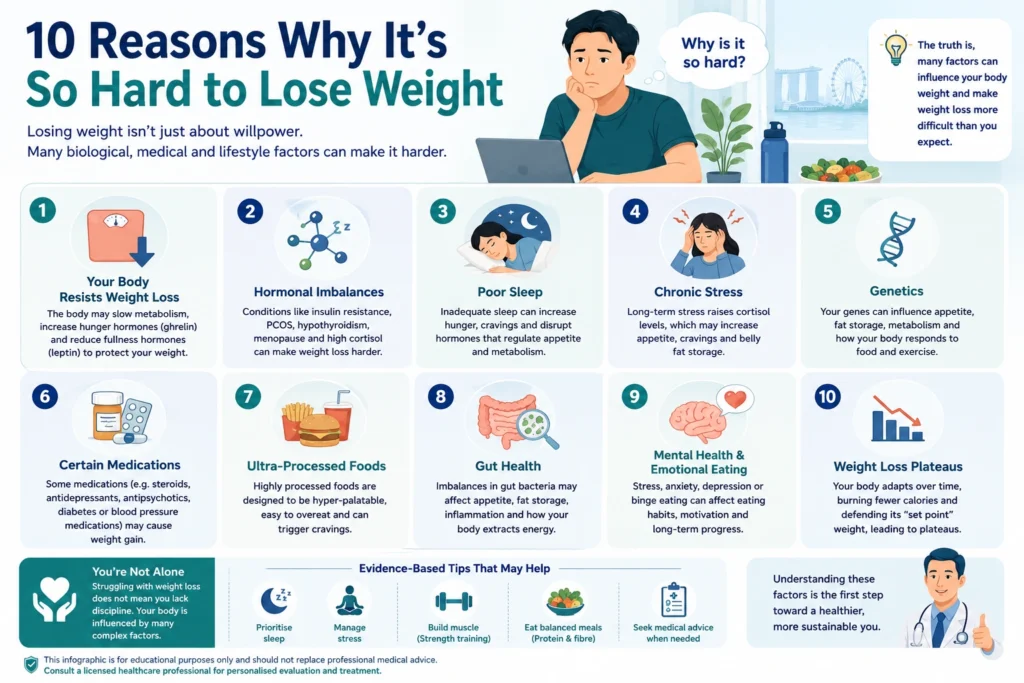
Your Body Is Designed to Resist Weight Loss
One of the biggest misconceptions about weight loss is that the body simply “cooperates” once you start eating less.
In reality, the body often interprets weight loss as a potential threat to survival.
When you lose weight, the body may respond by:
- Slowing down metabolism
- Increasing hunger hormones
- Reducing fullness hormones
- Conserving energy more efficiently
This process is known as metabolic adaptation or adaptive thermogenesis.
Research shows that after dieting:
- Ghrelin (the hunger hormone) often increases
- Leptin (the fullness hormone) decreases
- The body burns fewer calories at rest
These biological changes can persist for months or even years after weight loss, making long-term weight maintenance difficult.
This is one reason many people regain weight despite continuing to put in effort.
Hormonal Imbalances Can Make Weight Loss More Difficult
Hormones play a major role in regulating:
- Appetite
- Fat storage
- Blood sugar
- Energy use
- Metabolism
When hormones become imbalanced, losing weight may become significantly harder.
Common hormonal conditions linked to weight gain include:
- Insulin resistance
- Polycystic ovary syndrome (PCOS)
- Hypothyroidism
- Menopause
- Elevated cortisol from chronic stress
Research suggests that insulin resistance may particularly contribute to difficulty losing fat because high insulin levels encourage the body to store energy rather than burn it.
Women with PCOS also commonly report difficulty losing weight despite dieting and exercise, a challenge increasingly supported by medical research.
Poor Sleep Can Increase Hunger and Weight Gain
Sleep deprivation affects much more than energy levels.
Research shows that insufficient sleep may:
- Increase appetite
- Trigger cravings for high-calorie foods
- Disrupts blood sugar regulation
- Alter metabolism
- Reduce motivation for physical activity
People who sleep poorly often experience:
- Higher ghrelin levels
- Lower leptin levels
- Increased hunger and cravings
Even mild sleep deprivation may reduce self-control around food choices.
Most experts recommend aiming for 7–9 hours of quality sleep per night to support metabolic health and healthy weight management.
Chronic Stress Can Affect Weight Loss
Stress affects both physical and emotional health — including body weight.
When stress becomes chronic, the body produces more cortisol, a hormone associated with:
- Increased appetite
- Emotional eating
- Fat storage around the abdomen
- Blood sugar fluctuations
Many people notice stronger cravings for sugary or highly processed foods during stressful periods. This is not simply a lack of discipline — there are biological pathways involved.
Chronic stress can also disrupt sleep, exercise routines, and long-term consistency, making sustainable weight loss harder.
Weight Loss Plateaus Are Extremely Common
Many people initially lose weight, only to suddenly stop seeing progress.
This is known as a weight loss plateau, and it is very common.
Weight loss plateaus may occur because:
- Smaller bodies naturally require fewer calories
- Metabolism adapts downward
- The body becomes more energy efficient over time
Researchers sometimes describe this as the body defending its previous “set point” weight.
Although plateaus are frustrating, they do not necessarily mean you are failing or doing something wrong.
Genetics Can Influence Body Weight
Genetics may affect:
- Appetite regulation
- Fat storage patterns
- Hunger and fullness signals
- Metabolic rate
- Response to exercise
Some studies suggest that genetics contributes significantly to differences in body weight between individuals.
This does not mean weight is completely predetermined. However, it does mean some people may need substantially more effort to achieve the same results as others.
Certain Medications May Cause Weight Gain
Some medications are associated with weight gain or difficulty losing weight.
Examples include:
- Certain antidepressants
- Antipsychotic medications
- Steroids
- Some diabetes medications
- Certain blood pressure medications
Medication-related weight changes are often overlooked in discussions of weight management.
If weight gain began after starting a medication, it may be worth discussing alternatives with a healthcare professional.
Ultra-Processed Foods Can Increase Overeating
Highly processed foods are designed to be extremely palatable and easy to overconsume.
Research suggests these foods may:
- Delay fullness signals
- Increase calorie intake
- Trigger reward pathways in the brain
- Promote cravings and overeating
Foods high in refined carbohydrates, sugar, and unhealthy fats may also worsen insulin resistance in some individuals.
This is why many healthcare professionals emphasise food quality—not just calorie counting.
Gut Health May Influence Weight Management
Researchers are increasingly studying the relationship between gut bacteria and obesity.
Emerging evidence suggests the gut microbiome may influence:
- Appetite
- Fat storage
- Insulin sensitivity
- Inflammation
- Energy extraction from food
Although research is still evolving, some studies have linked gut microbiome differences with obesity and metabolic conditions such as PCOS.
Mental Health and Emotional Eating Matter
Weight management is closely connected to emotional and mental health.
Conditions such as:
- Depression
- Anxiety
- Chronic stress
- Binge eating disorder
may affect eating habits, activity levels, sleep quality, and motivation.
For many individuals, emotional eating becomes a coping mechanism rather than a simple issue of self-control.
Addressing emotional well-being can be an important part of sustainable weight management.
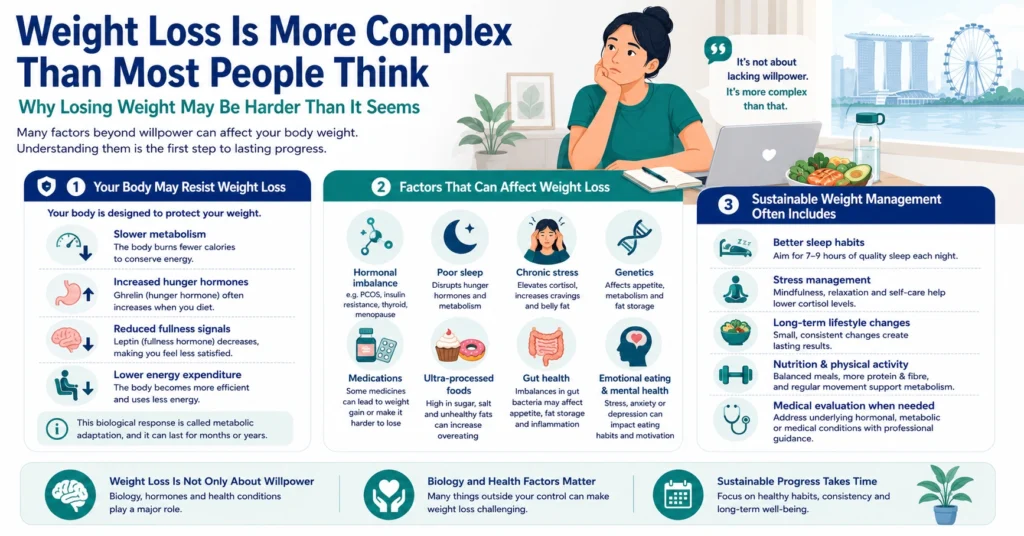
Evidence-Based Tips That May Help With Weight Loss
Healthy and sustainable weight management strategies may include:
- Focusing on gradual lifestyle changes
- Prioritising sleep and stress management
- Including resistance training to preserve muscle
- Eating more protein and fibre-rich foods
- Avoiding extreme calorie restriction
- Seeking medical evaluation for hormonal or metabolic concerns
- Working with qualified healthcare professionals when needed
The science is increasingly clear: struggling with weight loss does not automatically mean a person lacks motivation or discipline.
Instead, body weight is regulated by complex biological systems that can make losing weight much harder than many people realise.
The Bottom Line
If you have struggled to lose weight despite genuine effort, you are not alone — and it is not always simply about “trying harder.”
Medical research shows that weight regulation is highly complex and influenced by:
- Hormones
- Metabolism
- Genetics
- Sleep
- Stress
- Medications
- Medical conditions
- Psychological factors
Successful long-term weight management usually works best when approached as a sustainable health strategy rather than a short-term crash diet.
Understanding the biological and medical factors behind weight gain may help individuals approach weight management with more realistic expectations, better support, and healthier long-term habits.
Frequently Asked Questions on Weight Loss
Is slow weight loss normal?
Yes. Healthy and sustainable weight loss is often slower than many people expect. Rapid weight loss may be difficult to maintain long-term and can sometimes lead to muscle loss, fatigue, or rebound weight gain.
Why do some people lose weight more easily than others?
Weight loss results vary among individuals due to differences in genetics, hormones, metabolism, medical conditions, lifestyle, sleep, stress levels, and medications.
Does age affect weight loss?
Yes. Ageing may affect muscle mass, hormone levels, metabolism, and physical activity, making weight management more challenging over time.
When should I seek medical help for difficulty losing weight?
It may be worth seeking medical advice if you:
- Struggle to lose weight despite consistent effort
- Experience rapid or unexplained weight gain
- Have symptoms of hormonal imbalance
- Suspect medication-related weight gain
- Have obesity-related medical conditions
- Feel emotional eating or binge eating may be contributing
A healthcare professional can help assess for possible medical, hormonal, lifestyle, or psychological factors affecting weight management.
References
- Lee, P.C., Lim, C.H., Asokkumar, R., & Chua, M.W.J. (2023). Current treatment landscape for obesity in Singapore. Singapore Medical Journal. https://doi.org/10.4103/singaporemedj.SMJ-2022-216
- World Health Organization. (2024). Obesity and overweight. Retrieved from https://www.who.int/news-room/fact-sheets/detail/obesity-and-overweight
- Hall, K.D., & Kahan, S. (2018). Maintenance of lost weight and long-term management of obesity. Medical Clinics of North America, 102(1), 183–197. https://doi.org/10.1016/j.mcna.2017.08.012