


Losing weight quickly at the beginning of treatment can feel encouraging. But what happens when the scale stops moving after several months? A weight loss plateau is common during weight management and doesn’t necessarily mean your medication has stopped working.
As your body weight decreases, the amount of energy you need can also decrease. Your eating patterns, physical activity, sleep and stress may also shift over time. These changes can slow or temporarily stop weight loss, even when you take your medication consistently.
Understanding why a plateau occurs can help you review your overall approach instead of reacting to a single isolated reading.
Key Takeaway
- Weight loss plateaus are common and do not necessarily mean your medication has stopped working.
- Changing energy needs and daily habits can slow weight loss over time.
- Review your nutrition, protein intake and physical activity to support long-term progress.
- Track weight trends over several weeks rather than focusing on daily fluctuations.
- Never increase your medication dose yourself when weight loss slows.
- Consult your doctor about persistent plateaus to review your treatment and next steps.
Understanding Weight Loss Plateaus
A plateau describes a sustained period with little or no further weight loss. A few unchanged readings alone do not establish a plateau. It can happen after an initial period of more noticeable weight loss.
Early changes may occur more quickly because reduced food intake and increased activity can produce noticeable results. As your body becomes lighter, however, your energy needs may decrease, which can slow your progress.
A plateau does not necessarily mean you have done anything wrong. It can be part of how the body adapts to a lower weight and a changing energy balance.
It is also important to look beyond individual weigh-ins. Your body weight can naturally shift day to day because of fluid levels, salt intake, digestion, and other factors.
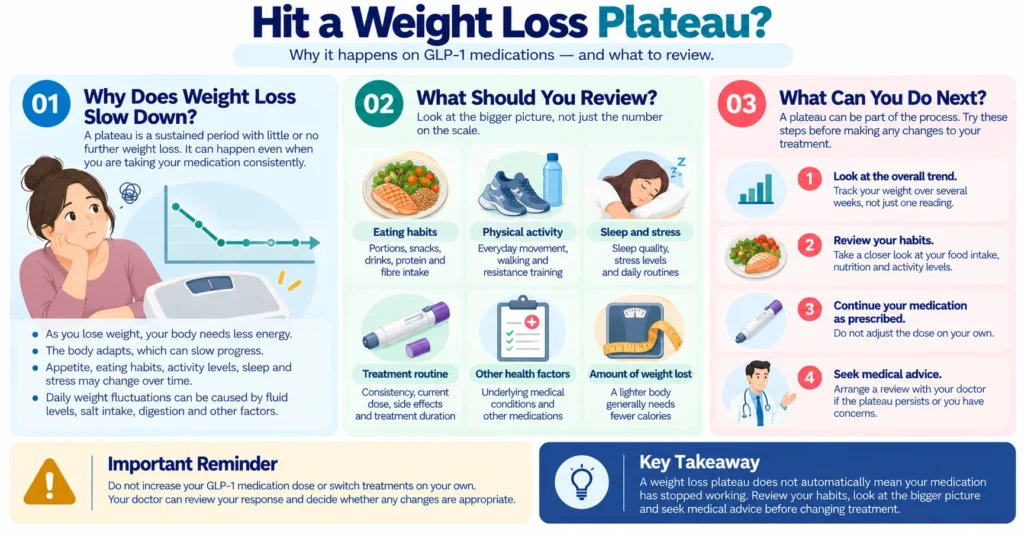
Why Weight Loss Slows Down on GLP – 1 Medications
Weight loss slows as the body adapts to the decreased weight, while energy needs and daily habits can also change. A lighter body generally requires fewer calories to maintain itself, which can alter energy balance.
This is sometimes described as metabolic adaptation. As you lose weight, your body generally needs less energy. Weight loss can also trigger biological responses that favour weight regain, including changes in appetite and, in some people, an additional reduction in energy expenditure. These responses vary between individuals. A plateau may therefore occur even when medication is still helping you maintain a lower weight.
At the same time, old eating patterns or lower activity levels can return without you necessarily noticing.
GLP-1 weight loss medications can help manage hunger and related pathways, but they cannot completely override the body’s natural response to weight loss.
How GLP-1 Medications Affect Appetite and Weight
GLP-1 medications help regulate appetite, satiety and blood sugar through pathways linked to a naturally occurring hormone called glucagon-like peptide-1. GLP-1 receptor agonists work by mimicking some of the effects of this hormone.
These medicines can:
- reduce appetite
- increase satiety and feelings of fullness
- delay stomach emptying
- reduce food intake
- help regulate blood sugar
Individual treatments can work differently. Semaglutide, for example, is a GLP-1 receptor agonist found in medicines such as Wegovy. Tirzepatide, found in Mounjaro, acts on both GIP and GLP-1 receptors.
The term GLP-1 refers to glucagon-like peptide-1, a hormone involved in appetite regulation and blood sugar control. These treatments may help people lose weight, but effectiveness can vary by individual.
A Plateau Does Not Necessarily Mean the Medication Has Stopped Working
A plateau does not automatically mean the medication has stopped working. Benefits such as blood sugar control achieved during treatment may be maintained even when weight stabilises.
It is also possible that your weight loss medication is no longer producing the same rate of decline as it did earlier in treatment. However, this does not mean you should increase your dose immediately.
Instead, review the broader picture, including:
- your treatment consistency
- current dose
- hunger cues
- dietary habits
- physical activity
- sleep and stress
- other medications
- underlying medical conditions
- the amount of weight you have already lost
Your doctor can assess these factors and determine whether your current treatment remains appropriate.
Weight Fluctuations Do Not Always Mean a Loss of Progress
Yes. The number on the scale can fluctuate even when you are making progress. Daily changes may be caused by hydration, salt intake, bowel movements and hormonal cycles rather than an increase in body fat.
For this reason, one higher weigh-in does not necessarily mean you have gained fat, just as one lower reading does not necessarily mean you have lost a significant amount of weight.
Looking at your overall trend over several weeks can provide a more useful picture than focusing on individual readings.
This is particularly important when you are experiencing a plateau. The scale is only one measure of progress.
Dietary Habits Can Affect Weight Loss Progress
Small changes in food intake can gradually reduce your calorie deficit and contribute to a plateau. Hunger and eating patterns may change during treatment, making it possible to increase portion sizes or snack intake.
Rather than assuming you need a stronger medication, review your recent dietary habits. Look for changes such as:
- larger portions
- more frequent snacks
- calorie-dense drinks
- sauces and condiments
- increased intake of refined carbohydrates or sugary foods
- less protein or fibre
- more frequent eating
You do not need to obsessively track every calorie. However, temporarily reviewing your food intake can help identify patterns that may have changed.
If you have diabetes or obesity, dietary habits can also play an important role in managing your overall health alongside your treatment. Choosing a balanced eating pattern does not mean avoiding every fatty food, but being mindful of how calorie-dense foods fit into your overall intake.
Small dietary changes may be enough to support renewed progress for some people.
Protein Intake Matters During Weight Loss
Adequate protein can help maintain muscle and support physical strength during weight loss. This matters because successful weight management is not only about reducing the number on the scale.
GLP-1 treatments can significantly reduce appetite, which may make it harder to consume enough protein and other nutrients.
Including protein-rich foods in a balanced eating pattern can support satiety and help preserve lean muscle, alongside appropriate exercise.
Your nutritional needs depend on factors such as your body size, activity level and health. A doctor or dietitian can provide personalised advice if you are concerned about your intake.
Physical Activity Can Support Progress
Reviewing your physical activity can help if your movement or muscle-strengthening routine has changed. Regular activity can support energy expenditure, muscle maintenance and overall health during weight loss.
Consider whether you are still getting regular:
- walking or other aerobic activity
- resistance training
- everyday movement
- exercise that supports muscle strength
Resistance training may be particularly useful for maintaining muscle and supporting body composition.
The goal is not to exercise excessively to compensate for food intake. Instead, aim for a sustainable routine that fits your health, lifestyle and current fitness level.
Can Sleep and Stress Affect a Weight Loss Plateau?
Yes. Poor sleep and ongoing stress can make weight management harder by affecting eating behaviour, energy, and daily activity.
When sleep quality is poor, you may feel more tired and less motivated to exercise. Changes in hunger and eating behaviour may also make it harder to maintain consistent habits.
Stress can similarly affect food choices and routine. It may also be relevant for people managing conditions such as high blood pressure, where maintaining healthy lifestyle habits is important.
Prioritising adequate sleep and practical stress-management strategies can therefore form part of a broader approach to long-term weight management.
Do Not Increase Your GLP-1 Medication Dose Without Medical Advice
No. You should not increase your medication dose on your own because your weight loss has slowed. The appropriate dose depends on the specific medication, your response, side effects and treatment tolerance.
For treatments such as semaglutide and tirzepatide, doctors generally adjust the dose gradually under medical supervision. A higher dose may not always be necessary.
If you are taking semaglutide or another GLP-1 treatment and notice a change in your progress, your doctor can review your response before deciding whether an adjustment is appropriate.
Do not alter your prescribed dose simply because you want faster weight loss.
Not sure why your weight loss has plateaued?
A doctor can help you look at the bigger picture, from your current medication and treatment response to lifestyle factors that may be affecting your progress.
Book a teleconsultation with a GoMed doctor for personalised guidance.
When Should You Review Your Weight Loss Treatment Plan?
Consider a follow-up if your weight has remained unchanged for an extended period, your appetite has changed, or you are experiencing side effects or other concerns.
Your doctor may review:
- your current dose
- treatment duration and consistent use
- weight trend
- dietary habits
- physical activity
- eating patterns and cravings
- side effects
- other medications
- existing medical conditions
Your doctor can also consider whether your BMI (body mass index), blood sugar and other health markers have changed.
A treatment review does not automatically mean increasing medication. Your doctor may recommend continuing the current treatment, making lifestyle changes, adjusting the dosage or considering a different approach.
Should You Switch to Another Weight Loss Medication?
Switching to another medication is sometimes considered, but it should only happen after a medical review. Different weight loss medications work through distinct pathways, and people can respond differently to each treatment.
Options may include medications such as Wegovy, Mounjaro or other approved therapies, depending on your health and treatment goals.
Don’t base changes solely on the number of weeks without progress. Your doctor can consider your response, treatment duration, tolerance, side effects and overall health before deciding whether another therapy is appropriate.
Can You Still Make Progress While Maintaining Your Weight?
Yes. You can make meaningful progress in your health while maintaining your weight. Weight management is not defined only by continued weight reduction.
Even during a plateau, you may experience improvements in:
- blood sugar control
- blood pressure
- fitness
- appetite control
- body composition
- healthier eating and activity habits
Maintaining the weight you have already lost can also be a valuable outcome. For some people, the goal eventually shifts from losing more weight to maintaining their results.
In other words, progress does not always mean losing another kilogram. Learning to sustain better habits and maintain a healthier weight can also be an important part of treatment.
Steps to Take When You Hit a Weight Loss Plateau
A plateau is a signal to reassess your overall approach, not a reason to give up or change your medication without medical advice.
Start by reviewing whether you are taking your medication as prescribed and whether your eating patterns, protein and fibre intake, physical activity, sleep or stress have changed.
You can then:
- Review your overall weight trend rather than one isolated reading.
- Reassess portions and dietary habits, including hidden calories.
- Maintain regular movement and resistance training where appropriate.
- Prioritise sleep and stress management.
- Continue your medication as prescribed.
- Discuss a persistent plateau with your doctor.
A plateau may be temporary, but it is not something you should simply assume will resolve on its own. If progress remains unchanged, your healthcare provider can review your treatment plan and tailor it to your needs.
The goal is not to force your body to keep losing weight at the same rate. It is about finding a sustainable approach that supports your long-term health.
Moving Forward After a Weight Loss Plateau
A weight loss plateau can be frustrating, but it does not mean your progress has come to an end. Changes in body weight are rarely linear, and a period of slower progress can be an opportunity to reassess your current approach.
Reviewing medication use, nutrition, physical activity, sleep and treatment goals can help identify factors that need attention. These measures support long-term health, but they do not guarantee further weight loss. Depending on your response and health goals, maintaining the weight already lost may be an appropriate outcome.
With GoMed, we’ll be with you every step of the way as you navigate your weight loss journey. Discuss your progress and concerns with our licensed doctors to determine whether your current treatment remains suitable or if a different approach may better support your goals.
Speak with a GoMed doctor today and take the next step in your weight management journey.
References
- Garvey WT, Batterham RL, Bhatta M, et al. Two-year effects of semaglutide in adults with overweight or obesity: the STEP 5 trial. Nature Medicine. 2022;28:2083–2091. doi:10.1038/s41591-022-02026-4.
- Horn DB, Kahan S, Batterham RL, et al. Time to weight plateau with tirzepatide treatment in the SURMOUNT-1 and SURMOUNT-4 clinical trials. Clinical Obesity. 2025;15(3):e12734. doi:10.1111/cob.12734.
- Hall KD. Physiology of the weight-loss plateau in response to diet restriction, GLP-1 receptor agonism, and bariatric surgery. Obesity. 2024;32(6):1163–1168. doi:10.1002/oby.24027.
- Friedrichsen M, Breitschaft A, Tadayon S, Wizert A, Skovgaard D. The effect of semaglutide 2.4 mg once weekly on energy intake, appetite, control of eating, and gastric emptying in adults with obesity. Diabetes, Obesity and Metabolism. 2021;23(3):754–762. doi:10.1111/dom.14280.
- Aronne LJ, Sattar N, Horn DB, et al. Continued treatment with tirzepatide for maintenance of weight reduction in adults with obesity: the SURMOUNT-4 randomized clinical trial. JAMA. 2024;331(1):38–48. doi:10.1001/jama.2023.24945.
- Mozaffarian D, Agarwal M, Aggarwal M, et al. Nutritional priorities to support GLP-1 therapy for obesity: A joint Advisory from the American College of Lifestyle Medicine, the American Society for Nutrition, the Obesity Medicine Association, and The Obesity Society. Obesity. 2025;33(8):1475–1503. doi:10.1002/oby.24336.