


For people interested in GLP-1 treatment but uncomfortable with injections, Rybelsus® offers an alternative: an oral semaglutide tablet that, unlike its injectable counterpart, is taken once daily.
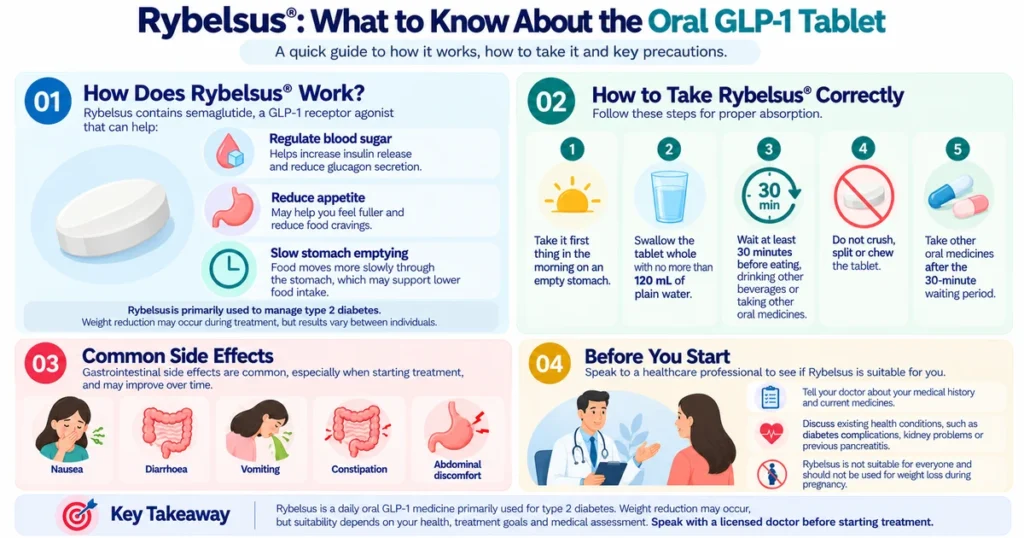
Its active ingredient is semaglutide, a GLP-1 receptor agonist that can help regulate blood sugar, reduce appetite and affect how quickly food leaves the stomach. Although these effects can contribute to weight reduction, it is primarily used to improve blood sugar control in adults with type 2 diabetes.
Here’s what to know about how oral semaglutide works, how to take it correctly and what to expect.
Key Takeaway
- Rybelsus is a daily oral GLP-1 medication used primarily to manage type 2 diabetes.
- It may support weight loss by reducing appetite and food intake.
- Take it on an empty stomach with water and wait at least 30 minutes before eating or taking other medicines.
- Common side effects include nausea, diarrhoea and stomach discomfort.
- Medical assessment is essential to check suitability, risks and possible medication interactions.
- Use prescription medication from legitimate providers and attend follow-ups to monitor your response.
What Is Rybelsus® and How Does It Work?
Rybelsus® is an oral GLP-1 medicine used primarily to manage type 2 diabetes. It works by mimicking the effects of GLP-1, a hormone involved in blood sugar regulation and appetite.
It can:
- increase insulin release when blood sugar is elevated
- reduce glucagon secretion
- slow stomach emptying
- decrease appetite
- reduce food cravings
These effects can help improve blood sugar control and may also lead to weight reduction.
It differs from injectable semaglutide products by delivering the same active ingredient as a daily tablet rather than a weekly injection.
Can Rybelsus® Help With Weight Management?
Yes, weight loss can occur with Rybelsus®, although it is primarily prescribed for type 2 diabetes rather than solely for weight management. The amount of weight lost varies between individuals and depends on factors such as prescribed strength, treatment duration, diet and physical activity.
Rybelsus has demonstrated weight reduction in type 2 diabetes trials. For example, PIONEER 1 found a placebo-adjusted weight reduction of approximately 2.3 kg at 26 weeks with 14 mg.
The reduced appetite and food intake associated with the tablet can support a person’s weight loss journey. However, results from this treatment should not be directly compared with medicines specifically studied and approved for chronic weight management.
If your main goal is weight management, a healthcare professional can assess whether oral semaglutide or another treatment is more appropriate for you.
How Does Oral Semaglutide Compare With Injectable GLP-1 Medicines?
The main difference is how the medicine is administered: oral GLP-1 medications are taken as a daily tablet, while injectable GLP-1 medicines are administered under the skin.
An oral option may appeal to people who prefer not to use injections. However, the tablet must be taken at a specific time in the morning, making the routine less flexible than some weekly injectable treatments.
Injectable options may also produce different weight-loss outcomes depending on the medicine and dose. Your doctor can help you compare the potential benefits, risks, and practical considerations, rather than choosing based on weight loss alone.
How Should You Take Rybelsus®?
Take Rybelsus first thing in the morning with water on an empty stomach. Wait at least 30 minutes before eating, drinking other beverages or taking other oral medicines.
For proper absorption:
- Swallow the tablet whole.
- Take it with no more than 4 ounces (120mL) of water.
- Do not crush, split or chew the tablet.
- Wait at least 30 minutes before eating or drinking.
- Take other oral medicines after this waiting period
These instructions matter because food, beverages and other medicines can affect how much of the medication your body absorbs.
What Is the Starting Strength?
Treatment usually starts at 3 mg once daily, allowing your body to adjust before moving to a higher strength. Depending on your response and your doctor’s instructions, the recommended dose may increase from 3 mg to 7 mg, then to 14 mg when appropriate.
Your doctor will consider factors such as your blood sugar control, response to treatment and tolerance before changing the strength. Do not adjust it yourself.
What Happens If You Have a Missed Dose?
If you miss a tablet, do not take an extra one to make up for it. Skip the missed tablet and take your next one on the following day as usual.
Do not take two tablets on the same day unless specifically instructed by your healthcare professional.
Prefer a Tablet Over Injections?
If injections aren’t for you, I’d suggest an oral alternative. If that’s more convenient for you, a GoMed doctor can help you determine whether it’s an appropriate option.
What Are the Common Side Effects of Rybelsus®?
Common adverse effects include nausea, diarrhoea, abdominal pain, vomiting, constipation and decreased appetite. Gastrointestinal symptoms are particularly common during treatment and may improve over time.
Other possible effects include decreased appetite, constipation and stomach discomfort.
Drinking enough fluids is important because vomiting or diarrhoea can cause a loss of fluids. Severe dehydration resulting from persistent vomiting or diarrhoea can affect kidney function and, in some cases, contribute to acute kidney injury.
If you experience persistent vomiting, severe diarrhoea or difficulty staying hydrated, seek medical advice.
Can the Medication Cause Low Blood Sugar?
The treatment can increase the risk of low blood sugar when used with certain diabetes medications. This is particularly relevant when it is combined with insulin or a sulfonylurea such as gliclazide.
Possible symptoms of low blood sugar include:
- dizziness or lightheadedness
- feeling jittery
- sweating
- fast heartbeat or rapid heartbeat
- confusion or drowsiness
- slurred speech
- weakness or hunger
If you have been advised to monitor your glucose, check your blood sugar level using your home blood sugar meter as directed and follow your healthcare professional’s instructions.
Some people may be advised to consume around 15 grams of fast-acting sugar when experiencing confirmed or suspected hypoglycaemia. Follow the personalised instructions provided by your healthcare team.
What Serious Side Effects Should You Know About?
Serious but uncommon adverse effects can include pancreatitis, gallbladder disease, severe gastrointestinal reactions, dehydration-related kidney problems and serious allergic reactions.
Seek urgent medical attention for severe or persistent abdominal pain, especially if it extends to the back, or symptoms such as swelling, shortness of breath or difficulty breathing.
Tell your doctor if you develop symptoms that could suggest thyroid disease, such as a neck lump, persistent hoarseness or trouble swallowing.
Does Rybelsus Cause Thyroid Tumours?
Animal studies found an increased risk of thyroid C-cell tumours with use of semaglutide, but it is not known whether it causes these tumours in humans. For this reason, the prescribing information includes a warning about the potential risk of thyroid C-cell tumours.
The medication should not be used by people with a personal or family history of medullary thyroid carcinoma (MTC) or Multiple Endocrine Neoplasia syndrome type 2 (MEN 2).
Possible symptoms of thyroid cancer or other thyroid tumours include a lump or swelling in the neck, persistent hoarseness, trouble swallowing or difficulty breathing. If you notice these symptoms, speak with your healthcare professional.
Can You Take Rybelsus During Pregnancy?
Rybelsus should not be used for weight loss during pregnancy. If you are planning to become pregnant, speak with your doctor because semaglutide should be discontinued at least 2 months before a planned pregnancy. Tell your healthcare provider if you become pregnant while taking Rybelsus.
What Should People With Diabetes Know About Oral GLP-1 Tablet?
The medicine is designed primarily for adults with type 2 diabetes and is used alongside diet and exercise to improve glycaemic control.
If you take insulin, a sulfonylurea or other diabetes medication, your doctor may need to consider your overall treatment plan and risk of hypoglycaemia.
If you have diabetic retinopathy, tell your doctor before starting treatment. Rapid improvement in blood glucose control can temporarily worsen diabetic retinopathy in some people, so additional eye monitoring may be appropriate.
What Should You Tell Your Doctor Before Starting Treatment?
Tell your doctor about your medical history and all medicines you take before starting the treatment. This helps them assess whether the medication is suitable and whether any adjustments are needed.
Mention if you have:
- diabetes complications
- kidney problems
- a history of pancreatitis
- diabetic retinopathy
- severe gastrointestinal disease, including severe gastroparesis
- previous allergic reactions
- a personal or family history of medullary thyroid carcinoma
Tell your doctor, anaesthetist or procedural team if you are taking Rybelsus before surgery or a procedure involving general anaesthesia or deep sedation, as the medication can slow gastric emptying, which may be relevant when procedures that use anaesthesia are planned.
Is Rybelsus® Available Online in Singapore?
Rybelsus is a prescription-only medicine in Singapore. Where clinically appropriate, patients may receive medical care through a licensed telemedicine provider, with prescription medicines supplied through appropriately licensed healthcare institutions or pharmacies. The doctor must determine whether teleconsultation is suitable and whether treatment is appropriate.
Always avoid buying semaglutide products from unverified websites, social media sellers, or illicit online sources, as unregulated medications carry severe risks of contamination or counterfeit ingredients.
How Can You Get Started?
The first step is to book an online weight loss consultation to determine whether oral semaglutide is appropriate for you. A licensed doctor can review your health, medications, blood sugar control, and treatment goals before deciding whether it is suitable.
The steps are:
Book an Appointment
Book an online consultation through GoMed.
Attend the Online Consultation
Discuss your health, medical history, current medications and treatment goals with a licensed doctor.
Receive Prescription and Medication
If clinically appropriate, the doctor may prescribe the medication and guide you on how to take it. Your medication can then be arranged for discreet delivery through GoMed’s pharmacy partner.
Follow-Up Care
Follow-up consultations allow your doctor to monitor your response and adjust your treatment when necessary.
What Should You Remember About Rybelsus®?
It can be an option for people who prefer an oral GLP-1 treatment, but it requires consistent daily use and careful adherence to the prescribed instructions. It is also not suitable for everyone, so your medical history, existing medicines and treatment goals should be considered before starting it.
If you are considering this option, a healthcare professional can help you decide whether it is right for your health needs and treatment goals. Getting it through a legitimate medical provider also ensures that your treatment can be properly assessed and monitored.
If you’re ready to explore your options, you can speak with a GoMed doctor online to discuss whether Rybelsus® may be suitable for your needs.
References
- U.S. Food and Drug Administration. Rybelsus (semaglutide) tablets: Prescribing Information. Revised October 2025.
- European Medicines Agency. Rybelsus (semaglutide): European Public Assessment Report and Product Information. Updated April 2026.
- Aroda VR, Rosenstock J, Terauchi Y, et al. PIONEER 1: randomized clinical trial of the efficacy and safety of oral semaglutide monotherapy in comparison with placebo in patients with type 2 diabetes. Diabetes Care. 2019;42(9):1724-1732. doi:10.2337/dc19-0749.
- Zinman B, Aroda VR, Buse JB, et al. Efficacy, safety, and tolerability of oral semaglutide versus placebo added to insulin with or without metformin in patients with type 2 diabetes: PIONEER 8. Diabetes Care. 2019;42(12):2262-2271.
- Knop FK, Aroda VR, do Vale RD, et al. Oral semaglutide 50 mg taken once per day in adults with overweight or obesity (OASIS 1): a randomised, double-blind, placebo-controlled, phase 3 trial. Lancet. 2023;402(10403):705-719. doi:10.1016/S0140-6736(23)01185-6.
- Ministry of Health, Singapore. Regulation measures for sale of medication or prescription drugs through online retailers. 12 November 2024.