


Erectile Dysfunction (ED) is a common condition that affects many men across different age groups. It refers to difficulty getting or maintaining an erection that is sufficient for sexual activity.
Many patients feel embarrassed discussing ED, but it is actually a very common medical issue that doctors see regularly. In some cases, ED may be related to stress or fatigue. In others, it may be an early sign of underlying medical conditions such as diabetes, high blood pressure, or heart disease.
The good news is that Erectile Dysfunction is often treatable. Depending on the cause, treatment may involve lifestyle changes, management of chronic medical conditions, oral medication, or other medical therapies.
In this article, I will share what I commonly discuss with my patients before starting Erectile Dysfunction medication.
What Is Erectile Dysfunction?
Erectile Dysfunction refers to the inability to:
- Get an erection
- Maintain an erection
- Keep the erection firm enough for sexual activity
Occasional erection difficulty can happen to many men, especially during periods of stress, poor sleep, alcohol intake, or fatigue. However, if the problem becomes persistent or starts affecting confidence and relationships, it may be worth seeking medical advice.
ED can occur gradually or suddenly, and symptoms may range from mild difficulty maintaining erections to complete inability to achieve an erection.
Common Causes of Erectile Dysfunction
Erectile Dysfunction can be caused by physical, psychological, or lifestyle-related factors.
Physical Causes
Common physical causes include:
- Type 2 Diabetes
- Hypertension
- High cholesterol
- Coronary Artery Disease
- Obesity
- Smoking
- Low testosterone
- Medication side effects
For example, persistently high blood sugar levels in diabetes can damage blood vessels and nerves, affecting blood flow to the penis.
Similarly, conditions affecting blood circulation may impair the ability to achieve or maintain an erection.
Psychological Causes
Psychological factors can also contribute to ED, including:
- Stress
- Anxiety
- Depression
- Relationship difficulties
- Performance anxiety
In many patients, both physical and psychological factors may coexist.
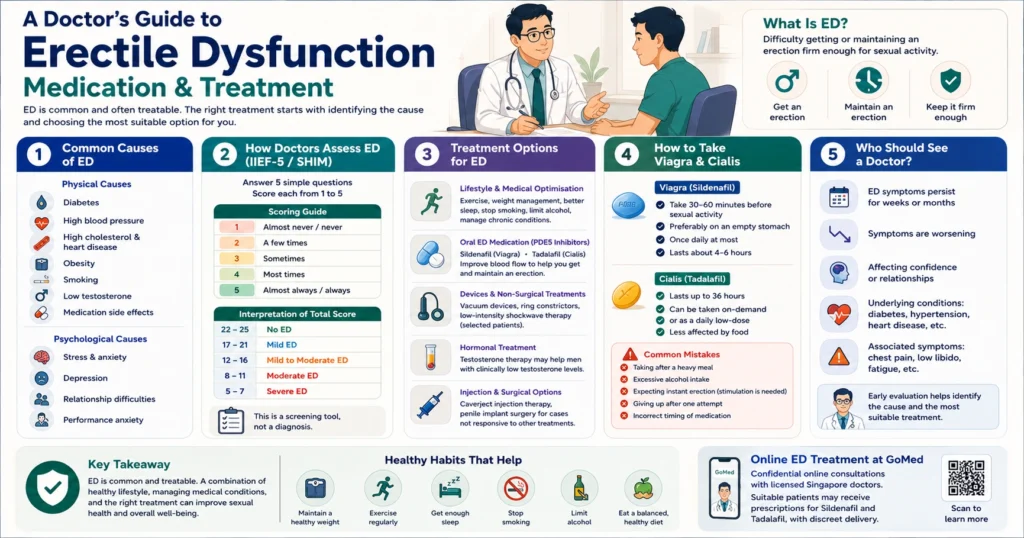
How Does Someone Know If They Have Erectile Dysfunction?
Doctors sometimes use a simple screening questionnaire called the International Index of Erectile Function (IIEF-5), also known as the SHIM score, to assess symptoms of Erectile Dysfunction.
Erectile Dysfunction Self-Assessment (IIEF-5 / SHIM)
Scoring System
| Score | Meaning |
|---|---|
| 1 | Almost never / never |
| 2 | A few times |
| 3 | Sometimes |
| 4 | Most times |
| 5 | Almost always / always |
Questions
For each question, select a score from 1 to 5.
| IIEF-5 Assessment Questions |
|---|
| How confident are you that you can get and keep an erection? |
| When you have erections, how often are they hard enough for penetration? |
| After penetration, how often can you maintain your erection? |
| During intercourse, how difficult is it to maintain your erection until completion? |
| How satisfied are you with your sexual performance? |
Interpretation of Total Score
| Total Score | Severity |
|---|---|
| 22–25 | No ED |
| 17–21 | Mild ED |
| 12–16 | Mild to Moderate ED |
| 8–11 | Moderate ED |
| 5–7 | Severe ED |
This questionnaire is only a screening tool and does not replace a proper medical assessment.
Treatment Options for Erectile Dysfunction
Treatment depends on the underlying cause, severity of symptoms, and individual patient preference.
Lifestyle and Medical Optimisation
Improving overall health can sometimes improve Erectile Dysfunction naturally.
This may include:
- Weight loss
- Regular exercise
- Better sleep
- Smoking cessation
- Reducing alcohol intake
- Managing diabetes, hypertension, and cholesterol
For some men, optimising these factors may significantly improve erections.
Oral Erectile Dysfunction Medication
Common oral medications include:
- Sildenafil (Viagra)
- Tadalafil (Cialis)
These medications belong to a group called phosphodiesterase-5 (PDE5) inhibitors. They work by improving blood flow to the penis.
Devices and Non-Surgical Treatments
Other treatment options include:
- Vacuum erection devices
- Ring constrictors
- Low-intensity shockwave therapy
Shockwave therapy may be useful in selected patients where blood vessel abnormalities contribute to ED, such as patients with diabetes or hypertension.
Hormonal Treatment
Testosterone replacement therapy may help patients with clinically low testosterone levels.
However, not all ED is caused by low testosterone, and proper medical evaluation is important before starting hormonal treatment.
Injection and Surgical Treatments
More advanced treatment options include:
- Caverject injection therapy
- Penile implant surgery
These are usually considered when oral medications are ineffective or unsuitable.
Online Erectile Dysfunction Treatment at GoMed
At GoMed, we provide confidential online consultations for Erectile Dysfunction.
Suitable patients may receive online prescriptions for medications such as:
- Sildenafil
- Tadalafil
Consultations are conducted by licensed Singapore doctors, and medications may be delivered discreetly to your doorstep where appropriate.
How to Take Viagra and Cialis
How to Take Viagra
Sildenafil (Viagra) is usually taken:
- Around 30–60 minutes before sexual activity
- Preferably on an empty stomach
- Once daily at most
Heavy meals, especially oily meals, may delay the effect of Viagra.
The medication generally lasts around 4–6 hours, although this varies between individuals.
How to Take Cialis
Tadalafil(Cialis) lasts longer than Viagra and may remain effective for up to 36 hours in some patients.
It can be prescribed:
- As an on-demand medication
- As a daily low-dose medication
Cialis is generally less affected by food intake compared to Viagra.
Common Mistakes Patients Make
Some common reasons ED medication may not work well include:
- Taking the medication immediately after a heavy meal
- Excessive alcohol intake
- Expecting an instant erection without sexual stimulation
- Giving up after only one attempt
- Incorrect timing of medication intake
Sometimes patients require dosage adjustments or several attempts before achieving optimal results.
The Bottom Line
Erectile Dysfunction is common and often treatable.
In many cases, ED may improve with lifestyle modification, optimisation of chronic medical conditions, and appropriate medical treatment.
While medications such as Viagra and Cialis can be helpful for many patients, it is important to identify and address any underlying contributing factors as well.
If you are experiencing persistent erection difficulties, consulting a licensed doctor can help determine the underlying cause and identify the most suitable treatment options.
Frequently Asked Questions
Can Erectile Dysfunction Be Reversed?
In some cases, yes.
If ED is related to lifestyle factors, stress, obesity, smoking, or poorly controlled chronic conditions, improving these factors may improve erectile function.
However, outcomes vary depending on the underlying cause.
Should I Worry If ED Happens Occasionally?
Occasional erection difficulty is common and may occur during stress, fatigue, or poor sleep.
Persistent or worsening ED, however, may warrant medical assessment.
Can Stress or Anxiety Cause ED?
Yes. Psychological stress and performance anxiety are common contributors to Erectile Dysfunction, especially in younger men.
Which Is Better: Viagra or Cialis?
Both medications are effective, but they differ in duration of action and dosing style.
Viagra typically works for several hours, while Cialis may last much longer.
The most suitable medication depends on individual preference, lifestyle, medical conditions, and response to treatment.
Are Erectile Dysfunction Medications Safe?
ED medications are generally safe for suitable patients when prescribed appropriately by a doctor.
However, they may not be suitable for everyone, especially patients taking nitrate medications or those with certain heart conditions.
When Should I See a Doctor for ED?
You should consider seeing a doctor if:
- ED symptoms persist for several weeks or months
- Symptoms are worsening
- ED is affecting your confidence or relationship
- You have underlying conditions such as diabetes or hypertension
- You experience associated symptoms such as chest pain or low libido
References
- American Urological Association Erectile Dysfunction Guideline
- European Association of Urology Guidelines on Sexual and Reproductive Health
- Rosen RC et al. The International Index of Erectile Function (IIEF): A multidimensional scale for assessment of erectile dysfunction
- NIH Consensus Conference. Impotence. NIH Consensus Development Panel on Impotence