


When most people think about weight and health, they focus on the number shown on the weighing scale. While body weight is important, it does not tell the whole story. Two individuals can weigh the same and even have similar Body Mass Index (BMI) values, yet one may have a significantly higher risk of developing diabetes, heart disease, and other chronic health conditions.
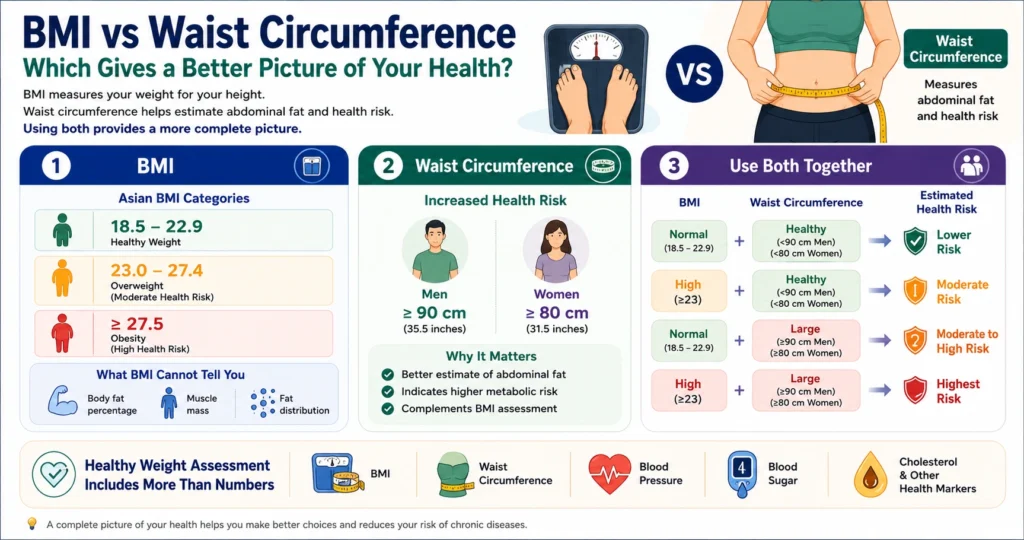
This is because where fat is stored in the body matters. BMI helps estimate whether your weight is appropriate for your height. Waist circumference is a practical proxy for abdominal fat and cardiometabolic risk; it does not directly measure visceral fat.
Understanding both measurements can help you better assess your health risks and determine whether lifestyle changes or weight management strategies may be beneficial.
What Is BMI?
Body Mass Index (BMI) is a simple screening tool used to estimate whether a person’s weight is appropriate for their height.
BMI is calculated using the following formula:
BMI = Weight (kg) ÷ Height² (m²)
Although BMI does not directly measure body fat, it is widely used because it is quick, inexpensive, and useful for identifying individuals who may be at increased risk of obesity-related health conditions.
Asian BMI Classification
Body Mass Index (BMI) is a simple screening tool used to assess whether a person’s weight is appropriate for their height. However, BMI cut-offs are not the same for all populations.
Research has shown that many Asian adults tend to develop obesity-related conditions, such as type 2 diabetes, high blood pressure, abnormal cholesterol, and cardiovascular disease, at lower BMI levels compared with Western populations. This is partly because Asian populations may have a higher percentage of body fat and more abdominal fat at the same BMI.
For this reason, lower BMI thresholds are commonly used when assessing health risk in Asian adults.
| BMI (kg/m²) | Asian BMI Category / Health Risk |
|---|---|
| <18.5 | Underweight |
| 18.5–22.9 | Healthy Weight |
| 23.0–27.4 | Overweight / Moderate Health Risk |
| ≥27.5 | Obesity / High Health Risk |
A BMI of 23 kg/m² or above may already indicate an increased risk of metabolic disease in Asian adults, especially when accompanied by a larger waist circumference, high blood pressure, abnormal cholesterol, prediabetes, diabetes, or fatty liver disease.
Although BMI is useful for screening, it does not directly measure body fat or show where fat is stored. Therefore, BMI should ideally be interpreted together with waist circumference and other health markers.
The Limitations of BMI
While BMI is a useful screening tool, it has several limitations.
BMI cannot differentiate between:
- Fat and muscle mass
- Visceral fat and subcutaneous fat
- Different patterns of fat distribution
For example, an athlete with high muscle mass may have a BMI in the overweight range despite having very little body fat. Conversely, someone with a normal BMI may have excess body fat and low muscle mass, placing them at increased metabolic risk.
This is why healthcare professionals often assess waist circumference alongside BMI.
What Is Waist Circumference?
Waist circumference measures the abdominal area and provides a practical way to estimate abdominal fat accumulation.
A larger waist circumference often indicates increased visceral fat, which is strongly associated with diabetes, heart disease, and other metabolic conditions.
How to Measure Your Waist Circumference
To obtain an accurate measurement:
- Stand upright with your feet shoulder-width apart.
- Locate the midpoint between the lowest rib and the top of the hip bone.
- Wrap a measuring tape around this area.
- Measure after a gentle exhalation.
- Ensure the tape is snug but not compressing the skin.
Healthy Waist Circumference for Asians
| Sex | Increased Health Risk |
|---|---|
| Men | ≥90 cm (35.5 inches) |
| Women | ≥80 cm (31.5 inches) |
A waist circumference above these thresholds suggests central obesity and an increased risk of metabolic disease.
Why Is Abdominal Fat More Harmful?
Not all body fat behaves the same way.
Subcutaneous Fat
Subcutaneous fat is located beneath the skin and is the fat that can be pinched around the arms, thighs, or abdomen. While excessive amounts can contribute to weight gain, it is generally less harmful.
Visceral Fat
Visceral fat is stored deep within the abdominal cavity and surrounds internal organs such as the liver, pancreas, and intestines.
Unlike subcutaneous fat, visceral fat is metabolically active and can contribute to:
- Insulin resistance
- Chronic inflammation
- Elevated blood pressure
- Abnormal cholesterol levels
- Increased cardiovascular risk
As a result, waist circumference often provides valuable information that BMI alone cannot capture.
Health Risks Associated with an Increased Waist Circumference
Excess abdominal fat has been linked to numerous health conditions.
Type 2 Diabetes
Visceral fat promotes insulin resistance, making it more difficult for the body to regulate blood sugar levels effectively.
High Blood Pressure
Central obesity is associated with increased blood pressure and greater strain on the cardiovascular system.
High Cholesterol
Excess abdominal fat can contribute to elevated triglyceride levels, reduced HDL (“good”) cholesterol, and increased cardiovascular risk.
Fatty Liver Disease
MASLD Metabolic dysfunction-associated fatty liver disease, formerly known as NAFLD Non-alcoholic fatty liver disease, is strongly associated with excess visceral fat and central obesity.
Heart Disease and Stroke
Individuals with larger waist circumferences have a higher risk of coronary artery disease, heart attacks, and strokes.
Obstructive Sleep Apnoea
Excess fat around the abdomen and upper airway can contribute to sleep-disordered breathing.
Certain Cancers
Research has linked obesity and central obesity to an increased risk of several cancers, including colorectal cancer and post-menopausal breast cancer.
Can You Have a Normal BMI but an Unhealthy Waistline?
Yes, this phenomenon is particularly common among Asian populations and is sometimes described as:
TOFI – Thin Outside, Fat Inside
A person may appear slim and have a BMI within the healthy range, yet carry excessive visceral fat around the abdomen.
For example:
| Measurement | Result |
|---|---|
| BMI | 22 kg/m² |
| Waist Circumference | 92 cm |
| Health Risk | Increased |
Despite having a “normal” BMI, this individual may still have an elevated risk of diabetes, fatty liver disease, and cardiovascular disease.
This pattern is commonly seen in:
- Sedentary individuals
- People with low muscle mass
- Older adults
- Individuals with a family history of diabetes
This highlights why relying on BMI alone may underestimate health risk.
What If BMI Is High but Waist Circumference Is Normal?
The opposite situation can also occur.
Individuals with higher muscle mass, such as athletes and regular gym-goers, may have a BMI in the overweight range despite maintaining a healthy waist circumference.
In these situations, BMI may overestimate health risk.
A complete assessment should also consider:
- Waist circumference
- Body composition
- Physical activity levels
- Blood pressure
- Blood glucose levels
- Cholesterol profile
Why BMI and Waist Circumference Should Be Used Together
BMI and waist circumference measure different aspects of health.
| BMI | Waist Circumference | Estimated Health Risk |
|---|---|---|
| Normal | Normal | Low |
| Elevated | Normal | Moderate |
| Normal | Elevated | Moderate to High |
| Elevated | Elevated | Highest |
Using both measurements together provides a more accurate assessment of metabolic and cardiovascular risk than either measurement alone.
When Should You Consider Weight Management?
You may benefit from discussing weight management with a healthcare professional if you have:
- BMI ≥23 kg/m² for Asian,
- Waist circumference ≥90 cm (men)
- Waist circumference ≥80 cm (women)
- Prediabetes or diabetes
- High blood pressure
- High cholesterol
- Fatty liver disease
- Obstructive sleep apnoea
Addressing weight concerns early can help reduce long-term health risks and improve overall well-being.
How Can You Reduce Your Waist Circumference?
Reducing abdominal fat requires overall fat loss rather than targeting a specific area of the body.
Effective strategies include:
- Maintaining a sustainable calorie deficit
- Increasing protein intake
- Performing regular resistance training
- Engaging in aerobic exercise
- Getting sufficient sleep
- Managing stress
- Reducing sugary drinks and excessive alcohol intake
It is important to remember that spot reduction is not a reliable way to reduce belly fat. While abdominal exercises can strengthen the core muscles, they do not selectively burn belly fat. Overall, fat loss through diet, aerobic activity, resistance training, sleep, and metabolic-risk control remains the evidence-based approach.
The Bottom Line
BMI is a useful screening tool, but it does not provide the complete picture of your health.
A normal BMI does not always mean that you are metabolically healthy, particularly if you have excess abdominal fat. Likewise, some individuals with a higher BMI may not have significant health risks if much of their weight comes from muscle mass.
For Asian populations, assessing both BMI and waist circumference provides a more accurate understanding of health risk. If your BMI or waist circumference falls outside the recommended range, it may be worth discussing lifestyle modifications or weight management options with your healthcare provider.
Considering Medical Weight Loss?
If you are concerned about your weight, waist circumference, or risk of weight-related health conditions, professional guidance can help you achieve sustainable and clinically meaningful results.
At GoMed, we provide online medical weight-loss consultations, allowing you to discuss your goals, assess your health risks, and explore evidence-based treatment options from the comfort of your home. Our doctors can help determine whether lifestyle interventions, prescription weight loss medications, or a combination of approaches may be suitable for you.
Prescription of weight-loss medications is generally reserved for people who meet clinical BMI and comorbidity criteria and is not indicated solely for cosmetic weight loss.
Book an online consultation today and take the first step towards a healthier weight and improved long-term health.
Frequently Asked Questions
Is BMI or waist circumference more important?
Both are useful. BMI helps estimate whether your weight is appropriate for your height, while waist circumference gives additional information about abdominal fat and metabolic risk. Using both together gives a better overall picture of your health.
Can I have a normal BMI but still be unhealthy?
Yes. Some individuals, particularly Asians, may have a normal BMI but excess visceral fat around the abdomen. This can increase the risk of diabetes, fatty liver disease, and heart disease despite appearing slim.
What waist circumference is considered high for Asians?
For Asian populations, a waist circumference of 90 cm or above in men and 80 cm or above in women is associated with increased health risk.
Can exercise reduce belly fat?
Exercise can help reduce overall body fat, including abdominal fat. However, spot reduction is not possible. Abdominal exercises strengthen the muscles underneath, but do not selectively burn belly fat.
How often should I measure my waist circumference?
Measuring once every 2 to 4 weeks is usually sufficient when tracking progress. Measuring too frequently may be misleading because waist size can fluctuate due to bloating, food intake, and water retention.
References
- World Health Organization Expert Consultation. Appropriate body-mass index for Asian populations and its implications for policy and intervention strategies. The Lancet. 2004;363(9403):157–163.
- World Health Organization. Waist Circumference and Waist-Hip Ratio: Report of a WHO Expert Consultation. Geneva: World Health Organization; 2008.
- Ministry of Health, Singapore. Clinical Practice Guidelines on Obesity and Weight Management.
- International Diabetes Federation. The IDF Consensus Worldwide Definition of the Metabolic Syndrome.
- Klein S, Allison DB, Heymsfield SB, et al. Waist Circumference and Cardiometabolic Risk. Circulation. 2007;115(13):1643–1654.
- Ross R, Neeland IJ, Yamashita S, et al. Waist Circumference as a Vital Sign in Clinical Practice. Nature Reviews Endocrinology. 2020;16:177–189.