

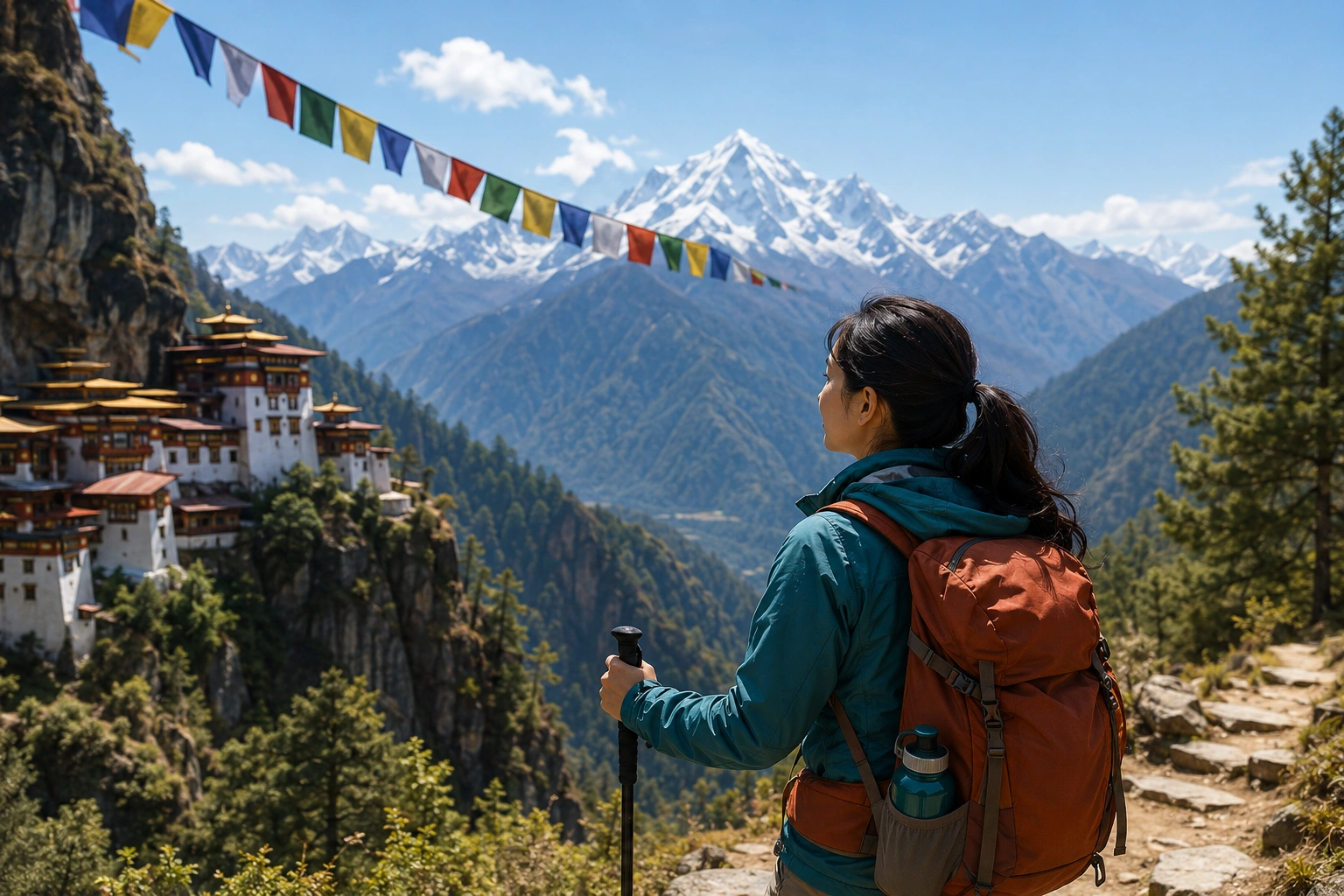
Travel to high-altitude destinations has become increasingly popular in recent years. Whether you are planning to visit Bhutan, explore Yunnan in China, trek in Nepal, travel through Tibet, or enjoy mountain destinations in Japan, high-altitude travel can be an unforgettable experience.
However, travelling to areas with high elevation may increase the risk of altitude sickness. Understanding how altitude sickness occurs, recognising the symptoms, and taking preventive measures can help you stay safe and enjoy your trip.
What Is Altitude Sickness?
Altitude sickness, also known as mountain sickness or Acute Mountain Sickness (AMS), is a condition that can occur when a person ascends to a high altitude too quickly.
Most cases occur at elevations above 2,500 metres (approximately 8,200 feet), although some individuals may develop symptoms at lower altitudes.
As altitude increases, the air becomes thinner and contains less oxygen. Although the percentage of oxygen in the air remains the same, the lower air pressure means that each breath delivers less oxygen to the body.
To compensate, the body responds by increasing breathing rate and heart rate in an attempt to deliver more oxygen to tissues. Over time, the body also produces more red blood cells to improve oxygen transport. When the body does not have sufficient time to adapt to these changes, altitude sickness may develop.
What Causes Altitude Sickness?
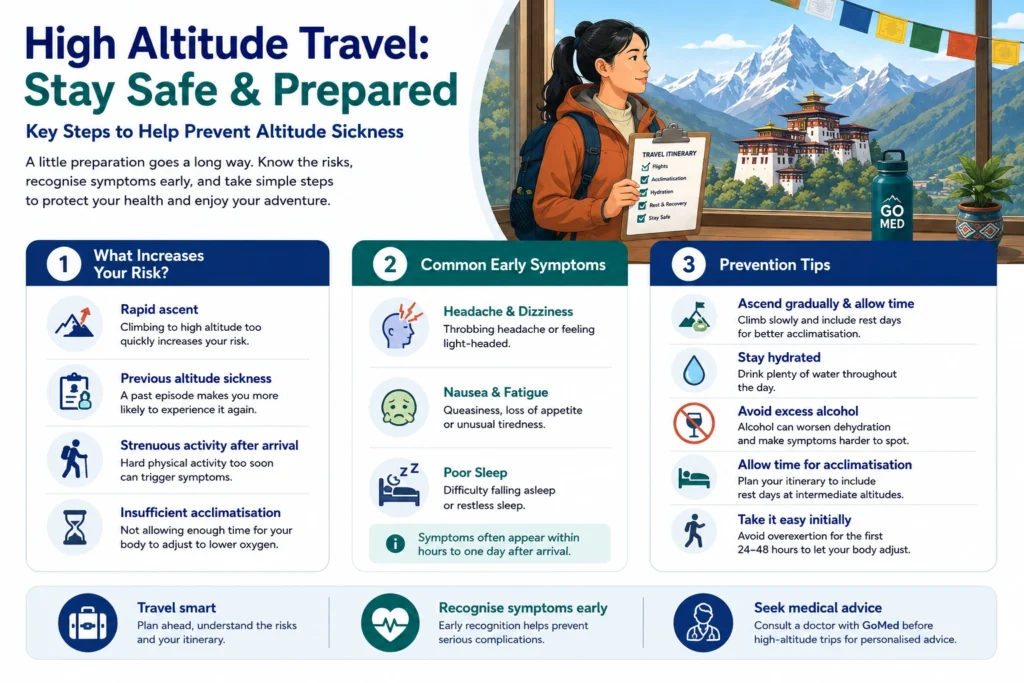
Several factors can increase the risk of developing altitude sickness:
- Rapid ascent to a high altitude
- Insufficient time for acclimatisation
- Sleeping at a significantly higher altitude than usual
- Strenuous physical activity shortly after arrival
- Previous history of altitude sickness
Although dehydration and alcohol consumption do not directly cause altitude sickness, they may worsen symptoms and make recovery more difficult.
Symptoms of Altitude Sickness
Symptoms usually develop within a few hours to one day after arriving at a high altitude.
Mild Symptoms
Common symptoms of mild altitude sickness include:
- Headache
- Nausea
- Dizziness
- Fatigue
- Poor sleep
- Loss of appetite
Many travellers describe the symptoms as feeling similar to a hangover or flu-like illness.
Severe Symptoms
Severe symptoms may indicate a potentially dangerous altitude-related illness and require urgent medical attention.
Warning signs include:
- Shortness of breath at rest
- Persistent vomiting
- Severe weakness
- Difficulty walking or maintaining balance
- Confusion
- Chest tightness
- Blue or grey discolouration of the lips or fingernails
Types of Altitude Sickness
Acute Mountain Sickness (AMS)
AMS is the most common form of altitude sickness. Symptoms are usually mild and improve with rest, acclimatisation, or descent.
High Altitude Pulmonary Edema (HAPE)
HAPE occurs when fluid accumulates in the lungs due to high altitude exposure. It can cause severe breathlessness, cough, and reduced oxygen levels.
HAPE is a medical emergency.
High Altitude Cerebral Edema (HACE)
HACE occurs when swelling develops in the brain due to high altitude exposure.
Symptoms may include confusion, loss of coordination, altered consciousness, or difficulty walking.
HACE is a life-threatening medical emergency that requires immediate descent and urgent medical attention.
When Should You Seek Emergency Care?
Seek urgent medical attention if you experience:
- Breathlessness while resting
- Difficulty walking in a straight line
- Confusion or unusual behaviour
- Severe drowsiness
- Blue lips or fingernails
- Worsening symptoms despite rest
If severe altitude sickness is suspected, immediate descent to a lower altitude is often the most important first step.
Who Is at Higher Risk?
Certain individuals may be more likely to develop altitude sickness:
- Travellers ascending rapidly above 2,500 metres
- Individuals with a previous history of altitude sickness
- People undertaking strenuous trekking or climbing activities
- Travellers who do not allow sufficient time for acclimatisation
Importantly, physical fitness does not guarantee protection against altitude sickness. Even experienced athletes may develop symptoms if they ascend too quickly.
How to Prevent Altitude Sickness
Ascend Gradually
Whenever possible, avoid rapid ascent to high elevations. A slower ascent allows the body time to adapt to lower oxygen levels.
Allow Time for Acclimatisation
Consider spending one or two nights at intermediate altitudes before ascending further.
Many trekking itineraries include acclimatisation days to reduce the risk of altitude sickness.
Stay Hydrated
Maintaining adequate hydration may help reduce discomfort during high-altitude travel.
Drink fluids regularly, especially during physical activity.
Avoid Excess Alcohol
Alcohol may worsen dehydration, interfere with sleep quality, and make symptoms more difficult to recognise.
Limiting alcohol intake during the first few days at high altitude may be beneficial.
Avoid Overexertion Initially
Allow your body time to adjust before engaging in strenuous exercise or trekking.
Take it easy during the first 24 to 48 hours after arriving at a high altitude.
Consider Preventive Medication
For some travellers, preventive medication may be appropriate, particularly if:
- Rapid ascent is unavoidable
- Previous altitude sickness has occurred
- Travel plans involve very high elevations
At GoMed, our family physicians can review your travel itinerary, planned altitude exposure, medical history, and current medications to determine whether preventive medication may be suitable for your trip.
Not all travellers require medication. The decision depends on factors such as the altitude reached, rate of ascent, previous history of altitude sickness, and individual medical conditions.
Planning a High-Altitude Trip?
If you are travelling to destinations such as Yunnan, Bhutan, Tibet, Nepal, or other high-altitude regions, the doctors at GoMed Singapore can assess your travel plans through an online consultation and advise whether preventive measures or medication may be appropriate before departure.
A pre-travel consultation can also help identify individual risk factors, review existing medical conditions, and ensure that you are adequately prepared for high-altitude travel.
Frequently Asked Questions on Altitude Sickness
How high is considered high altitude?
High altitude generally refers to elevations above 2,500 metres (8,200 feet).
Can physically fit people get altitude sickness?
Yes. Fitness does not prevent altitude sickness. The rate of ascent is often more important than physical conditioning.
How long does altitude sickness last?
Mild symptoms often improve within 24 to 48 hours as the body acclimatises. More severe symptoms may require descent and medical treatment.
Can children develop altitude sickness?
Yes. Children can develop altitude sickness just like adults. Parents should monitor for symptoms such as headache, irritability, poor appetite, vomiting, or unusual tiredness.
Does supplemental oxygen help?
Supplemental oxygen may improve symptoms and is sometimes used in high-altitude environments. However, severe symptoms still require medical assessment and often descend to a lower altitude.
Should I continue climbing if symptoms begin?
Travellers with symptoms of altitude sickness should avoid further ascent until symptoms improve. Continuing to climb may increase the risk of serious complications.
Key Takeaway
Altitude sickness is a common condition that can affect travellers visiting high-altitude destinations. The risk increases when ascending too quickly without allowing adequate time for acclimatisation.
Most cases are mild and improve with rest, but severe symptoms may indicate a medical emergency requiring immediate descent and urgent medical attention.
By ascending gradually, allowing time for acclimatisation, staying hydrated, and recognising warning signs early, travellers can significantly reduce their risk and enjoy a safer high-altitude journey.
References
- Centers for Disease Control and Prevention. High-Altitude Travel and Altitude Illness. CDC Yellow Book. Available at: https://www.cdc.gov/yellow-book/hcp/environmental-hazards-risks/high-altitude-travel-and-altitude-illness.html
- Luks, A. M., Auerbach, P. S., Freer, L., Grissom, C. K., Keyes, L. E., McIntosh, S. E., Rodway, G. W., Schoene, R. B., Zafren, K., & Hackett, P. H. Wilderness Medical Society Clinical Practice Guidelines for the Prevention and Treatment of Acute Altitude Illness. Wilderness & Environmental Medicine. https://doi.org/10.1016/j.wem.2023.05.013
- National Health Service. Altitude Sickness. Available at: https://www.nhs.uk/conditions/altitude-sickness/
- World Health Organization. International Travel and Health. Available at: https://www.who.int/publications/i/item/9789241580472
- Mayo Clinic. Altitude Sickness Overview.