

Obesity is a chronic medical condition that affects millions of people worldwide and is increasingly becoming a major health concern in Singapore. It is not simply about appearance or “lack of discipline.” Obesity is a complex condition influenced by genetics, hormones, lifestyle, eating habits, sleep, stress, medical conditions, and environmental factors.
Being overweight or obese may increase the risk of developing conditions such as:
- Type 2 diabetes
- High blood pressure
- High cholesterol
- Fatty liver disease
- Sleep apnoea
- Heart disease
- Joint problems
- Certain cancers
For many individuals, losing weight through diet and exercise alone can be extremely difficult, especially when the body naturally tries to regain lost weight over time. This is why medical weight management may sometimes be recommended.
In recent years, GLP-1 medications have become an increasingly popular option for obesity treatment and weight management. However, before starting treatment, I always make sure my patients understand both the benefits and limitations of these medications.
Managing Obesity: Diet, Lifestyle, and Medication
Weight loss medication should never be viewed as a standalone solution.
Successful long-term weight management usually requires a combination of:
- Sustainable dietary changes
- Regular physical activity
- Adequate sleep
- Stress management
- Behavioural modification
- Ongoing medical follow-up
GLP-1 medication may help reduce appetite and improve portion control, but patients still need to build healthier habits to maintain results long term.
In most cases, medication works best as a “tool” that supports lifestyle changes rather than replacing them.
What Are GLP-1 Medications?
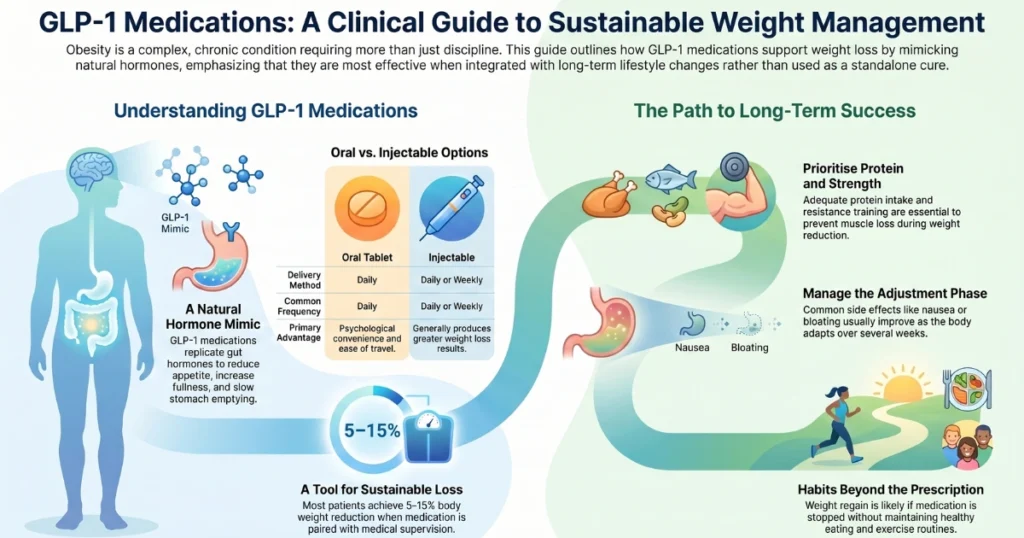
GLP-1 stands for glucagon-like peptide-1, a natural hormone produced in the gut after eating.
GLP-1 medications work by helping to:
- Reduce appetite
- Increase fullness after meals
- Slow stomach emptying
- Reduce food cravings
- Improve blood sugar regulation
These effects may help patients consume fewer calories and lose weight more sustainably.
Some GLP-1 medications are originally developed for diabetes treatment, while others are specifically approved for obesity management.
Types of GLP-1 Medication
Both oral and injectable GLP-1 medications are available.
Oral GLP-1 Medication
Oral Semaglutide (Rybelsus)
This is a tablet taken once daily.
Some patients prefer oral medication because:
- They dislike injections
- It feels more convenient psychologically
- It may be easier when travelling
However, oral GLP-1 medication usually requires stricter timing instructions and may produce more modest weight loss compared to injectable options.
Injectable GLP-1 Medication
Common injectable medications include:
- Semaglutide (Wegovy, Ozempic)
- Liraglutide (Saxenda)
- Tirzepatide (Mounjaro)
These are usually injected either:
- Daily, or
- Weekly, depending on the medication
Injectable options generally produce greater weight loss results compared to oral medications.
Many patients are initially worried about injections, but most eventually find the needles very small and manageable.
GLP-1 Medication Efficacy
One of the most important things I tell patients is to have realistic expectations.
Weight loss results vary between individuals and depend on:
- Starting weight
- Diet quality
- Physical activity
- Sleep
- Consistency
- Medication adherence
- Individual response
Some patients may lose weight rapidly, while others lose weight more gradually.
In general:
- Oral GLP-1 medications may produce modest weight loss
- Injectable semaglutide usually produces more significant weight loss
- Tirzepatide (Mounjaro) may produce even greater weight reduction in some patients
Clinical studies suggest some patients may achieve:
- 5–10% body weight reduction
- 10–15% weight loss
- More significant weight loss in selected individuals
However, treatment response differs greatly from person to person.
I also remind patients that healthy and sustainable weight loss is usually gradual rather than extreme.
Common Side Effects of GLP-1 Medication
Side effects are very common during the early stages of treatment, especially during dose escalation.
Common Side Effects
The most frequently reported side effects include:
- Nausea
- Bloating
- Acid reflux
- Constipation
- Diarrhoea
- Reduced appetite
- Early fullness
- Burping
- Occasional vomiting
Symptoms are often worse when:
- Eating large meals
- Eating too quickly
- Consuming oily or heavy foods
- Increasing the medication dose too rapidly
Many patients improve after several weeks once the body adapts.
Less Common but Important Risks
Although uncommon, patients should also be aware of potential serious side effects, including:
- Severe vomiting with dehydration
- Gallstones
- Pancreatitis
- Significant abdominal pain
- Persistent severe nausea
- Allergic reactions
Patients should seek medical attention if they develop severe abdominal pain, persistent vomiting, chest pain, dehydration, or concerning symptoms.
Cost Concerns
GLP-1 medications can be expensive, especially newer injectable medications.
Before starting treatment, I always discuss:
- Monthly medication costs
- Duration of treatment
- Long-term affordability
- Follow-up consultation costs
- Lifestyle sustainability
One important point patients often overlook is that obesity is usually a chronic condition.
This means some patients may regain weight after stopping medication, particularly if lifestyle changes are not maintained.
Because of this, patients should avoid starting treatment with unrealistic expectations if they are unable to continue treatment safely or sustainably.
Compliance and Long-Term Success
Medication compliance is extremely important.
Patients who skip doses frequently or stop treatment early often experience:
- Reduced effectiveness
- Increased side effects when restarting
- Weight regain
- Difficulty maintaining appetite control
I also remind patients that GLP-1 medication works best when combined with:
- Higher protein intake
- Portion control
- Resistance training or exercise
- Sleep optimisation
- Reduced liquid calories and snacking
Without lifestyle adjustments, long-term success becomes much harder.
Important Lifestyle Advice I Usually Discuss
Protein Intake Matters
Some patients lose both fat and muscle mass during weight loss.
To reduce muscle loss, patients should prioritise:
- Adequate protein intake
- Strength training
- Regular physical activity
Maintaining muscle mass is important for long-term metabolic health and weight maintenance.
Eat Slowly
Because GLP-1 medications slow stomach emptying, overeating may trigger nausea or vomiting.
Patients are usually advised to:
- Eat smaller meals
- Eat slowly
- Stop once comfortably full
- Avoid binge eating
Hydration Is Important
Reduced appetite may also reduce fluid intake.
This may increase the risk of:
- Constipation
- Dizziness
- Dehydration
Patients should maintain adequate hydration throughout treatment.
What Happens After Successful Weight Loss?
This is one of the most important discussions during treatment.
Many patients focus heavily on losing weight but do not think about maintenance.
After successful weight loss, patients may:
- Continue medication long term
- Reduce dosage gradually
- Transition to maintenance therapy
- Stop medication with close monitoring
However, stopping medication suddenly without lifestyle changes may lead to weight regain.
Long-term success usually depends on whether patients can maintain:
- Healthy eating habits
- Physical activity
- Portion control
- Sleep quality
- Sustainable routines
The goal should not simply be rapid weight loss, but building healthier long-term habits.
The Bottom Line
GLP-1 medications can be an effective tool for weight management in suitable individuals, especially when combined with proper lifestyle modification and medical supervision.
However, they are not miracle medications or shortcuts.
Successful long-term weight management still depends heavily on:
- Sustainable dietary habits
- Physical activity
- Behavioural changes
- Consistency
- Ongoing follow-up
Before starting treatment, patients should understand:
- The potential benefits
- Possible side effects
- Financial commitment
- Importance of compliance
- Long-term maintenance expectations
When used appropriately, GLP-1 medication may help support healthier and more sustainable weight loss outcomes.
Frequently Asked Questions (FAQ) on GLP-1 Medication
Are GLP-1 medications safe?
GLP-1 medications are generally considered safe when prescribed appropriately by a licensed doctor. However, like all medications, they carry potential side effects and risks.
Patients should undergo a proper medical assessment before starting treatment.
Which is better: oral or injectable GLP-1 medication?
It depends on the individual patient.
Injectable medications generally produce greater weight loss, while oral medication may feel more convenient for some individuals.
A doctor can help determine which option is more suitable based on medical history, goals, cost, and lifestyle.
How long do you need to take GLP-1 medication?
Treatment duration varies greatly.
Some patients use medication for the short term, while others may require longer-term treatment to maintain results.
Obesity is often a chronic condition, so long-term management may sometimes be necessary.
Will you regain weight after stopping medication?
Weight regain can happen, especially if lifestyle changes are not maintained.
This is why sustainable habits remain extremely important even after successful weight loss.
Can you exercise while on GLP-1 medication?
Yes. In fact, exercise is strongly encouraged.
Regular exercise may help:
- Preserve muscle mass
- Improve metabolism
- Support long-term weight maintenance
- Improve overall health outcomes
References
- Wilding JPH, et al. Once-Weekly Semaglutide in Adults with Overweight or Obesity. New England Journal of Medicine. 2021.
- Jastreboff AM, et al. Tirzepatide Once Weekly for the Treatment of Obesity. New England Journal of Medicine. 2022.
- American Diabetes Association. Standards of Care in Diabetes. 2025